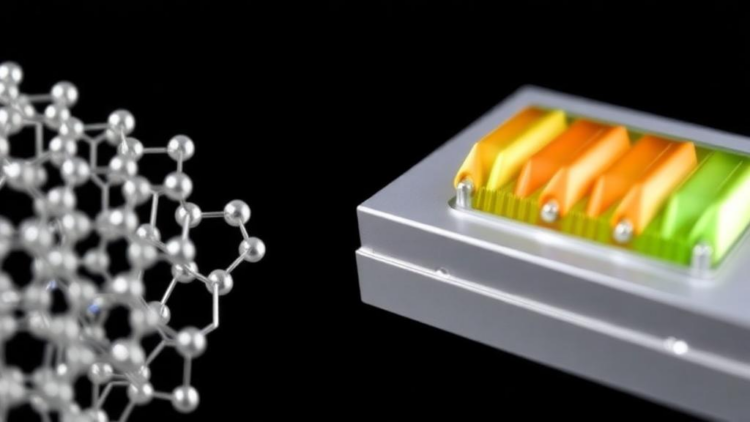
Supercapacitors sit at the heart of the modern energy transition, bridging the gap between batteries, which store large amounts of energy slowly, and conventional capacitors, which deliver bursts of power almost instantly. A comprehensive review published in Advances in Industrial and Engineering Chemistry by Meiying Cui, Meiying Pei, and Seok Kim of Pusan National University now maps the state of the art in one of the field’s most promising material families: metal–organic frameworks, or MOFs, and the inorganic composite electrodes built from them. The review, which has already drawn thousands of accesses and dozens of citations, argues that MOFs could underpin the next generation of supercapacitors, provided researchers can engineer their way around two stubborn weaknesses: poor electrical conductivity and limited electrochemical stability.
MOFs are a class of porous coordination polymers in which metal ions or clusters act as nodes and organic ligands serve as linkers, forming crystalline lattices riddled with pores. Unlike conventional solids such as activated carbon or zeolites, their architecture can be tuned almost at will by swapping ligands or changing the coordination geometry of the metal centers. The result is an extraordinary internal surface area and porosity that can host enormous numbers of electrochemically active sites, which is precisely what a supercapacitor electrode needs. In supercapacitors, energy is stored either as an electrical double layer at the electrode–electrolyte interface, as in carbon-based devices, or through fast Faradaic redox reactions near the electrode surface, as in pseudocapacitors built from metal oxides, hydroxides, and conducting polymers. MOFs, in principle, excel at both mechanisms.
The catch is that the very organic linkers that give MOFs their tunability also impede charge transport. Electrons struggle to move through the insulating organic framework, and many MOFs degrade under humid operating conditions, losing surface area and adsorption capacity over time. The review details how researchers have responded with a two-pronged strategy: first, combining MOFs with highly conductive partners such as graphene, MXenes, and metallic compounds to form hybrid composites; and second, using MOFs as sacrificial templates to derive porous carbons, metal oxides, sulfides, phosphides, and hydroxides that inherit the parent framework’s intricate architecture while shedding its conductivity problem. Freestanding MOF-based electrodes, grown directly as binder-free films rather than cast from slurries, add a further advantage by preventing particle aggregation and improving flexibility and longevity.
Synthesis is where the design begins. The review surveys the main routes to MOFs, including hydrothermal and solvothermal methods, in which ligands and metal salts are heated together in a sealed vessel for extended periods; electrochemical synthesis, which excludes unwanted anions from metal salts, allows lower reaction temperatures, and offers rapid, voltage-tunable production; slow diffusion; sonochemical synthesis at ambient temperature, which is energy-efficient and environmentally friendly; and mechanochemical approaches that grind reagents together without solvents. Structures can be modified before synthesis, in situ, or afterward through post-synthetic procedures, and strong Lewis-acid metal ions paired with oxygen- and nitrogen-donor ligands form the robust bonds that give the best electrochemical performance. The choice of route matters, because porosity, particle size, crystallinity, and surface area all directly govern how much charge an electrode can store and how fast it can deliver it.
Among pure MOFs, the zeolitic imidazolate frameworks known as ZIF-8 and ZIF-67 dominate the supercapacitor literature. ZIF-8 offers a three-dimensional interconnected pore network with thermal stability and a Brunauer–Emmett–Teller surface area of up to 1370 square meters per gram, while ZIF-67, built from cobalt atoms and nitrogen-containing ligands, can serve as a single precursor for both nanoporous carbon and cobalt oxide. In one highlighted study, an asymmetric supercapacitor using ZIF-67-derived materials achieved an energy density of 42.3 watt-hours per kilogram at a power density of 476 watts per kilogram. When ZIF-67 was carbonized at 800 degrees Celsius under an inert atmosphere and acid-washed to remove cobalt nanoparticles, the resulting graphitized carbon delivered a specific capacitance of 238 farads per gram at 20 millivolts per second in sulfuric acid electrolyte, outperforming the ZIF-8 analogue thanks to cobalt’s catalytic role in promoting graphitization.
Monometallic MOFs based on iron, cobalt, and nickel have also delivered striking results. Iron-based MOFs exploit the intrinsic redox activity of iron to push energy densities beyond 50 watt-hours per liter, and solvothermally grown Fe-MOF nanocomposites with vertically aligned structures reached a specific capacitance of 96 farads per gram while retaining 85.35 percent of their initial capacitance after 5000 cycles. Cobalt MOFs electrodeposited on nickel foam at a deposition voltage of minus 0.9 volts achieved 797.5 farads per gram at 1 ampere per gram and kept more than 60 percent of their capacitance over 10,000 cycles, while a hierarchically structured Co-MOF on nickel foam reached 13.6 farads per square centimeter. Nickel MOFs treated with hydrochloric acid reached a remarkable 2567.23 farads per gram at 2 amperes per gram with a low sheet resistance of 1.209 ohms, and retained 85.71 percent of capacitance after 5000 cycles.
The review’s most compelling numbers, however, come from multi-metal frameworks. Bimetallic ultrathin NiCo-MOF nanosheets studied by Wang and colleagues achieved 1202.1 farads per gram at 1 ampere per gram, beating conventional Ni-MOF at 840 and Co-MOF at 650.6 farads per gram, retained 89.5 percent of capacitance after 5000 cycles, and delivered an energy density of 49.4 watt-hours per kilogram in an asymmetric device. The dual metal sites create complementary synergistic effects that raise both conductivity and reactivity. Trimetallic designs go further still: a NiCoMn-MOF grown as flower-like hierarchical micropheres over 48 hours reached 1905 farads per gram at 1 ampere per gram, and binder-free Ni-Co-Mn MOFs with 3D-on-2D nanoarchitectures on nickel foam exhibited a battery-type areal capacity of 1311.4 microampere-hours per square centimeter with strong rate capability and cycling durability. Multiple metal species in diverse oxidation states act as electron mediators, accelerating charge transfer between linkers and metal centers.
Composites with carbon materials tackle the conductivity problem head-on. Graphene–MOF hybrids exploit graphene’s exceptional electron mobility: a copper-MOF/reduced graphene oxide electrode reached 867.09 farads per gram, far above standalone rGO at 284.41 or Cu-MOF at 135 farads per gram, with a device energy density of 30.56 watt-hours per kilogram and 90.07 percent retention after 10,000 cycles. In another design, a nickel MOF grown on reduced graphene oxide was split into two electrodes, one converted to nickel hydroxide and the other to nitrogen-doped porous carbon, yielding a hybrid supercapacitor with 59 watt-hours per kilogram at 872 watts per kilogram and 95 percent capacity retention after 10,000 cycles. MXene–MOF composites add a different trick: intercalating porous MOF layers between MXene sheets prevents the restacking and oxidation that normally degrade MXenes, while the conductive MXene framework shortens ion diffusion pathways. A Ti3C2Tx/Ni-MOF composite lifted specific capacitance from 114 and 224 farads per gram for the individual components to 536 farads per gram, with 95 percent retention over 5000 cycles.
MOF-derived materials form the second pillar of the strategy. Zinc-based frameworks such as ZIF-8 and MOF-5 are prized precursors because volatile zinc compounds evaporate during high-temperature carbonization, leaving behind heteroatom-doped porous carbons whose nitrogen, oxygen, sulfur, and phosphorus dopants improve electrolyte wettability and add pseudocapacitive sites. A zinc-BTC-derived nanowire carbon achieved 205 farads per gram, while a graphitic carbon nitride/zinc oxide nanocomposite with oxygen vacancies reached an extraordinary 3000 farads per gram at 3 amperes per gram. Direct pyrolysis in nitrogen or air converts MOFs into metal oxides such as Co3O4, NiCo2O4, and Cu-doped V2O5 with morphologies controlled by annealing conditions; hollow Co3O4 nanoboxes delivered 1324.5 farads per gram at 20 amperes per gram. Sulfides benefit from weaker metal–sulfur bonds and faster reaction kinetics than oxides, with NiCo sulfide nanosheet arrays reaching 3724 farads per gram at 1 ampere per gram. Phosphides, converted using sodium hypophosphite, produced a nickel phosphide/carbon composite at 2136.3 farads per gram, and layered double hydroxides formed by chemical etching preserve MOF porosity while enabling multimetal compositions with capacitances approaching 1900 farads per gram.
The review closes with a sober assessment of what stands between laboratory triumphs and commercial reality. Large-scale synthesis of MOF-based materials with consistent morphology, stability, and electrochemical performance remains unsolved, and optimizing composition while keeping costs and environmental impact low is essential. The authors identify four priority directions: high-performance energy storage materials, eco-friendly and cost-effective synthesis, further development of MOF-derived porous materials, and new composite architectures. Even so, the trajectory is unmistakable. From graphene-wrapped frameworks to trimetallic telluride heterostructures retaining over 90 percent of their capacity after 10,000 cycles, MOF-based electrodes are converging on the combination of high energy density, high power density, and long cycle life that grid storage, electric vehicles, and renewable energy systems demand. If scalable synthesis catches up with materials design, the porous crystals once dismissed as too fragile and too insulating may become the workhorses of sustainable high-capacity energy storage.
Subject of Research: Metal–organic framework-based composite and derived electrode materials for supercapacitor energy storage
Article Title: Recent advances in metal–organic framework-based inorganic composite electrodes for capacitors: a comprehensive review
Article References: Cui, M., Pei, M., & Kim, S. (2025). Recent advances in metal–organic framework-based inorganic composite electrodes for capacitors: a comprehensive review. Advances in Industrial and Engineering Chemistry, 1(1), Article 8. https://doi.org/10.1007/s44405-025-00009-w
Image Credits: AI Generated
DOI: 10.1007/s44405-025-00009-w
Keywords: metal–organic frameworks, supercapacitors, electrode materials, energy storage, graphene composites, MXenes, porous carbon, metal oxides, metal sulfides, metal phosphides, layered double hydroxides, pseudocapacitance
Cite Scienmag News
APA MLA Chicago
Bethany Barker. (October 3, 2026). Metal–Organic Framework Composites Push Supercapacitor Electrodes Toward New Limits. Scienmag. https://scienmag.com/metal-organic-framework-composites-push-supercapacitor-electrodes-toward-new-limits/
Bethany Barker. “Metal–Organic Framework Composites Push Supercapacitor Electrodes Toward New Limits.” Scienmag, 3 October 2026, https://scienmag.com/metal-organic-framework-composites-push-supercapacitor-electrodes-toward-new-limits/. Accessed 3 October 2026.
Bethany Barker. “Metal–Organic Framework Composites Push Supercapacitor Electrodes Toward New Limits.” Scienmag. October 3, 2026. https://scienmag.com/metal-organic-framework-composites-push-supercapacitor-electrodes-toward-new-limits/
Copy citation Download RIS
Tags: electrical conductivity improvementelectrochemical stability enhancementelectrode materialsenergy storageenergy storage materialsgraphene compositeshigh surface area energy storageinorganic composite electrodeslayered double hydroxidesmetal oxidesmetal phosphidesmetal sulfidesmetal-organic frameworksMetal–Organic Framework compositesMOF-based electrode engineeringMXenesnext-generation supercapacitorsporous carbonporous coordination polymersporous materials for energy transitionpseudocapacitancesupercapacitor electrodessupercapacitorstunable MOF architectures