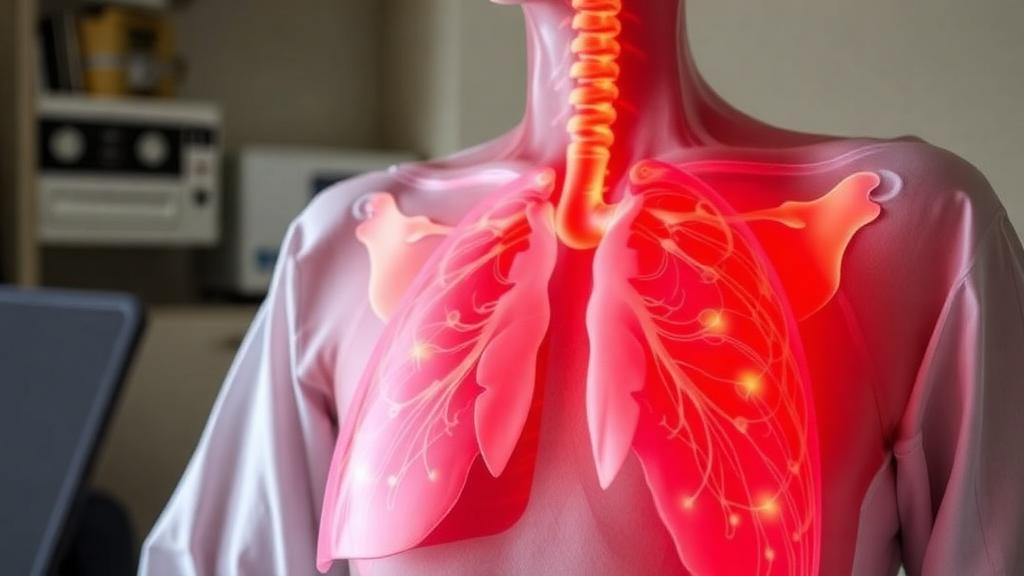
For most people, a bone-thinning diagnosis prompts a trip to the pharmacy and perhaps a new exercise habit. For someone who has just survived a lung transplant, it is one more burden stacked on top of an already punishing medical routine. New research from China suggests that this stacking effect may be quietly undermining the bone health of older lung transplant recipients after they leave the hospital, and the findings offer a rare, detailed look at why home-based osteoporosis care so often falls short in this vulnerable population.
The study, published in BMC Geriatrics by a team led by Yandie Wang and Fei Zeng of the Second Affiliated Hospital of Zhejiang University School of Medicine, took a qualitative approach to a problem that is usually measured only in bone mineral density scans. Osteoporosis is common after lung transplantation, driven by a convergence of factors: pre-transplant lung diseases such as chronic obstructive pulmonary disease and interstitial lung disease that already erode bone, the immunosuppressive drugs, particularly glucocorticoids, that patients must take for life, and the age-related bone loss that affects all older adults. The consequences are serious. Fragility fractures in transplant recipients are linked to frailty, disability, hospital readmission, and setbacks in functional recovery that can undo months of rehabilitation.
After discharge, the medical playbook for these patients is conceptually simple. They need to adhere to their medications, maintain adequate calcium intake and vitamin D supplementation, and perform weight-bearing and resistance exercises to slow further bone loss and reduce fracture risk. But knowing what should happen and understanding why it so often does not are two different questions, and it is the second question the researchers set out to answer. Between November 2025 and February 2026, they recruited twenty older lung transplant recipients with confirmed osteoporosis from a tertiary hospital in Zhejiang Province, using maximum variation purposive sampling to capture a range of experiences rather than a narrow, average patient.
The methodological backbone of the study was the Integrated Theory of Health Behavior Change, a framework that organizes health behavior into three domains: knowledge and beliefs, self-regulation skills and abilities, and social facilitation. The researchers used this theory to structure their semi-structured interviews and then applied directed content analysis to the transcripts, continuing recruitment until they reached code and meaning saturation, the point at which new interviews stopped producing new themes. Reporting followed the Consolidated Criteria for Reporting Qualitative Research checklist, a standard that helps readers judge the rigor of qualitative work. What emerged was a map of seven themes spread across the three domains, and together they paint a picture of self-management as a fragile system that can fail at multiple points.
The first domain, knowledge and beliefs, revealed a striking perceptual problem: osteoporosis was difficult for these patients to recognize and easy to deprioritize. Unlike rejection episodes or lung function decline, bone loss is silent. There is no breathlessness, no cough, no acute crisis to signal that the skeleton is weakening. In the hierarchy of threats that a transplant recipient must monitor, the invisible one loses. This perceptual invisibility meant that osteoporosis care competed poorly for attention against the demanding regimen of immunosuppression monitoring, infection vigilance, and pulmonary rehabilitation that dominates post-transplant life.
Compounding the priority problem, the researchers found that low confidence and negative self-appraisal constrained self-management. Patients who doubted their own capacity to manage yet another chronic condition tended to disengage, a pattern consistent with the self-efficacy literature across chronic disease. Yet the same domain contained a powerful counterweight: a sense of responsibility for preserving the benefits of the transplant. For many recipients, the gift of new lungs carried a moral weight, a duty to protect the outcome that donors and surgical teams had made possible. That sense of stewardship motivated them to persist with bone-protecting behaviors even when motivation from other sources flagged. It is a psychologically interesting finding, suggesting that framing osteoporosis care as part of protecting the transplant itself, rather than as a separate health task, could harness an existing motivational engine.
The second domain, self-regulation skills and abilities, exposed a structural bottleneck that the authors describe as task overload and limited capacity. Older transplant recipients are not managing one condition; they are managing a portfolio of them, each with its own medications, monitoring requirements, dietary considerations, and exercise prescriptions. When the total self-management workload exceeds a patient’s cognitive and physical capacity, something gives, and bone health, being silent and slow-moving, is a likely candidate. Against this, the study identified a genuine facilitator: patients who succeeded in organizing and adapting their osteoporosis self-management into everyday life, weaving calcium intake, supplements, and weight-bearing activity into existing routines rather than treating them as separate tasks, were better able to sustain the behaviors over time. The practical implication is that integration, not addition, is the design principle that works.
The third domain, social facilitation, may be the most actionable. The researchers found that multiple constraints in home-based support and resources hindered self-management. Older recipients living at home often lacked family members available or able to help, faced financial or logistical barriers to accessing care, and had limited contact with health professionals once the intensive post-transplant follow-up period receded. In contrast, multilevel support, spanning family caregivers, community resources, and accessible professional follow-up, facilitated sustained self-management. The word multilevel matters here: no single layer of support was sufficient on its own, but patients embedded in overlapping networks of practical help and professional oversight managed to maintain the regimen.
Taken together, the findings point to a conclusion that challenges the standard post-discharge model. The authors argue that support for these patients should extend beyond knowledge-based education, which assumes the problem is information, and instead combine coordinated, continuous, and tailored home-based guidance with family caregiver involvement and accessible professional follow-up. Management plans, they suggest, should be aligned with each recipient’s actual capacities and family caregiving circumstances, and osteoporosis management should be integrated into the established post-transplant routines that patients already perform reliably. In other words, the fix is not another leaflet; it is a redesign of how bone care is delivered so that it rides on the infrastructure patients already use.
The study has the inherent limits of qualitative work conducted at a single center in one Chinese province with twenty participants, and its themes describe experiences rather than quantify outcomes. But its value lies precisely in the granularity that only interviews can provide. Quantitative studies can tell us that adherence to bone-protecting regimens is poor in transplant recipients; this study explains the mechanics of that failure, from the invisibility of bone loss to the arithmetic of task overload to the absence of support at home. As transplant medicine continues to extend survival, the frontier is shifting from keeping patients alive to keeping them functional, and the skeleton, it turns out, is part of that frontier. For the growing population of older lung transplant recipients, the difference between a fragility fracture and continued independence may depend not on new drugs, but on whether the health system learns to build bone care into the fabric of daily life rather than leaving it as one more silent task on an already impossible list.
Subject of Research: Home-based osteoporosis self-management in older lung transplant recipients
Article Title: Barriers and facilitators to home-based osteoporosis self-management among older lung transplant recipients: a qualitative study
Article References: Wang, Y., Xie, M., Hao, F., Liang, J., Gu, P., Xu, A., & Zeng, F. (2026). Barriers and facilitators to home-based osteoporosis self-management among older lung transplant recipients: a qualitative study. BMC Geriatrics. https://doi.org/10.1186/s12877-026-08445-z
Image Credits: AI Generated
DOI: 10.1186/s12877-026-08445-z
Keywords: lung transplantation, osteoporosis, older adults, self-management, qualitative research, bone health, fracture risk, health behavior, caregiver support, post-transplant care, self-efficacy, BMC Geriatrics
News Source: Ophelia Keating. (October 6, 2026). Why Older Lung Transplant Patients Struggle to Protect Their Bones at Home. Scienmag.