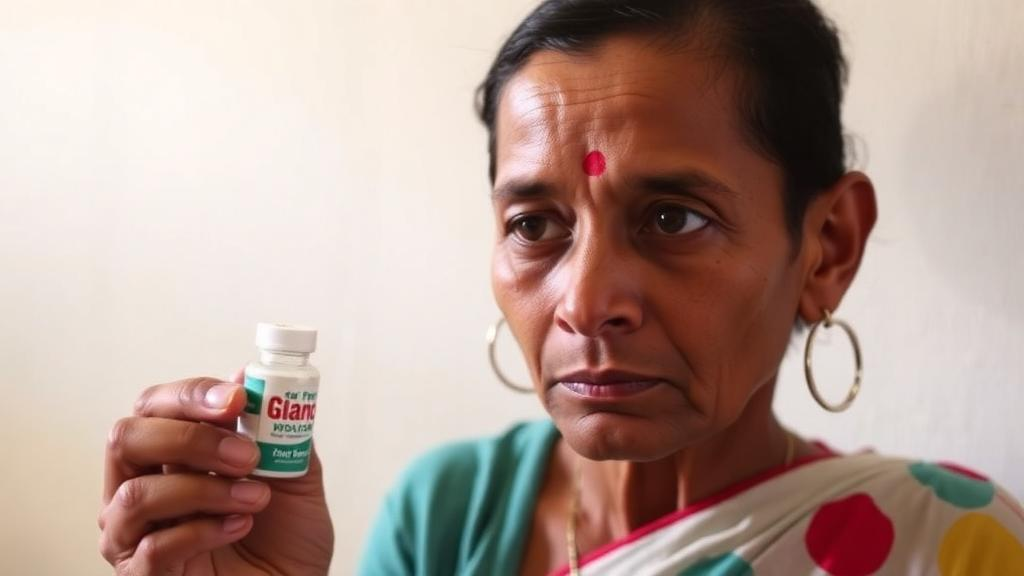
Glaucoma is often called the silent thief of sight, and for good reason. The disease damages the optic nerve gradually, usually without pain or obvious symptoms, until irreversible vision loss has already occurred. Unlike a bacterial infection that can be cured with a short course of antibiotics, glaucoma is a chronic condition that demands lifelong management, most commonly through daily topical medications that lower the pressure inside the eye. That lifelong requirement is precisely where a quiet but dangerous problem emerges: when patients cannot afford their drops, they ration them, delay refills, or abandon them altogether. A new hospital-based study from Sudurpaschim Province in far-western Nepal now offers a rare, quantified look at this phenomenon in one of the country’s most resource-limited regions, and its findings carry warnings that extend well beyond a single eye hospital.
The research, published in BMC Health Services Research, was conducted by a team led by Ravi Dhar Bhandari of Dhangadhi Netralaya Eye Hospital together with colleagues from the Tilganga Institute of Ophthalmology in Kathmandu. Their focus was a specific behavior known in the health services literature as cost-related non-adherence, abbreviated CRNA. The concept is deceptively simple: a patient is considered cost-related non-adherent if, within a defined period, they engaged in at least one cost-saving behavior related to their medication. That might mean skipping doses to make a bottle last longer, taking drops less frequently than prescribed, delaying a refill until money becomes available, or using a cheaper substitute without medical guidance. Each of these behaviors may seem minor in isolation, but in a disease where sustained intraocular pressure control is the only proven way to preserve vision, even intermittent lapses can translate into permanent nerve damage.
To measure how often this happens, the researchers designed a cross-sectional study running from 1 October 2023 to 31 March 2024 at Dhangadhi Netralaya, a major eye hospital serving Sudurpaschim Province. They enrolled consecutive patients aged eighteen or older who had been receiving topical glaucoma medication for at least six months, a threshold chosen to ensure that participants had enough experience with their treatment regimen to report on it meaningfully. Data came from two sources: a structured questionnaire capturing sociodemographic information and medication-related behaviors, and a review of medical records for clinical details such as diagnosis, visual acuity, and the number of medication bottles prescribed. The study received ethics approval from the Ethical Review Committee of the Nepal Health Research Council under protocol reference number 54, and every participant provided written informed consent before enrollment, in accordance with the Declaration of Helsinki.
The final cohort comprised 132 patients, of whom 60.6 percent were male, with a mean age of 60.1 years and a standard deviation of 12.6 years. Primary open-angle glaucoma, the most common form of the disease worldwide, accounted for 65.9 percent of diagnoses, with angle-closure variants and secondary glaucomas making up the remainder. The burden of visual loss in this group was striking even before adherence was considered: 53.0 percent of participants already had some degree of visual impairment, and 15.2 percent were blind. These figures underscore a broader reality of glaucoma care in low-resource settings, where patients frequently present late in the disease course, when much of the damage cannot be undone. Against this backdrop, any additional barrier to effective treatment, including cost, becomes a matter of profound consequence.
The headline finding was that 14 of the 132 participants reported at least one cost-saving behavior with their glaucoma medications in the preceding six months, yielding a prevalence of cost-related non-adherence of 10.6 percent, with a 95 percent confidence interval ranging from 6.1 to 17.5 percent. In other words, roughly one in ten patients in this cohort was compromising their glaucoma therapy for financial reasons. The authors are careful to frame this as a conservative estimate for a single hospital population, but the proportion is clinically meaningful: every one of those ten percent represents a person whose optic nerve is exposed to pressure fluctuations that could accelerate vision loss. The confidence interval also indicates genuine statistical uncertainty inherent in a sample of this size, a limitation the researchers acknowledge by presenting the estimate transparently rather than overstating its precision.
Perhaps the most technically interesting part of the study lies in its analysis of which patients were most at risk. The team first performed bivariate analyses examining the raw associations between cost-related non-adherence and a range of potential predictors, then moved to multivariable logistic regression to adjust for confounding variables and isolate independent risk factors. Three factors emerged with statistical significance at the conventional threshold of a p-value below 0.05. Patients with systemic comorbidities, meaning coexisting conditions such as diabetes, hypertension, or other chronic illnesses requiring their own treatment expenses, had dramatically higher odds of cost-related non-adherence, with an adjusted odds ratio of 23.05 and a 95 percent confidence interval spanning 2.32 to 374.36. The very width of that interval reflects the small number of affected patients, but the direction and magnitude of the association tell a coherent story: households juggling multiple chronic diseases face compounding out-of-pocket costs, and when budgets are stretched, eye drops that produce no felt benefit are among the first expenses to be cut.
The second independent predictor was the number of glaucoma medication bottles prescribed. Most participants, 62.9 percent, were prescribed a single bottle, while 28.8 percent were prescribed two and 8.3 percent were prescribed three. Each additional bottle multiplied both the direct cost and the logistical complexity of the regimen, and patients on multi-bottle therapy had an adjusted odds ratio of 6.76 for cost-related non-adherence, with a confidence interval of 2.31 to 25.73. This finding aligns with a well-established principle in adherence research: regimen complexity is one of the most reliable predictors of non-adherence across virtually every chronic disease, from HIV to hypertension to glaucoma. Every additional medication adds a set of instructions, a schedule, and a price tag, and in a setting where patients typically pay out of pocket, the financial gradient is steep.
The third finding was more counterintuitive. Male sex was associated with significantly lower odds of cost-related non-adherence, with an adjusted odds ratio of 0.11 and a confidence interval of 0.02 to 0.55. Given that men made up the majority of the cohort, this suggests that women in this population face disproportionate financial barriers to sustaining their glaucoma therapy. The authors do not over-interpret this result, but it resonates with a substantial body of literature from South Asia documenting gender inequities in healthcare access and expenditure, where women’s health needs are often deprioritized within household spending decisions. Whether the mechanism in Sudurpaschim Province reflects income disparities, decision-making dynamics, or other factors is a question the study raises but cannot fully resolve, and it is precisely the kind of question that deserves targeted follow-up research.
It is worth pausing on why these findings matter beyond Nepal. Glaucoma is the leading cause of irreversible blindness globally, and the World Health Organization has projected that the burden of blinding eye disease will grow as populations age. In high-income countries, cost-related non-adherence to glaucoma drops is also documented, but insurance coverage, generic options, and pharmaceutical assistance programs provide buffers that simply do not exist in many low- and middle-income settings. In far-western Nepal, where geographic isolation, limited transportation infrastructure, and low household incomes compound the challenge, the out-of-pocket cost of a bottle of topical medication can represent a substantial fraction of a family’s monthly budget. The study’s finding that more than half of enrolled patients already had visual impairment, and one in seven was blind, paints a picture of a population arriving at care late and then struggling to sustain it.
The authors conclude with a set of practical implications that follow directly from their data. Because cost-related non-adherence affected approximately one in ten patients, and because the strongest risk factors were systemic comorbidities and multi-bottle regimens, interventions can be targeted with reasonable precision. Strategies to reduce out-of-pocket costs, whether through subsidized medication supply, inclusion of glaucoma drops in essential drug programs, or tiered pricing at charitable eye hospitals, would address the financial barrier at its root. Simplifying treatment regimens where clinically feasible, for example by favoring combination drops that consolidate multiple medications into a single bottle, would simultaneously lower cost and reduce complexity. Clinicians could also screen for cost-related non-adherence proactively, asking patients directly whether they have stretched or skipped drops for financial reasons, since patients rarely volunteer this information unprompted. As a modifiable barrier, medication cost stands apart from demographic risk factors that cannot be changed, which is what makes this modest study of 132 patients in far-western Nepal a small but genuinely actionable piece of the global effort to prevent avoidable blindness.
Subject of Research: Cost-related non-adherence to topical glaucoma medication among patients in far-western Nepal
Article Title: Cost-related non-adherence to glaucoma medical therapy: a hospital based study in Sudurpaschim Province of Nepal
Article References: Bhandari, R. D., Bist, J., Poudel, M., Pant, O. P., & Pant, B. P. (2026). Cost-related non-adherence to glaucoma medical therapy: a hospital based study in Sudurpaschim Province of Nepal. BMC Health Services Research. https://doi.org/10.1186/s12913-026-15788-1
Image Credits: AI Generated
DOI: 10.1186/s12913-026-15788-1
Keywords: glaucoma, cost-related non-adherence, medication adherence, Nepal, eye health, ophthalmology, health services research, out-of-pocket costs, visual impairment, primary open-angle glaucoma, treatment regimen complexity, low-resource settings
News Source: Ophelia Keating. (October 6, 2026). When Eye Drops Cost Too Much: One in Ten Glaucoma Patients in Nepal Skips Medication to Save Money. Scienmag.