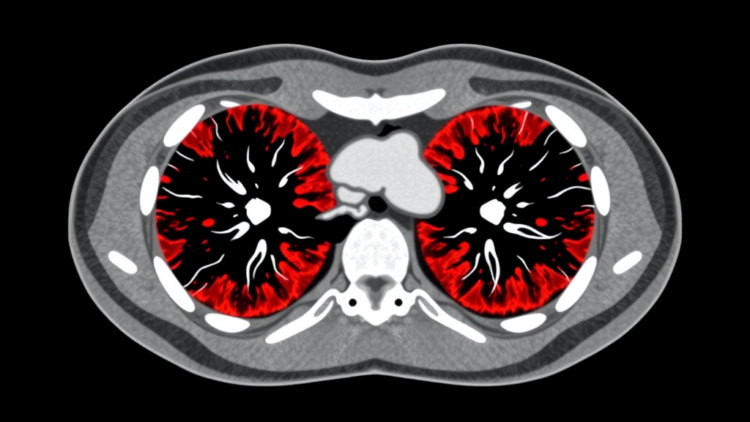
Just weeks after finishing treatment for kidney or bowel cancer, many patients believe they are doing everything right. They walk, they garden, they hit their step goals. Yet a new Dutch study suggests that a substantial share of these survivors are spending nearly half of every day completely still — and that the patients most at risk of an ultra-sedentary lifestyle are not always who clinicians might expect. The research, published in the Journal of Cancer Survivorship, is among the first to map the full 24-hour movement patterns of people recovering from localised renal cell carcinoma and colorectal cancer using objective accelerometer data rather than self-reported questionnaires.
The study drew on two long-running Dutch cohorts. The ReLife study enrolled 368 patients with newly diagnosed, localised renal cell carcinoma between 2018 and 2021, while the EnCoRe study followed 504 patients with stages I to III colorectal cancer recruited from 2012 onwards. From these cohorts, 326 patients with renal cell carcinoma and 358 with colorectal cancer produced valid accelerometer data. Each participant wore a small, validated activity monitor — an activPAL in the ReLife study and a MOX accelerometer in EnCoRe — strapped continuously to the front of the thigh for seven consecutive days. Because these devices sit directly on the leg, they can distinguish sitting and reclining from standing with far greater accuracy than wrist-worn trackers or memory-based questionnaires, which research has shown tend to overestimate activity and underestimate sitting time.
The timing of the measurements is what makes the findings clinically striking. Patients with kidney cancer were assessed at a median of twelve weeks after surgery, and patients with colorectal cancer at roughly six to eight weeks after treatment — a window when recovery habits are still being formed and when clinicians have a genuine opportunity to intervene. Sedentary behaviour was defined as any waking activity expending 1.5 metabolic equivalents or less while sitting or reclining, while physical activity was captured across light-intensity and moderate-to-vigorous categories. On average, patients with kidney cancer spent 10.1 hours per day sedentary, of which 5.4 hours accumulated in prolonged bouts, alongside 42 minutes of moderate-to-vigorous activity. Patients with colorectal cancer fared worse still, averaging 10.7 sedentary hours per day and just 90 minutes of total physical activity.
Rather than treating sitting and moving as separate variables, the researchers used a statistical technique called latent profile analysis, which searches for hidden subgroups of people who share similar patterns across multiple behaviours simultaneously. This matters because the two behaviours compete for the same 24 hours: every additional hour of sitting necessarily displaces an hour that could have been spent standing, walking, or exercising. The analysis considered sedentary time, prolonged sedentary bouts, standing time, sedentary breaks, and various measures of physical activity, standardising each indicator before testing models containing one to seven profiles. Fit statistics including the Akaike and Bayesian Information Criteria pointed consistently to a three-profile solution in both cancer populations, with entropy values of 0.84 indicating good separation between the groups and average membership probabilities exceeding 90 percent.
The three profiles that emerged were labelled the most sedentary, the average, and the highly active. In the kidney cancer group, 28 percent of patients fell into the most sedentary profile, spending an average of 11.9 hours per day sitting or reclining — 7.6 of those hours in unbroken stretches — while still managing 72 minutes of daily physical activity. In the colorectal cancer group, 16 percent belonged to the most sedentary profile, logging a remarkable 13.1 sedentary hours per day, 9.1 of them in prolonged bouts, against only 44 minutes of total physical activity. At the other extreme, the highly active kidney cancer patients spent 8.1 hours sedentary but accumulated 61 minutes of moderate-to-vigorous activity and 5.2 hours of standing daily, while their colorectal counterparts managed 125 minutes of physical activity and 4.1 hours standing against 9.0 sedentary hours.
One of the most provocative insights is that high sitting and high moving can coexist in the same person. Even patients in the most sedentary profiles engaged in some daily physical activity, meaning it is entirely possible to meet the standard recommendation of 150 minutes of weekly moderate-to-vigorous exercise while still spending the majority of waking life motionless. More than three quarters of the kidney cancer patients in the study met the physical activity guideline, yet average sedentary time in both groups exceeded the 9.1 hours per day reported for the general Dutch population. For cancer survivors, whose long-term health depends on both sides of the energy balance, this dissociation between exercise and sedentary time represents a blind spot in conventional lifestyle advice.
The correlates of profile membership add another layer of complexity. Using multinomial logistic regression that adjusted for all factors simultaneously, the researchers found that men with kidney cancer were more than twice as likely as women to belong to the most sedentary profile, with an odds ratio of 2.18. Men with colorectal cancer, conversely, were less likely to be in the highly active group. Higher educational attainment was associated with a lower likelihood of belonging to the highly active profile in both populations — a counterintuitive finding that contrasts with some previous studies and may reflect differences in occupational activity that the analysis could not fully capture. Higher body mass index was consistently linked to a lower chance of being highly active, with each additional kilogram per square metre reducing the odds by roughly 8 to 9 percent in both groups.
Two findings in particular challenge intuition. First, patients with kidney cancer who reported better physical functioning were less likely to sit all day, which fits the idea that a minimum functional capacity is needed to break up sitting time. Second, and more surprisingly, higher fatigue scores were associated with a lower likelihood of belonging to the most sedentary profile in both cancer groups. The authors caution that these effect sizes were small and may not be clinically meaningful, and they note that the relationship between fatigue and activity is bidirectional: fatigue is a well-known barrier to exercise, yet exercise is one of the most effective treatments for cancer-related fatigue. Former smokers with colorectal cancer were nearly twice as likely as never smokers to be highly active, a result the researchers describe as unexpected given that smoking has generally been linked to inactivity in prior work.
The study has honest limitations. Response rates were around 44 to 45 percent in both cohorts, and the researchers acknowledge that health-conscious individuals are more likely to volunteer for such studies — which helps explain why physical activity levels in the sample were relatively high compared with other cancer survivor populations. The cross-sectional design means no conclusions about cause and effect can be drawn, and because the analysis was exploratory without adjustment for multiple testing, some associations may be false positives that require external validation. Age, living situation, employment, comorbidities, alcohol consumption, tumour stage, and treatment details showed no statistically significant associations with profile membership.
Nevertheless, the implications for survivorship care are clear. Activity patterns after cancer treatment are heterogeneous, and the same three-profile structure appeared in two very different cancer populations even though the absolute hours of sitting and moving differed between them. Men, patients with higher education, and those with higher body mass index emerged as consistent candidates for targeted support, while the coexistence of high sitting with adequate exercise suggests that interventions should address sedentary behaviour directly rather than assuming that exercise prescriptions alone will solve the problem. The recent CHALLENGE trial, which showed that a structured three-year exercise programme significantly improved disease-free survival in patients with colon cancer, has already demonstrated how powerful movement can be after treatment. This new study adds a crucial nuance: to fully realise that potential, clinicians may need to look not just at how much their patients move, but at how much of the day they never leave the chair.
Subject of Research: Physical activity and sedentary behaviour profiles in patients shortly after treatment for localised renal cell carcinoma and colorectal cancer
Article Title: Activity profiles and their correlates in patients with localised renal and colorectal cancer shortly after treatment: a cross-sectional analysis
Article References: Siffels, A., Bours, M. J. L., van Roekel, E. H., Weijenberg, M. P., Sedelaar, J. P. M., Breukink, S. O., Keulen, E. T. P., Janssen-Heijnen, M., Frenken, K. G., Aben, K. K. H., Maurits, J. S. F., Kiemeney, L. A. L. M., Buffart, L. M., & Vrieling, A. (2026). Activity profiles and their correlates in patients with localised renal and colorectal cancer shortly after treatment: a cross-sectional analysis. Journal of Cancer Survivorship. https://doi.org/10.1007/s11764-026-02106-1
Image Credits: AI Generated
DOI: 10.1007/s11764-026-02106-1
Keywords: renal cell carcinoma, colorectal cancer, cancer survivorship, physical activity, sedentary behaviour, accelerometers, latent profile analysis, fatigue, body mass index, health-related quality of life, lifestyle interventions, Activity
Cite Scienmag News
APA MLA Chicago
Nathaniel Bowman. (September 25, 2026). Who Sits All Day After Cancer Treatment? New Study Reveals Distinct Activity Profiles. Scienmag. https://scienmag.com/who-sits-all-day-after-cancer-treatment-new-study-reveals-distinct-activity-profiles/
Nathaniel Bowman. “Who Sits All Day After Cancer Treatment? New Study Reveals Distinct Activity Profiles.” Scienmag, 25 September 2026, https://scienmag.com/who-sits-all-day-after-cancer-treatment-new-study-reveals-distinct-activity-profiles/. Accessed 25 September 2026.
Nathaniel Bowman. “Who Sits All Day After Cancer Treatment? New Study Reveals Distinct Activity Profiles.” Scienmag. September 25, 2026. https://scienmag.com/who-sits-all-day-after-cancer-treatment-new-study-reveals-distinct-activity-profiles/
Copy citation Download RIS
Tags: 24-hour movement profile of cancer survivorsaccelerometer-based movement tracking in cancer patientsaccelerometersActivityactivity monitoring technology in cancer survivorship studiesbehavioral patterns of cancer survivors using accelerometersbody mass indexcancer survivor activity patternscancer survivorshipColorectal cancerfatiguehealth-related quality of lifeidentifying at-risk populations for inactivity post-cancer treatmentimpact of prolonged sitting on cancer recovery outcomesinfluencelatent profile analysislifestyle interventionsobjective measurement of daily activity in cancer rehabilitationPhysical activitypost-treatment physical activity in renal and colorectal cancer survivorsrenal cell carcinomasedentary behavior after cancer treatmentsedentary behaviourultra-sedentary lifestyle risks in cancer recovery