• HOME
  • NEWS
  • EXPLORE
    • CAREER
      • Companies
      • Jobs
    • EVENTS
    • iGEM
      • News
      • Team
    • PHOTOS
    • VIDEO
    • WIKI
  • BLOG
  • COMMUNITY
    • FACEBOOK
    • INSTAGRAM
    • TWITTER
Sunday, May 17, 2026
BIOENGINEER.ORG
No Result
View All Result
  • Login
  • HOME
  • NEWS
  • EXPLORE
    • CAREER
      • Companies
      • Jobs
        • Lecturer
        • PhD Studentship
        • Postdoc
        • Research Assistant
    • EVENTS
    • iGEM
      • News
      • Team
    • PHOTOS
    • VIDEO
    • WIKI
  • BLOG
  • COMMUNITY
    • FACEBOOK
    • INSTAGRAM
    • TWITTER
  • HOME
  • NEWS
  • EXPLORE
    • CAREER
      • Companies
      • Jobs
        • Lecturer
        • PhD Studentship
        • Postdoc
        • Research Assistant
    • EVENTS
    • iGEM
      • News
      • Team
    • PHOTOS
    • VIDEO
    • WIKI
  • BLOG
  • COMMUNITY
    • FACEBOOK
    • INSTAGRAM
    • TWITTER
No Result
View All Result
Bioengineer.org
No Result
View All Result
Home NEWS Science News Health

Which role does the brain play in prosocial behavior?

Bioengineer by Bioengineer
May 25, 2018
in Health
Reading Time: 2 mins read
0
Share on FacebookShare on TwitterShare on LinkedinShare on RedditShare on Telegram

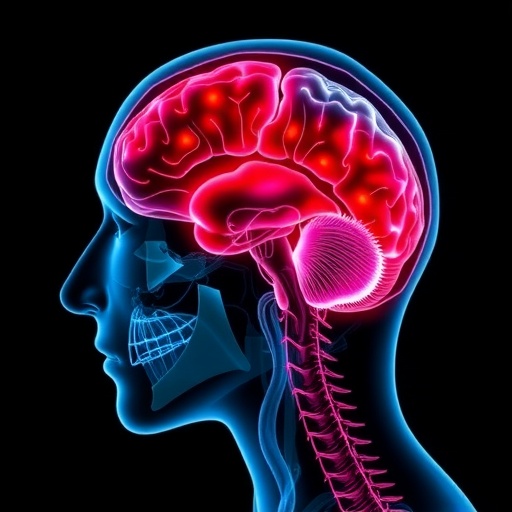
Helping other people in need is a foundation of our society. It is intuitive to believe that we help others because we empathically share their pain. Neuroscience shows that when we see somebody in pain our brain activates tactile and emotional regions as if we ourselves were in pain. A study from Selene Gallo (Netherlands Institute for Neuroscience, KNAW) investigated whether altering activity in these tactile brain regions while witnessing the pain of others would alter people's willingness to help. The results, published on 08 May 2018 in eLife, are of great importance to understand our social human nature and to find treatments for pathologies, like psychopath individuals.

To answer the question, researchers from the Social Brain Lab, led by Valeria Gazzola and Christian Keysers (Netherlands Institute for Neuroscience, KNAW), gave participants the opportunity to reduce the pain of a victim receiving a swat on her hand. They could reduce the pain by giving up money they could have otherwise taken home while their tactile brain activity was measured and altered.

The researchers used electroencephalography, a method to record electrical activity of the brain, in healthy human participants. With this method, they found that the activity in tactile cortices increased when participants increased their donation. Later they altered brain activity by using neuromodulation. Normally participants gave more money when the victim experienced more pain. But when interfering with tactile activity two related phenomena were observed: (a) people became less able to perceive in how much pain the other person was and (b) they no longer adapted their donations as appropriately to the needs of the other.

An important social function for the tactile cortices

The results suggest that our tactile cortices, primarily evolved to perceive touch and pain on our body, have an important social function. They contribute to prosocial decision-making by helping to transform the sight of bodily harm into an accurate feeling for how much pain the victim experiences. This feeling is necessary to adapt our helping to the needs of others.

Providing a link between empathy for pain and prosocial behavior at the neural level is crucial to understand our social human nature and target pharmacological approaches to treat pathologies in which these mechanisms dysfunction, for example in psychopath individual or in children with callous unemotional traits.

###

Media Contact

Selene Gallo
[email protected]
0031-205-661-717

http://www.nin.knaw.nl/

https://nin.nl/which-role-does-the-brain-play-in-prosocial-behavior/

Related Journal Article

http://dx.doi.org/10.7554/eLife.32740
Share12Tweet8Share2ShareShareShare2

Related Posts

Intrinsic Capacity, Resilience, Frailty in Stroke Recovery

May 17, 2026

Physical Resilience Linked to Aging Views in Chinese Elders

May 17, 2026

Tau T205 Phosphorylation Controls Memory and Engrams

May 17, 2026

Phocaeicola dorei Eases Liver Fibrosis via Efferocytosis

May 17, 2026
Please login to join discussion

POPULAR NEWS

  • Research Indicates Potential Connection Between Prenatal Medication Exposure and Elevated Autism Risk

    844 shares
    Share 338 Tweet 211
  • New Study Reveals Plants Can Detect the Sound of Rain

    730 shares
    Share 291 Tweet 182
  • Salmonella Haem Blocks Macrophages, Boosts Infection

    62 shares
    Share 25 Tweet 16
  • Breastmilk Balances E. coli and Beneficial Bacteria in Infant Gut Microbiomes

    58 shares
    Share 23 Tweet 15

About

We bring you the latest biotechnology news from best research centers and universities around the world. Check our website.

Follow us

Recent News

Intrinsic Capacity, Resilience, Frailty in Stroke Recovery

Seed Traits Key to Rare vs. Common Astragalus

Noncanonical Sulfur Metabolism, Immunity Altered in Down Syndrome

Subscribe to Blog via Email

Success! An email was just sent to confirm your subscription. Please find the email now and click 'Confirm' to start subscribing.

Join 82 other subscribers
  • Contact Us

Bioengineer.org © Copyright 2023 All Rights Reserved.

Welcome Back!

Login to your account below

Forgotten Password?

Retrieve your password

Please enter your username or email address to reset your password.

Log In
No Result
View All Result
  • Homepages
    • Home Page 1
    • Home Page 2
  • News
  • National
  • Business
  • Health
  • Lifestyle
  • Science

Bioengineer.org © Copyright 2023 All Rights Reserved.