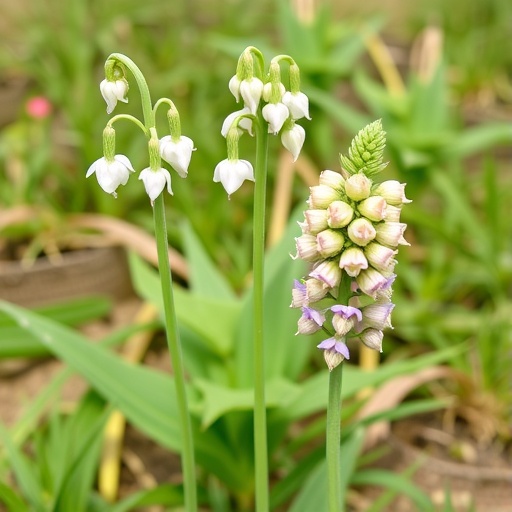
In the intricate world of botany, the fine line that separates rare plant species from their common counterparts has long challenged researchers, especially within the vast and diverse genus Astragalus, a member of the Fabaceae family renowned for its ecological and medicinal significance. In a groundbreaking study published recently, scientists Rahimi, Tahmasebi, Asadi, and colleagues have ventured into uncharted territory by exploring the crucial role seed characteristics play in the differentiation of these plant species. Their findings illuminate new pathways for conservation efforts and deepen our understanding of plant biodiversity dynamics in rapidly changing ecosystems.
The genus Astragalus, colloquially known as milkvetches, comprises thousands of species scattered across various continents, many of which display remarkable adaptability to contrasting environmental conditions. However, this adaptability masks an underlying complexity—overlapping morphological traits in above-ground plant structures frequently obscure distinctions between species that are either abundant or on the verge of extinction. The researchers focused on seed morphology, a feature historically underutilized yet inherently stable and genetically informative, to address this taxonomic dilemma.
Fundamental to their approach was a comprehensive analysis of seed features including size, surface texture, shape, and weight among a spectrum of Astragalus species known for their different levels of abundance in natural habitats. Utilizing high-resolution imaging techniques and morphometric software, the team meticulously cataloged thousands of seed samples, ensuring the statistical power necessary to draw meaningful comparisons. This methodological rigor allowed the detection of subtle but consistent variations that correlate strongly with species rarity or commonness.
One of the most revelatory observations from the study was the differentiation in seed coat surface patterns. Rare species tended to exhibit more intricate and finely reticulated textures compared to their common relatives whose seed coats were comparatively smoother and less elaborately sculpted. This disparity suggests evolutionary adaptations that may influence seed dispersal mechanisms or germination success rates, factors that directly impact species propagation and survival in heterogeneous landscapes.
In addition to surface texture, the scientists noted significant divergences in seed size. Rare Astragalus species commonly produced smaller seeds with higher relative mass, a combination that might confer selective advantages in nutrient allocation and dormancy strategies. Conversely, common species often demonstrated larger but lighter seeds, likely optimizing for dispersal efficiency and competitive colonization. Such trade-offs underscore the complex evolutionary pressures that shape reproductive traits in plants.
The implications of these seed trait distinctions extend beyond mere taxonomy. Understanding seed morphology could enhance predictive models of population dynamics by revealing potential bottlenecks in recruitment stages unique to rare species. Conservation biologists can leverage this knowledge to tailor habitat restoration efforts, for example by replicating optimal seed conditions or targeting seed banks, thereby improving the efficacy of preservation programs aimed at preventing plant extinctions.
Moreover, the study’s findings have notable applications in combating illegal harvesting and trade of endangered plants. Seed morphology, now validated as a reliable identifier, might serve as a forensic tool for ecological authorities to authenticate plant material origin and curb biodiversity exploitation. This adds a practical dimension to the research, transforming fundamental botanical insights into actionable conservation strategies.
The research team also ventured into genetic correlations, investigating whether genetic markers align with morphometric seed data. Early evidence points to a tight linkage, suggesting that seed characteristics are not merely phenotypic responses to environment but are genetically entrenched traits. This genomic underpinning may facilitate the development of rapid DNA-based diagnostics complementing morphometric analyses, streamlining species identification in field settings.
Intriguingly, the phenomenon observed in Astragalus could be extrapolated to other plant genera exhibiting similar taxonomic ambiguities. The study champions a paradigm shift in plant identification protocols, advocating for integrative approaches that incorporate seed morphology alongside traditional vegetative and floral characteristics. Such multidimensional strategies promise enhanced accuracy and greater resolution in distinguishing closely related taxa.
Beyond academic circles, this research sparks wider public interest in plant science by highlighting the hidden intricacies encoded within seeds—the tiny but potent vessels of life. Communicating these discoveries through science media has the potential to inspire conservation awareness and foster appreciation of biodiversity at a granular and ultimately critical level.
Future avenues proposed by the researchers include expanding seed characteristic analyses under varying environmental stressors to assess phenotypic plasticity. They envision long-term ecological monitoring that correlates seed trait shifts with climate change trajectories, thereby enriching predictive frameworks for species adaptation and resilience.
In an era marked by unprecedented biodiversity loss, pragmatic advances such as this seed-focused research are vital. They offer novel entry points into safeguarding our planet’s botanical wealth by unearthing the subtle, often overlooked traits that distinguish vulnerable species and inform their preservation.
The study exemplifies interdisciplinary collaboration, blending taxonomy, ecology, genetics, and advanced imaging technologies. It underscores how integrating traditional botanical expertise with modern analytical tools can decode nature’s complexity and address urgent environmental challenges.
By focusing on Astragalus, a genus with direct medicinal and ecological importance, the research aligns scientific inquiry with broader societal benefits. Ensuring the survival of rare species within this group holds promise not only for ecosystem stability but also for retaining genetic resources pivotal to pharmacology and agriculture.
Ultimately, the enduring lesson from Rahimi, Tahmasebi, Asadi, and their colleagues’ work is that seeds, though small and often overlooked, harbor profound secrets essential to biodiversity comprehension and conservation. Their characteristics offer a powerful lens through which the delicate balance between rarity and commonness in plant species can be understood, managed, and ultimately preserved.
Subject of Research: Importance of Seed Characteristics in Distinguishing Rare and Common Astragalus Species (Fabaceae)
Article Title: The importance of seed characteristics in distinguishing the rare and common plant species in Astragalus (Fabaceae)
Article References:
Rahimi, I., Tahmasebi, P., Asadi, E. et al. The importance of seed characteristics in distinguishing the rare and common plant species in Astragalus (Fabaceae). Sci Rep (2026). https://doi.org/10.1038/s41598-026-53371-0
Image Credits: AI Generated
Tags: Astragalus species conservationconservation strategies for rare plantsecological significance of seed traitsFabaceae family seed characteristicsgenetic markers in seed traitsmedicinal plants seed morphologyplant biodiversity and seed analysisrare vs common plant species differentiationseed morphology in Astragalusseed size and shape variation in Astragalusseed surface texture in taxonomyseed traits in plant taxonomy