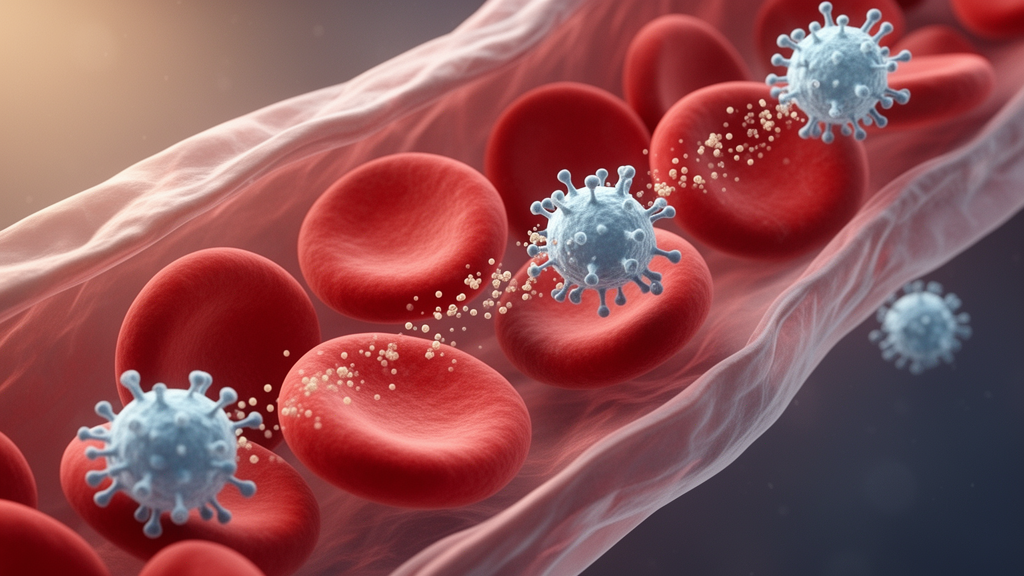
A 52-year-old Japanese man with advanced melanoma under his thumbnail developed a rare and dangerous complication of modern cancer immunotherapy: his own immune system began destroying his red blood cells. Remarkably, the condition resolved after doctors simply stopped the immunotherapy drugs—without the corticosteroids that are normally considered essential treatment. The case, reported by dermatologists at Gunma University Graduate School of Medicine in the Journal of Cutaneous Immunology and Allergy, offers a vivid illustration of both the power and the peril of immune checkpoint inhibitors, the drug class that has transformed melanoma care worldwide.
The patient’s story began with an ulcerated, dark-red tumor measuring 27 by 20 by 19 millimeters involving the nail unit of his right thumb, accompanied by a small black macule on the fingertip. He underwent amputation of the thumb along with a sentinel lymph node biopsy. Histopathological examination revealed atypical epithelioid and spindle-shaped tumor cells that stained positive for the classic melanoma markers Melan-A, HMB-45, and S-100, confirming a diagnosis of malignant melanoma staged as pT4bN0M0—Stage IIC under the American Joint Committee on Cancer’s 8th edition system. Genetic testing showed the tumor was wild-type for the BRAF V600 mutation, ruling out targeted therapy options that work against that common mutation.
Ten months after surgery, contrast-enhanced computed tomography revealed multiple bilateral pulmonary metastases, and his physicians initiated combination therapy with nivolumab and ipilimumab. This dual checkpoint blockade pairs an antibody against the PD-1 checkpoint protein with one against CTLA-4, unleashing T cells to attack the tumor. The regimen is among the most effective systemic treatments for advanced melanoma, but it carries a well-known risk: by loosening the molecular brakes on immunity, it can provoke immune-related adverse events in virtually any organ, from the colon and lungs to the endocrine glands and, rarely, the blood.
After just two cycles, the man presented with three days of fatigue and headache, and clinicians noted mild conjunctival pallor. Laboratory testing told an alarming story: his hemoglobin had plunged from a baseline of 13.0 grams per deciliter to 7.6 grams per deciliter, lactate dehydrogenase—a marker of cell destruction—had surged to 1283 units per liter, reticulocytes were elevated at 203,000 per microliter as his bone marrow scrambled to replace dying red cells, and haptoglobin, a protein that mops up free hemoglobin, was depleted. These findings pointed squarely to acute hemolysis. Yet the direct antiglobulin test, or DAT, the classic immunohematologic assay for antibodies coating red blood cells, came back negative, as did the indirect antiglobulin test.
The DAT result is where this case becomes scientifically interesting. Autoimmune hemolytic anemia is typically confirmed by a positive DAT, which detects immunoglobulin or complement bound to the red cell surface. But DAT-negative hemolysis is a recognized phenomenon, thought to reflect antibody levels below the detection threshold of routine testing, antibodies of unusual specificity, or complement-mediated destruction that standard assays miss. A recent scoping review of 92 cases of immune checkpoint inhibitor-associated immune hemolytic anemia found that 16 of 88 patients who underwent DAT testing had negative results. The authors of the new report emphasize that a negative DAT therefore does not rule out the diagnosis when the clinical and biochemical picture is compelling—abrupt anemia, reticulocytosis, elevated LDH, low haptoglobin, and no other explanation such as bleeding, bone marrow suppression, infection, or new medications.
Applying the diagnostic criteria proposed by Leaf and colleagues, which require an abrupt hemoglobin decline, laboratory evidence of hemolysis, temporal relationship to checkpoint inhibitor initiation, and exclusion of alternative causes, the team classified the event as immune checkpoint inhibitor-associated DAT-negative autoimmune hemolytic anemia. Notably, a follow-up CT scan showed that the pulmonary metastases had shrunk, confirming a partial response to the very therapy implicated in the blood disorder—a cruel trade-off that clinicians managing these patients must constantly weigh.
What happened next sets this case apart from most in the literature. The nivolumab-ipilimumab combination was discontinued immediately, but because the hemoglobin began rising during the evaluation period, the team withheld corticosteroids—the mainstay of treatment for severe immune hemolysis—and managed the patient with supportive care and close monitoring alone. Hemoglobin gradually returned to baseline and LDH fell in parallel. The episode was graded as severity 3 on the Common Terminology Criteria for Adverse Events scale. Because the risk of recurrent hemolysis on rechallenge was judged unacceptably high, the team did not attempt anti-PD-1 monotherapy; instead, two months after the anemia resolved, treatment was switched to the chemotherapy agent dacarbazine.
The broader literature underscores how unusual this steroid-free recovery was. In the scoping review of 92 cases, melanoma was the most frequently reported underlying malignancy, accounting for 38 of 84 cases with a documented tumor type. The median time from checkpoint inhibitor initiation to hemolysis onset was 62 days—roughly three treatment cycles—closely matching the two cycles in this patient. Pembrolizumab and nivolumab were the most commonly implicated single agents, while the nivolumab-ipilimumab combination accounted for 11 of the 92 cases. Management was far more aggressive in most reported patients: checkpoint inhibitor therapy was withheld in 87 cases, pharmacological treatment—predominantly high-dose glucocorticoids—was given in 90, and transfusion support was required in 58. Against that backdrop, a grade 3 hemolytic event resolving with drug discontinuation alone should be regarded as exceptional, the authors caution, and corticosteroids remain the standard of care for clinically significant or progressive disease.
The outcome of the melanoma itself adds a sobering coda. Four cycles of dacarbazine failed to control the disease; follow-up imaging showed progression of the pulmonary metastases along with new subcutaneous deposits in the left buttock and pleural metastases. The patient opted for palliative care and died twelve months after the immunotherapy was stopped. The case thus captures the double-edged nature of checkpoint blockade in stark terms: the treatment produced a clear tumor response but also triggered a life-threatening immune reaction, and the subsequent salvage therapy could not regain control of the cancer.
For clinicians, the take-home messages are concrete. Unexplained anemia during checkpoint inhibitor therapy demands urgent evaluation, and autoimmune hemolytic anemia should be suspected whenever abrupt hemoglobin decline is accompanied by biochemical evidence of hemolysis—even when the DAT is negative. Hemolysis in this setting can deteriorate rapidly, so inpatient observation, serial hemoglobin and LDH measurements, and readiness to escalate to corticosteroids and transfusion are essential. At the same time, this report suggests that in carefully selected, hemodynamically stable patients who show an early upward hemoglobin trend, observation after drug discontinuation may be feasible—provided that any sign of deterioration prompts immediate intervention. As immune checkpoint inhibitors continue to expand across tumor types, rare hematologic adverse events like this one will increasingly test the judgment of the oncologists, dermatologists, and hematologists who wield these powerful drugs.
Subject of Research: Immune checkpoint inhibitor-associated DAT-negative autoimmune hemolytic anemia in a melanoma patient
Article Title: Resolution of direct antiglobulin test-negative autoimmune hemolytic anemia without corticosteroid therapy after discontinuation of nivolumab plus ipilimumab therapy for subungual melanoma
Article References: Nakajima, M., Saito, S., Sato, M., Nakajima, M., Yamazaki, S., Yasuda, M., & Motegi, S.-I. (2026). Resolution of direct antiglobulin test-negative autoimmune hemolytic anemia without corticosteroid therapy after discontinuation of nivolumab plus ipilimumab therapy for subungual melanoma. Journal of Cutaneous Immunology and Allergy, 9, Article 17320. https://doi.org/10.3389/jcia.2026.17320
Image Credits: AI Generated
Keywords: immune checkpoint inhibitors, autoimmune hemolytic anemia, nivolumab, ipilimumab, melanoma, direct antiglobulin test, immune-related adverse events, hemolysis, corticosteroids, dacarbazine, immunotherapy, case report
News Source: Nathaniel Bowman. (October 16, 2026). When Cancer Immunotherapy Turns the Immune System Against Blood: A Rare Case of Checkpoint Inhibitor Anemia That Healed Without Steroids. Scienmag.