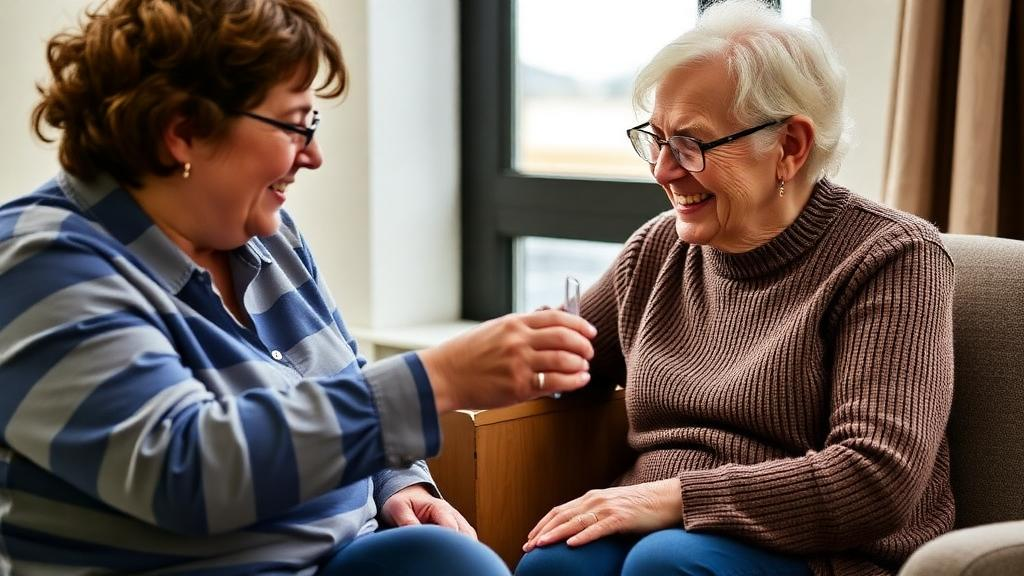
Caring for a family member with dementia is one of the most demanding roles in modern health care, and the people who shoulder it are often invisible to the systems designed to help patients. A new qualitative study from South Korea now offers one of the most detailed maps to date of what actually makes these family caregivers feel empowered, and the findings suggest that empowerment is far more than a feeling of confidence. It is a multidimensional process that unfolds across cognition, emotion, behavior, and relationships, and it can be deliberately supported through education, resource linkage, and emotional care.
The research, conducted by Hye-Ah Yeom and So-Yoon Kim of the College of Nursing at The Catholic University of Korea and published in BMC Geriatrics, used semi-structured focus group interviews to gather the lived experiences of 14 family caregivers of older adults with dementia, organized into three groups, alongside five dementia care professionals who formed a fourth group. Rather than asking participants to rate their wellbeing on a scale, the researchers let them describe, in their own words, what it means to cope, adapt, and eventually thrive in a caregiving role that can last for years and reshape every corner of family life.
To give structure to these narratives, the team applied the Psychological Empowerment Model, a theoretical framework that treats empowerment as having distinct dimensions: the cognitive, the emotional, the behavioral, and the relational. Using qualitative thematic analysis, the researchers then distilled the interview transcripts into seven main themes and fourteen sub-themes that together describe the components of family empowerment in the Korean context. The result is a framework that could inform the design of intervention programs and measurement tools specifically built for dementia caregivers, a population whose needs are often lumped together with those of other informal caregivers despite the unique pressures of progressive cognitive decline.
The first theme, reconstructing the caregiving situation and awareness, captures a cognitive shift that many caregivers described. When a parent or spouse begins to forget names, repeat questions, or lose the ability to manage daily tasks, families often initially misread the situation, attributing changes to normal aging or personality. Empowerment, in this framework, begins when caregivers actively reframe what is happening, coming to see dementia as a disease with a trajectory rather than a personal failing or an inexplicable family crisis. This reconstruction of perception is not merely intellectual; it changes how caregivers interpret difficult behaviors, plan for the future, and communicate with the person they care for.
The second theme highlights how caregivers acquire dementia information through experiential means. Formal education about the disease is often scarce, fragmented, or delivered at the wrong moment, so many caregivers become experts by trial and error, learning through direct experience what triggers agitation, which routines calm their loved one, and how to navigate the health system. The study suggests that this experiential knowledge is a genuine component of empowerment, but it also exposes a gap: if caregivers must learn everything the hard way, the system is failing to provide timely, accessible information. Building sustainable support, the authors argue, requires structured education that complements rather than substitutes for lived experience.
Emotionally, the third theme centers on satisfaction with doing one’s best in caregiving. Caregiving for dementia is frequently framed in terms of burden, depression, and burnout, and those outcomes are real. Yet the interviews reveal a counterweight: a sense of fulfillment that comes from knowing one has given one’s utmost, even when the disease continues to progress. This emotional dimension aligns with the Psychological Empowerment Model’s emphasis on meaning and competence, and it suggests that interventions which help caregivers recognize and take pride in their effort, rather than measuring success by the impossible standard of halting the disease, may protect against despair.
The fourth theme addresses a behavioral challenge that resonates across cultures: balance between self-care and family care. Caregivers who maintained their own health, hobbies, social ties, and rest were better positioned to sustain the caregiving role over time. The study frames this balance not as selfishness but as a core practice of empowerment, a deliberate behavioral strategy that keeps the caregiver’s own life from being fully absorbed by the patient’s needs. In societies where filial duty carries strong moral weight, as it does in Korea, giving caregivers explicit permission and practical tools to care for themselves may be one of the most consequential things support services can do.
The fifth theme, securing and utilizing dementia-related resources, moves the analysis from the household to the wider system. Empowered caregivers are those who know what services exist, from day care centers and respite programs to counseling and financial support, and who can actually access and use them. The professionals interviewed in the study underscored how often families remain unaware of available help or feel intimidated by bureaucratic steps. This finding points to a concrete lever for policy: resource linkage, where trained professionals actively connect families to services, could convert latent empowerment into practical capability.
The final two themes are reflective and relational. Reflections of caregiving experiences describe how caregivers look back on their journey, integrating hardship and growth into a coherent personal narrative, while new roles and relationships created through caregiving capture the unexpected social outcomes of the role: deeper bonds with the care recipient, new connections with other caregivers, and sometimes renegotiated relationships within the family. Empowerment, in other words, is not only an individual psychological state but is reinforced relationally, through the communities and identities that caregiving can create.
Synthesizing these themes, the authors conclude that family empowerment for caregivers of older adults with dementia is established through a cognitive process of reconstructing caregiving perceptions, an emotional fulfillment derived from stability in the caregiving process, behavioral practices that balance self-care with family care, and relational reinforcement gained through newly established roles. This multidimensional picture matters because it tells intervention designers that a single-pill approach, such as a one-off information session or a support hotline, will not suffice. Sustainable support systems, the researchers propose, should combine education, resource linkage, and emotional support, and should be accompanied by the development of empowerment intervention programs and validated measurement tools grounded in the components identified here.
The study was approved by the Institutional Review Board of The Catholic University of Korea and conducted in accordance with the Declaration of Helsinki, with written informed consent from all participants. As global populations age and dementia prevalence climbs, the number of family caregivers will grow with it, and the Korean findings offer a template that researchers elsewhere can test and adapt. The deeper message is hopeful: caregivers are not passive recipients of burden but active agents who, given the right cognitive reframing, information, emotional acknowledgment, self-care opportunities, resources, and relationships, can transform one of life’s hardest roles into one that carries meaning, competence, and connection.
Subject of Research: Family empowerment components among family caregivers of older adults with dementia
Article Title: Components of family empowerment for family caregivers of older adults with dementia: focus group interviews
Article References: Yeom, H.-A., & Kim, S.-Y. (2026). Components of family empowerment for family caregivers of older adults with dementia: focus group interviews. BMC Geriatrics. https://doi.org/10.1186/s12877-026-08403-9
Image Credits: AI Generated
DOI: 10.1186/s12877-026-08403-9
Keywords: dementia, family caregivers, empowerment, focus group interviews, qualitative research, Psychological Empowerment Model, geriatrics, caregiver support, older adults, South Korea, thematic analysis, dementia care
News Source: Cassandra Pierce. (October 6, 2026). What Makes Dementia Family Caregivers Feel Empowered? New Study Maps the Components. Scienmag.