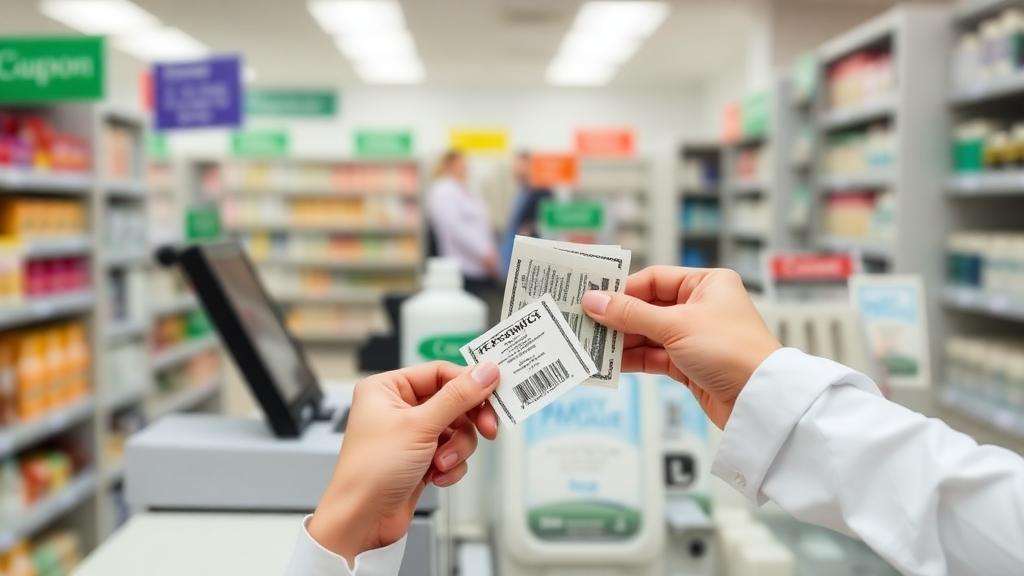
Glucagon-like peptide-1 receptor agonists, the class of drugs behind some of the most consequential shifts in modern medicine, have moved from niche diabetes therapy to household name in a remarkably short span. Yet behind the headlines about weight loss and glycemic control sits a quieter financial drama playing out at pharmacy counters across the United States, one involving manufacturer coupons, insurance deductibles, and the delicate question of who ultimately pays when a monthly prescription can run to four figures. A new study published in the Journal of General Internal Medicine by Minji Kim of the Johns Hopkins Bloomberg School of Public Health, So-Yeon Kang of Georgetown University, and Manuel Hermosilla of the University of Illinois Chicago examines precisely this question, tracing how manufacturer coupon use shapes both patient and payer spending over the course of GLP-1 treatment episodes.
The stakes of this inquiry are difficult to overstate. Prescribing trends documented in JAMA Network Open in 2025 show that glucagon-like peptide 1 receptor agonists are now prescribed at unprecedented scale, both for type 2 diabetes and for obesity, two conditions that together touch well over half of the American adult population. A poll reported in JAMA in 2024 found that roughly twelve percent of United States adults have used a GLP-1 drug at some point, even when the medication was difficult for them to afford. When a drug class reaches that kind of penetration, the financial architecture wrapped around it, including rebates, copay cards, and benefit design quirks, ceases to be a technical footnote and becomes a matter of national fiscal significance.
Manufacturer coupons, sometimes called copay cards or copayment offsets, are discounts offered by pharmaceutical companies that reduce the out-of-pocket amount a patient pays at the pharmacy. On their face, they appear to be an unambiguous good for patients, a form of corporate charity that lowers the barrier between a prescribed medication and the person who needs it. The reality is more complicated. Prior research published in JAMA Internal Medicine in 2021 characterized the landscape of copayment offsets for prescription drugs in the United States and found that these programs are widespread, particularly for brand-name drugs where cheaper generic alternatives do not exist. Coupons can steer patients toward higher-cost brand medications when lower-cost alternatives are available, and they can blunt the price signals that would otherwise push patients and prescribers toward more affordable options.
The mechanics matter for understanding why economists and health policy researchers scrutinize these programs so closely. In a standard insurance design, a patient’s out-of-pocket payment is determined by the formulary tier of the drug, the deductible status of the plan, and any coinsurance obligations. A manufacturer coupon typically covers some or all of the patient’s cost-sharing obligation, so the patient pays a reduced amount while the full negotiated price is still billed to the insurance claim. This means the insurer, and ultimately the pooled premium base that all enrollees contribute to, absorbs the difference. The patient feels relief at the counter; the payer sees no relief at all, and may in fact see increased utilization of expensive brand drugs that would otherwise have been abandoned or substituted.
Complicating the picture further is a countermeasure that pharmacy benefit managers have deployed in recent years known as the copay accumulator program. As described in JAMA Oncology in 2018, these programs exclude the value of manufacturer coupons from counting toward a patient’s deductible or out-of-pocket maximum. Under a traditional arrangement, a coupon might help a patient burn through their deductible faster, eventually reaching the point where insurance covers most of the drug’s cost. Under an accumulator program, the coupon shields the patient’s wallet but does not advance the deductible meter, so once the coupon expires or its annual cap is reached, the patient faces the full cost-sharing burden all at once. Critics argue this design creates a financial cliff that can force patients to abandon therapy mid-year, a phenomenon sometimes described as financial toxicity.
Against this backdrop, patterns of manufacturer coupon use documented for the broader prescription drug market between 2017 and 2019, in work published in JAMA Network Open by Kang and colleagues, showed that coupon use is common and concentrated among expensive specialty and brand-name medications. GLP-1 receptor agonists sit squarely in that category. With list prices for many agents in the class exceeding nine hundred dollars per month before rebates, and with insurance coverage for obesity indications still uneven across plans, coupons have become a central mechanism through which patients gain access to these drugs. The new study by Kim, Kang, and Hermosilla leverages licensed IQVIA data, a widely used commercial source of pharmacy claims information, to quantify what coupon use means for spending during actual treatment episodes rather than at isolated fill events.
The treatment episode framing is analytically important. A single prescription fill captures only a moment in a patient’s therapeutic journey. GLP-1 therapy is typically chronic, intended to continue indefinitely for diabetes management and often for weight management as well, and real-world episodes are punctuated by dose escalations, plan-year resets of deductibles, coupon expiration dates, and discontinuations. By following episodes rather than fills, the researchers can observe how the financial burden shifts over time, how coupon reliance evolves as patients move from initiation to maintenance dosing, and how the split of spending between patient and payer changes across the arc of treatment. This longitudinal view is essential for evaluating whether coupons function as bridges to sustainable coverage or as temporary subsidies that collapse when patients need them most.
The policy context surrounding this work is charged. GLP-1 drugs have become a focal point of national debate over drug pricing, with employers, insurers, and public programs straining under the budgetary weight of demand. Some manufacturers have introduced coupon programs specifically for obesity indications, while others have restricted them, and the Inflation Reduction Act’s Medicare negotiation provisions have begun to reshape the economics of the class for older adults. Meanwhile, copay accumulator and maximizer programs have spread through commercial formularies, creating a patchwork in which the same coupon card can produce very different financial outcomes depending on the fine print of a patient’s benefit design. Research that empirically ties coupon use to realized spending, for patients and payers alike, provides the evidentiary foundation that regulators, employers, and legislators need as they weigh rules governing these programs.
It is also worth situating the study within the broader movement toward transparency in pharmaceutical economics. The authors report that the work was supported in part by Arnold Ventures, a funder with a substantial portfolio in drug pricing research, and that the funder had no role in data collection, analysis, interpretation, or reporting. The data were obtained under license from IQVIA and are not publicly available, a common constraint in commercial claims research that underscores the value of peer-reviewed publications in making such analyses accessible. The study passed through peer review at the Journal of General Internal Medicine, receiving editorial acceptance in September 2026 and publishing in October 2026, placing it among the first wave of rigorous economic analyses of coupon dynamics in the GLP-1 era.
For clinicians, the practical takeaway is that the affordability conversation at the point of prescribing is more consequential than ever. A patient who initiates a GLP-1 agent with coupon support may face a very different cost structure six months later, and anticipatory counseling about deductible resets, coupon caps, and accumulator provisions could prevent abrupt discontinuations that carry clinical consequences, particularly for patients with type 2 diabetes for whom interrupted glycemic control poses real risks. For policymakers, the study adds to a growing body of evidence suggesting that coupons, whatever their benefits for individual patients, operate within a system whose incentives are misaligned, subsidizing brand loyalty on the manufacturer side while shifting costs toward pooled premiums on the payer side. As GLP-1 demand continues its steep climb, the intersection of coupon policy, benefit design, and treatment persistence will remain one of the most consequential frontiers in American health economics, and studies of this kind offer the clearest window yet into how that intersection actually functions at the pharmacy counter.
Subject of Research: Manufacturer coupon use and its effects on patient and payer spending during GLP-1 receptor agonist treatment episodes
Article Title: Manufacturer Coupon Use and Patient and Payer Spending During GLP-1 Treatment Episodes
Article References: Kim, M., Kang, S.-Y., & Hermosilla, M. (2026). Manufacturer Coupon Use and Patient and Payer Spending During GLP-1 Treatment Episodes. Journal of General Internal Medicine. https://doi.org/10.1007/s11606-026-10862-0
Image Credits: AI Generated
DOI: 10.1007/s11606-026-10862-0
Keywords: GLP-1 receptor agonists, manufacturer coupons, copay cards, drug pricing, pharmacoeconomics, type 2 diabetes, obesity, copay accumulator programs, pharmacy benefit managers, out-of-pocket spending, IQVIA claims data, health policy
News Source: Ophelia Keating. (October 6, 2026). Coupon Clipping at the Pharmacy Counter: What Manufacturer Discounts Really Do to GLP-1 Drug Spending. Scienmag.