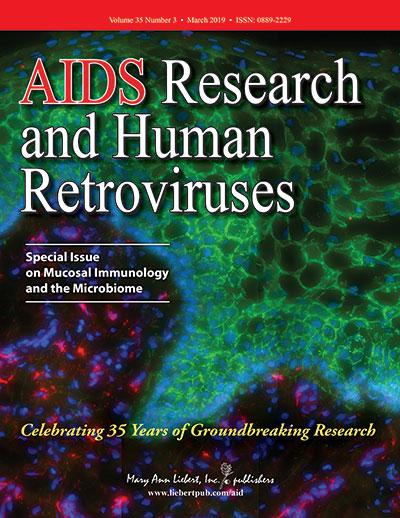
Credit: Mary Ann Liebert, Inc., publishers
New Rochelle, NY, March 15, 2019–An international team of researchers presents a comprehensive and renewed focus on the common, yet poorly understood condition of bacterial vaginosis (BV) and how the microbial make-up of the vagina can affect a woman’s risk of acquiring HIV and AIDS. A Perspectives article, with the goal of standardizing how BV clinical and research findings are discussed, is published in AIDS Research and Human Retroviruses, a peer-reviewed journal from Mary Ann Liebert, Inc., publishers. The article is part of a Special Issue of the Journal, Mucosal Immunology and the Microbiome. Click here to read the full-text article free on the AIDS Research and Human Retroviruses website through April 14, 2019.
In the Special Issue of the journal entitled Mucosal Immunology and the Microbiome, Lyle McKinnon, University of Manitoba (Winnipeg, Canada) and Centre for the AIDS Programme of Research in South Africa (CAPRISA, Durban, South Africa), Gilda Tachedjian, Burnet Institute (Melbourne, Australia), Monash University (Clayton, Australia), The University of Melbourne, and RMIT University (Melbourne), and a large team of researchers from around the world coauthored the article “The Evolving Facets of Bacterial Vaginosis: Implications for HIV Transmission.”
BV is a common disorder affecting 29% of women in the United States and 52% of women in sub-Saharan Africa, where HIV is also a highly prevalent sexually transmitted infection (STI). This article draws attention to the varied language and definitions used to describe BV and the related genital inflammation and risk of HIV and other STIs. It also discusses the implications of asymptomatic BV and HIV risk. The researchers make specific recommendations related to conventional and newer molecular testing methods to diagnose BV and to characterize the vaginal microbiome.
“This timely Perspectives article makes an important contribution to HIV research as it explores the active debate surrounding the vaginal microbiome, and bacterial vaginosis in particular, and increased risk of HIV acquisition in women,” says Thomas Hope, PhD, Editor-in-Chief of AIDS Research and Human Retroviruses and Professor of Cell and Molecular Biology at Northwestern University, Feinberg School of Medicine, Chicago, IL. “We are proud to feature this article, which helps bring clarity to an evolving field, in our first Special Issue on Mucosal Immunology and the Microbiome.”
Research reported in this publication was supported by the National Institutes of Health under Award Numbers K23AI103044, R21AI122001, UL1TR000454, and UL1TR002378. The content is solely the responsibility of the authors and does not necessarily represent the official views of the National Institutes of Health.
###
About the Journal
AIDS Research and Human Retroviruses, published monthly online with open access options and in print, presents papers, reviews, and case studies documenting the latest developments and research advances in the molecular biology of HIV and SIV and innovative approaches to HIV vaccine and therapeutic drug research, including the development of antiretroviral agents and immune-restorative therapies. Content also explores the molecular and cellular basis of HIV pathogenesis and HIV/HTLV epidemiology. The Journal features rapid publication of emerging sequence information, reports on clinical trials of emerging HIV therapies, and images in HIV research. Tables of content and a sample issue may be viewed on the AIDS Research and Human Retroviruses website.
About the Publisher
Mary Ann Liebert, Inc., publishers is a privately held, fully integrated media company known for establishing authoritative peer-reviewed journals in many promising areas of science and biomedical research, including AIDS Patient Care and STDs, Viral Immunology, and Journal of Interferon and Cytokine Research. Its biotechnology trade magazine, GEN (Genetic Engineering & Biotechnology News), was the first in its field and is today the industry’s most widely read publication worldwide. A complete list of the firm’s 80 journals, books, and newsmagazines is available on the Mary Ann Liebert, Inc., publishers website.
Media Contact
Kathryn Ryan
[email protected]
Original Source
https:/
Related Journal Article
http://dx.