• HOME
  • NEWS
  • EXPLORE
    • CAREER
      • Companies
      • Jobs
    • EVENTS
    • iGEM
      • News
      • Team
    • PHOTOS
    • VIDEO
    • WIKI
  • BLOG
  • COMMUNITY
    • FACEBOOK
    • INSTAGRAM
    • TWITTER
Tuesday, August 18, 2026
BIOENGINEER.ORG
No Result
View All Result
  • Login
  • HOME
  • NEWS
  • EXPLORE
    • CAREER
      • Companies
      • Jobs
        • Lecturer
        • PhD Studentship
        • Postdoc
        • Research Assistant
    • EVENTS
    • iGEM
      • News
      • Team
    • PHOTOS
    • VIDEO
    • WIKI
  • BLOG
  • COMMUNITY
    • FACEBOOK
    • INSTAGRAM
    • TWITTER
  • HOME
  • NEWS
  • EXPLORE
    • CAREER
      • Companies
      • Jobs
        • Lecturer
        • PhD Studentship
        • Postdoc
        • Research Assistant
    • EVENTS
    • iGEM
      • News
      • Team
    • PHOTOS
    • VIDEO
    • WIKI
  • BLOG
  • COMMUNITY
    • FACEBOOK
    • INSTAGRAM
    • TWITTER
No Result
View All Result
Bioengineer.org
No Result
View All Result
Home NEWS Science News Biology

Wels catfish genome assembled

Bioengineer by Bioengineer
September 22, 2020
in Biology
Reading Time: 3 mins read
0
IMAGE
Share on FacebookShare on TwitterShare on LinkedinShare on RedditShare on Telegram

IMAGE

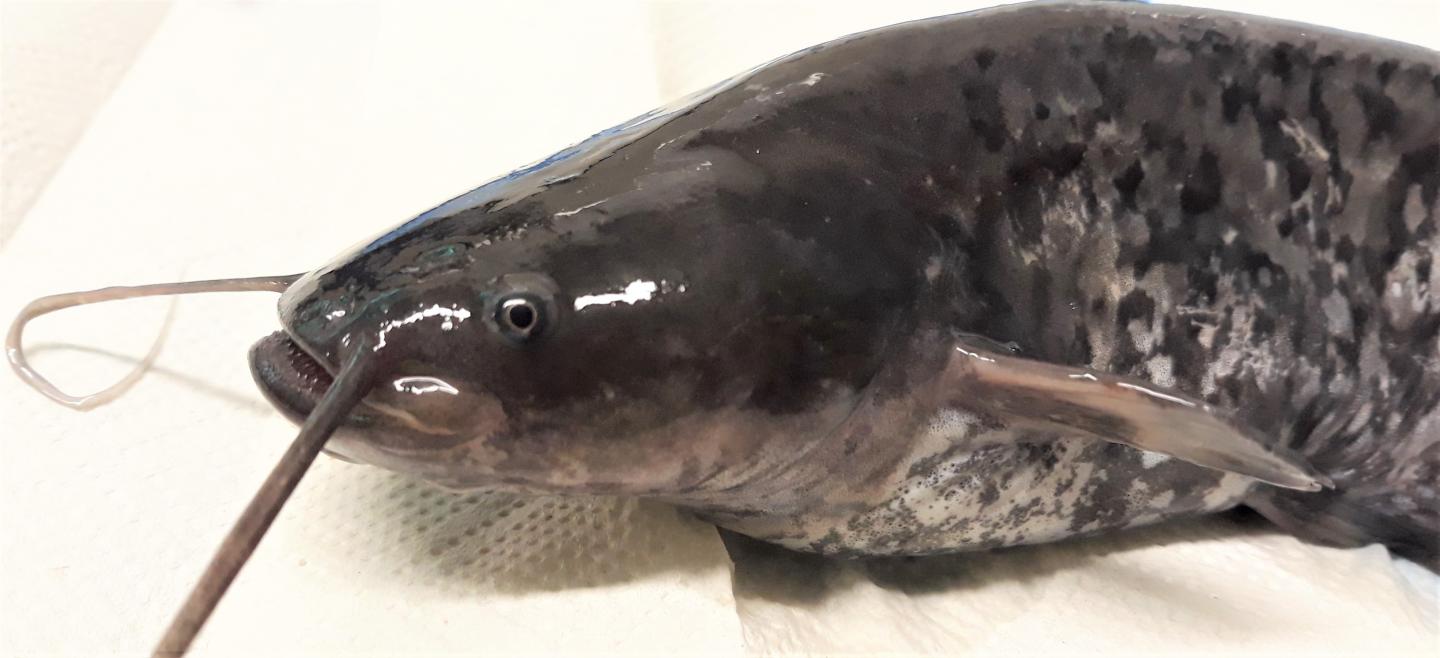
Credit: Anti Vasemägi/EMÜ

An international research team led by scientists from Estonian University of Life Sciences has for the first time sequenced and assembled the genome of the wels catfish (Silurus glanis). The maximum reported size of the wels catfish is 5 m and up to 300 kg, which makes it one of the largest freshwater fish species in the whole world. By deciphering the genetic code of the barbelled giant, scientists expect to better understand the secrets of the wels catfish’s exceptionally rapid growth, enormous appetite and longevity.

The wels catfish lives in large European rivers and lakes. Catfish is hunting mainly at night and is not a picky eater, with invertebrates, fish, frogs, rodents and birds in its regular diet. When the water is warm and food is plentiful, the catfish grows extremely rapidly: ten-year-old fish can reach one and a half metres length. Given that a catfish can live up to 80 years, it is no wonder it has rightly become the prized trophy fish and a central character in many legends among anglers.

Due to its rapid growth and tender, boneless flesh, the catfish is increasingly gaining popularity for recreational fishing and aquaculture. The greatest number of wels catfish are being caught from the inland waters of Russia, Kazakhstan and Turkey, and its aquaculture production is currently approximately 2000 tonnes per year. At the same time, the lack of genetic information in wels catfish has inhibited application of modern selective breeding methods that utilize genomic information instead of phenotypic traits to estimate the breeding values of fish. “Assembled wels catfish genome allows researchers to find genomic regions and gene variants that impact growth rate, age at sexual maturity, disease resistance and other relevant traits for aquaculture,” explained Riho Gross, Chair professor of Aquaculture at Estonian University of Life Sciences, who led the research.

According to Anti Vasemägi, senior researcher of Estonian University of Life Sciences and professor of Swedish University of Agricultural Sciences, who participated in the work, the size of wels catfish genome can be compared to that of other bony fishes (800 million base pairs), and contains a little more than 21 000 genes. He added that the genome assembly will serve as a springboard for future research aimed at addressing the bottlenecks in catfish aquaculture and challenges linked to conservation of wild populations.

###

Scientific article describing the results of the research was published in the journal G3: Genes, Genomes, Genetics and the study was funded by Estonian Research Council and European Maritime and Fisheries Fund.

Article: Draft Genome Assembly of the Freshwater Apex Predator Wels Catfish (Silurus glanis) Using Linked-Read Sequencing. M.Yu. Ozerov, M. Flajšhans, K. Noreikiene, A. Vasemägi, R. Gross. G3: Genes, Genomes, Genetics. Early online September 11, 2020; https://doi.org/10.1534/g3.120.401711

Media Contact
Riho Gross
[email protected]

Original Source

http://doi.org/10.1534/g3.120.401711

Related Journal Article

http://dx.doi.org/10.1534/g3.120.401711

Tags: BiologyGeneticsMarine/Freshwater Biology
Share12Tweet8Share2ShareShareShare2

Related Posts

One in 20 Australian women now receive intravenous iron infusions

One in 20 Australian women now receive intravenous iron infusions

August 18, 2026
Scientists identify crucial steps that initiate DNA replication

Scientists identify crucial steps that initiate DNA replication

August 18, 2026

Diverse Legume Defence Signals and Clustered Receptors Co-Evolved from Conserved Subtilase Scaffolds

August 18, 2026

Last common ancestor may have climbed vertically, regardless of limb structure

August 18, 2026
Please login to join discussion

POPULAR NEWS

  • Study Measures Time to Inpatient Care for Patients Boarding in Emergency Departments

    29 shares
    Share 12 Tweet 7
  • Implantable Device May Restore Function After Spinal Cord Injury

    29 shares
    Share 12 Tweet 7
  • Three-Decade Study Reveals New Insights Into Lyme Disease Ecology

    29 shares
    Share 12 Tweet 7
  • Next-Generation Sequencing Detects Residual Disease in T-Cell Acute Lymphoblastic Leukemia

    29 shares
    Share 12 Tweet 7

About

BIOENGINEER.ORG

We bring you the latest biotechnology news from best research centers and universities around the world. Check our website.

Follow us

Recent News

Study Measures Time to Inpatient Care for Patients Boarding in Emergency Departments

Implantable Device May Restore Function After Spinal Cord Injury

Three-Decade Study Reveals New Insights Into Lyme Disease Ecology

Subscribe to Blog via Email

Enter your email address to subscribe to this blog and receive notifications of new posts by email.

Join 85 other subscribers
  • Contact Us

Bioengineer.org © Copyright 2023 All Rights Reserved.

Welcome Back!

Login to your account below

Forgotten Password?

Retrieve your password

Please enter your username or email address to reset your password.

Log In
No Result
View All Result
  • Homepages
    • Home Page 1
    • Home Page 2
  • News
  • National
  • Business
  • Health
  • Lifestyle
  • Science

Bioengineer.org © Copyright 2023 All Rights Reserved.