A comprehensive systematic review and network dose-response meta-analysis evaluating forty-seven randomized controlled trials has mapped how different exercise modalities associate with changes in vascular endothelial function across 2,165 adult participants. The investigation, published in Frontiers in Physiology by researchers from Lingnan Normal University, Shandong Vocational University of Foreign Affairs, and Wuhan Sports University, examined brachial artery flow-mediated dilation across continuous aerobic exercise, high-intensity interval training, resistance training, and combined aerobic and resistance exercise. In direct contrasts against non-training or matched control groups, continuous aerobic exercise, high-intensity interval training, and combined training produced clear, measurable gains in arterial dilation. Conversely, the overall effect estimate for isolated resistance training against control conditions remained imprecise, demonstrating wide statistical uncertainty that crossed the null line and precluding definitive conclusions regarding its standalone impact on conduit artery endothelial function.
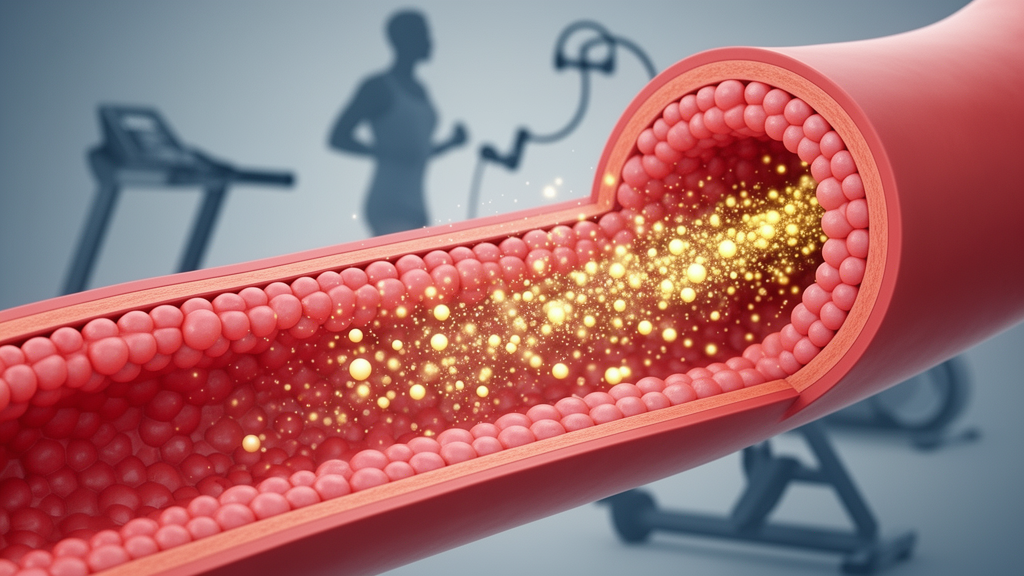
Vascular endothelial function was assessed through brachial artery flow-mediated dilation, an established non-invasive metric that measures the percentage increase in arterial diameter following a temporary period of ischaemia typically induced by cuff occlusion. Under standard distal-cuff conditions, the reactive hyperaemia stimulus triggers endothelial release of nitric oxide, leading to vascular relaxation. While impaired flow-mediated dilation correlates with higher future rates of cardiovascular disease events, investigators emphasize that changes in this surrogate physiological endpoint cannot be translated directly into absolute reductions in primary clinical outcomes. In physical activity research, regular muscular exertion generates repeated elevations in luminal blood flow and vascular shear stress. These recurring physical forces serve as primary mechanical stimuli that enhance endothelial nitric oxide synthase activity, boost nitric oxide bioavailability, stimulate antioxidant defenses, and improve vascular wall regulation.
To evaluate whether specific weekly exercise doses maximize endothelial health, the research team searched five bibliographic databases from inception through 30 January 2026, retrieving 3,446 total records across PubMed, Scopus, the Cochrane Library, Web of Science, and Embase. Following duplicate removal and structured screening, the authors assembled forty-seven trials encompassing 111 intervention and control arms that provided usable flow-mediated dilation data and quantified exercise exposure. To standardize distinct training programmes onto a unified exposure scale, weekly volume was converted into metabolic equivalent minutes per week, known as MET-minutes per week. One standard metabolic equivalent represents a resting oxygen uptake of 3.5 millilitres per kilogram of body mass per minute. The included trials incorporated diverse participant cohorts ranging from young, healthy, sedentary individuals to older adults presenting with chronic conditions such as type 2 diabetes, primary hypertension, heart failure, coronary heart disease, and chronic obstructive pulmonary disease.
In direct pairwise random-effects comparisons against control arms, continuous aerobic exercise across twenty-seven trials demonstrated a pooled mean difference of 2.60 percentage points with a 95 percent confidence interval spanning 1.99 to 3.22 percentage points. High-intensity interval training across twelve trials achieved a mean improvement of 2.61 percentage points, with a 95 percent confidence interval from 1.62 to 3.60 percentage points. Combined aerobic and resistance exercise synthesized from seven trials showed an average improvement of 2.20 percentage points, with a confidence interval between 0.53 and 3.86 percentage points. In contrast, resistance training evaluated across nine trials yielded an uncertain mean difference of 1.91 percentage points, bounded by a broad 95 percent confidence interval from minus 1.57 to positive 5.40 percentage points, reflecting substantial between-trial heterogeneity indicated by an inconsistency index of 98.6 percent and a between-study variance of 27.465.
To analyze dose-response dynamics across continuous exercise volumes without fragmenting data into arbitrary dose brackets, investigators fitted inverse-variance-weighted dose-response meta-regressions with study fixed intercepts. When linear, quadratic, and cubic polynomial mathematical models were contrasted using information criteria and numerical stability diagnostics, the quadratic model was selected as a balanced descriptive representation. Across 111 usable arms and 47 study intercepts, the quadratic model achieved an inverse-variance weighted residual sum of squares of 751.6 with 56 degrees of freedom, generating an Akaike information criterion of 529.3 and a Bayesian information criterion of 681.0, which was lower than both linear and cubic alternatives. Furthermore, when evaluating model identifiability across 600 nonparametric whole-study bootstrap iterations, 597 resamples yielded valid full-rank fits under the quadratic model, compared to 573 valid fits for the cubic specification.
Under the selected quadratic curve, the modelled vertex for continuous aerobic exercise appeared at approximately 1,102 MET-minutes per week, where the predicted mean improvement reached 3.00 percentage points, with a pointwise 95 percent confidence interval from 2.16 to 3.77 percentage points. Combined aerobic and resistance training reached a fitted vertex at 984 MET-minutes per week, corresponding to a predicted effect of 2.53 percentage points and a confidence interval of 1.24 to 4.55 percentage points. High-intensity interval training displayed an internal vertex at approximately 1,605 MET-minutes per week with a point estimate of 2.81 percentage points, but its pointwise confidence interval spanned from minus 0.52 to 3.65 percentage points. For resistance training, the fitted curve reached its peak at 1,000 MET-minutes per week, matching the absolute upper boundary of observed doses in the trial inventory, with an effect estimate of 2.73 percentage points that also encompassed zero across its confidence interval from minus 3.59 to 4.92 percentage points.
Crucially, the authors highlighted that identifying a mathematical vertex within aggregate observational curves does not prove the existence of an optimal biological threshold. When whole-study bootstrap resampling was applied to quantify parameter variability, the 95 percent percentile intervals for the maximizing doses proved exceptionally wide. The maximizing dose interval for aerobic exercise ranged from 873 to the upper observed boundary of 2,160 MET-minutes per week. For combined exercise, the maximizing dose interval extended from 784 to 1,350 MET-minutes per week. High-intensity interval training produced a maximizing dose distribution spanning 755 to the boundary of 1,800 MET-minutes per week, while resistance training spanned the entire observed spectrum from 412.5 to 1,000 MET-minutes per week. Because all four modality intervals contacted or encompassed their highest observed doses, the aggregated evidence lacked the localization precision needed to define prescriptive training targets.
Exploratory meta-regression models assessing potential study-level effect modifiers revealed substantial imprecision, precluding definitive conclusions regarding demographic or clinical influences. Adding interaction terms evaluated at an exposure of 1,000 MET-minutes per week showed that each ten-year increase in mean study age was associated with an effect difference of 0.19 percentage points, with a 95 percent confidence interval from minus 1.25 to 1.56 percentage points across forty-seven studies. Each ten-percentage-point higher proportion of female participants yielded a difference of minus 0.03 percentage points across forty-five reporting trials, bounded by an interval of minus 0.30 to 0.25 percentage points.
Methodological quality appraisal and procedural variation introduced additional interpretive constraints. Applying the Cochrane risk-of-bias framework revealed that only fifteen of the forty-seven included trials, representing 31.9 percent, exhibited a low overall risk of bias. Twenty-eight trials raised some methodological concerns, and four studies were judged to carry a high overall risk of bias, meaning that 68.1 percent of the synthesized trial base had identifiable methodological vulnerabilities. Furthermore, detailed examination of flow-mediated dilation protocols showed marked procedural heterogeneity across the nineteen reports containing accessible protocol details. Cuff placement varied considerably, with eleven studies confirming distal forearm placement, one utilizing proximal upper-arm placement, two reporting upper-arm placement without explicit anatomical relation to the imaged segment, and five presenting ambiguous descriptions, while twenty-eight primary papers omitted full procedural specifications entirely.
Sensitivity analyses further underscored how specific trial subsets influenced numeric estimates. Recalculating models across alternative within-person correlation assumptions from 0.25 to 0.75 shifted the aerobic maximum between 1,097 and 1,125 MET-minutes per week, while combined training moved between 982 and 987 MET-minutes per week. Excluding the four high-risk trials shifted the aerobic maximum noticeably upward to 1,377 MET-minutes per week, yielding a mean difference of 2.84 percentage points with a confidence interval of 2.08 to 3.90 percentage points. Removing trials lasting four weeks or less left forty-five studies and dramatically lowered the maximum resistance training effect to 0.28 percentage points with an expanded confidence interval from minus 6.54 to 8.73 percentage points. Removing three trials that explicitly described proximal or upper-arm cuff placement adjusted the aerobic maximum to 1,046 MET-minutes per week and the combined training maximum to 910 MET-minutes per week, demonstrating that procedural variations directly alter fitted dose coordinates.
Ultimately, the researchers concluded that while structured aerobic, interval, and combined exercise reliably enhance conduit artery endothelial dilation compared to non-active controls, the available network data cannot support definitive clinical prescriptions or establish modality superiority. Substantial residual variance, reflected in a quadratic model residual inconsistency diagnostic of 92.5 percent, alongside sparse head-to-head active comparisons, unstandardized vascular measurement protocols, and wide bootstrap confidence bounds, underscores the preliminary nature of these mathematical associations. Rather than defining rigid therapeutic exercise targets, the team emphasized that these dose-response curves should serve as foundational frameworks to guide future prospective, randomized dose-ranging trials that employ rigorous, standardized vascular testing protocols.
Subject of Research: Dose-response relationships between exercise modalities and brachial artery flow-mediated dilation
Article Title: Modality-specific dose-response associations between exercise and brachial artery flow-mediated dilation in adults: a systematic review and network dose-response meta-analysis
Article References: Tang, S., Hou, S., Shi, F., & Xu, W. (2026). Modality-specific dose-response associations between exercise and brachial artery flow-mediated dilation in adults: a systematic review and network dose-response meta-analysis. Frontiers in Physiology, 17, Article 1990935. https://doi.org/10.3389/fphys.2026.1990935
Image Credits: AI Generated
DOI: 10.3389/fphys.2026.1990935
Keywords: cardiovascular health, flow-mediated dilation, vascular endothelial function, exercise physiology, aerobic exercise, high-intensity interval training, resistance training, combined exercise, metabolic equivalent, systematic review, network meta-analysis, dose-response modeling, endothelial nitric oxide, brachial artery, randomized controlled trials, vascular adaptation, exercise prescription
News Source: Drew Townsend. (November 21, 2026). Exercise Modalities Show Differing Dose Associations With Endothelial Function in Adult Trials. Scienmag.