• HOME
  • NEWS
  • EXPLORE
    • CAREER
      • Companies
      • Jobs
    • EVENTS
    • iGEM
      • News
      • Team
    • PHOTOS
    • VIDEO
    • WIKI
  • BLOG
  • COMMUNITY
    • FACEBOOK
    • INSTAGRAM
    • TWITTER
Sunday, October 25, 2026
BIOENGINEER.ORG
No Result
View All Result
  • Login
  • HOME
  • NEWS
  • EXPLORE
    • CAREER
      • Companies
      • Jobs
        • Lecturer
        • PhD Studentship
        • Postdoc
        • Research Assistant
    • EVENTS
    • iGEM
      • News
      • Team
    • PHOTOS
    • VIDEO
    • WIKI
  • BLOG
  • COMMUNITY
    • FACEBOOK
    • INSTAGRAM
    • TWITTER
No Result
View All Result
Bioengineer.org
No Result
View All Result
Home NEWS Science News Technology

Wearable system detects and transmits scents over distance

by
October 25, 2026
in Technology
Reading Time: 2 mins read
0
Wearable system detects and transmits scents over distance

Wearable system detects and transmits scents over distance

Share on FacebookShare on TwitterShare on LinkedinShare on RedditShare on Telegram

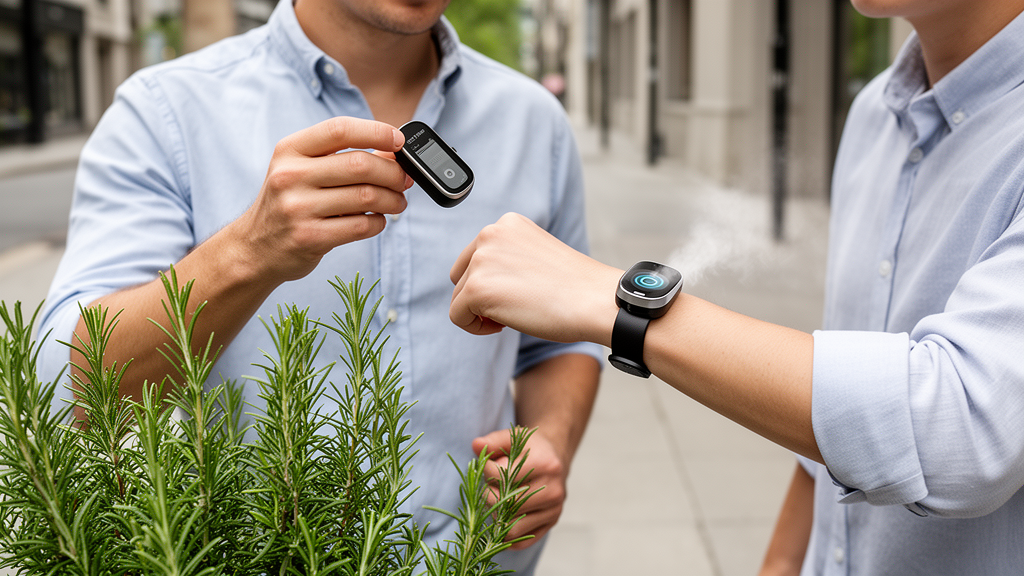
Researchers have developed an AI-assisted wearable system that can recognize odors and transmit them to people at a distance, advancing efforts to share smell through human-machine interfaces. The system combines an electronic nose, or e-nose, with a scent-release platform called Scentronic. In experiments involving as many as 16 volunteers, the system identified odors associated with beer, cake, coffee, oranges and red wine, then reproduced those scents for distant users through wearable devices.

The e-nose used machine learning to identify the volatile organic compounds that characterize the five test odors. Scentronic was available in two designs: a lightweight wristband with two odor channels and a necklace with five channels arranged like beads on a string. The number of channels and their arrangement were intended to let users smell the transmitted odors directly. The study was a peer-reviewed publication in Science Advances and was described in an AAAS news release.

The researchers also combined the olfactory interface with a flavor simulator, a cup filled with water into which flavoring liquid can drip. Using a model and previously established parameters, they examined how the flavor simulator might enhance the wearable system in future applications. The work was presented as a step toward broader human-machine interfaces capable of exchanging sensory information, rather than as a demonstration of a consumer product or a clinical treatment.

The authors identified potential uses for people facing nutritional challenges, astronauts who may encounter unappealing food supplements, and warfighters consuming field rations. In each case, the proposed goal would be to improve the perceived quality of food. The researchers also suggested that clinicians might eventually use a device of this type to assess patients’ sense of smell more accurately by exposing them to odors at different intensities. These applications remain potential directions identified by the authors, and the study does not establish clinical benefits, nutritional improvements or performance gains.

At present, the system is a research prototype with a limited set of tested scents and a small volunteer evaluation. The release describes a device capable of detecting and relaying odors over distance, while the underlying study focuses on the recognition of selected volatile compounds and the transmission of those odors through wearable hardware. Further validation would be needed before drawing conclusions about accuracy, reliability or usefulness in everyday settings, food applications and medical assessment.

Subject of Research: AI-assisted wearable system for detecting and transmitting odors

Article Title: Smell you later: New device detects and relays scents across distance

Article References: Smell you later: New device detects and relays scents across distance. Original publication (Bibliographic details unavailable.)

Image Credits: AI Generated

DOI: Not provided

Keywords: olfactory interface, artificial intelligence, electronic nose, remote scent transmission, wearable technology, volatile organic compounds, Scentronic, human-machine interfaces, food flavor simulation, Smell, later, device

News Source: Denise Maddox. (October 25, 2026). Wearable system detects and transmits scents over distance. Scienmag.


Tags: Artificial Intelligencedeviceelectronic nosefood flavor simulationhuman-machine interfaceslaterolfactory interfaceremote scent transmissionScentronicSmellvolatile organic compoundswearable technology
Share12Tweet7Share2ShareShareShare1

Related Posts

Copper nanoparticles improve three-state polymer memory performance

Copper nanoparticles improve three-state polymer memory performance

October 25, 2026
Magnesium Source Choice Governs Durability of Enzyme-Solidified Mine Tailings

Magnesium Source Choice Governs Durability of Enzyme-Solidified Mine Tailings

October 25, 2026

Lab study finds mixed-acid corrosion varies by metal and organic acid

October 25, 2026

Cold-sprayed graphene sensor detects pulse in one-person test

October 25, 2026

POPULAR NEWS

  • Childhood pneumonia deaths fell sharply, but vaccine gaps keep the burden unequal

    Childhood pneumonia deaths fell sharply, but vaccine gaps keep the burden unequal

    29 shares
    Share 12 Tweet 7
  • Ascites Cell Blocks Enable Ovarian Cancer Diagnosis and Molecular Profiling

    29 shares
    Share 12 Tweet 7
  • Genome-wide SSR markers validated in 73 barnyard millet genotypes

    29 shares
    Share 12 Tweet 7
  • Pilot study finds 10.9% of female Asian tiger mosquitoes indoors

    29 shares
    Share 12 Tweet 7

About

We bring you the latest biotechnology news from best research centers and universities around the world. Check our website.

Follow us

Recent News

Childhood pneumonia deaths fell sharply, but vaccine gaps keep the burden unequal

Ascites Cell Blocks Enable Ovarian Cancer Diagnosis and Molecular Profiling

Genome-wide SSR markers validated in 73 barnyard millet genotypes

Subscribe to Blog via Email

Enter your email address to subscribe to this blog and receive notifications of new posts by email.

Join 85 other subscribers
  • Contact Us

Bioengineer.org © Copyright 2023 All Rights Reserved.

Welcome Back!

Login to your account below

Forgotten Password?

Retrieve your password

Please enter your username or email address to reset your password.

Log In
No Result
View All Result
  • Homepages
    • Home Page 1
    • Home Page 2
  • News
  • National
  • Business
  • Health
  • Lifestyle
  • Science

Bioengineer.org © Copyright 2023 All Rights Reserved.