Credit: Photo by Daryl Halliwell
DNA-based biomonitoring relies on species-specific segments of organisms DNA for their taxonomic identification and is rapidly advancing for monitoring invertebrate communities across a variety of ecosystems. The analytical approaches taken vary from single-species detection to bulk environmental sample analysis, depending largely on the focus of data generation. However, for freshwater systems, there is often a lack of consideration as to the optimal sample type for maximising detection of macroinvertebrates.
Ecology, life stage and habitat preference (i.e. benthic or water column) of macroinvertebrates ultimately influences the rate of DNA detection depending on the sampling approach taken. DNA-based biomonitoring data collected for freshwater macroinvertebrates often focuses on detection of bioindicator groups Ephemeroptera (mayflies), Plecoptera (stoneflies), Trichoptera (caddisflies) and Odonata (dragonflies & damselflies), to infer the health status of freshwater systems.
In their larval stage, these macroinvertebrates – commonly referred to as EPTO – occupy the benthos in rivers, lakes, ponds, and wetlands. Considering this, water samples have been proposed as a surrogate source of macroinvertebrate DNA, despite lack of understanding as to whether water provides sufficient taxonomic recovery of macroinvertebrates, particularly of EPTO groups.
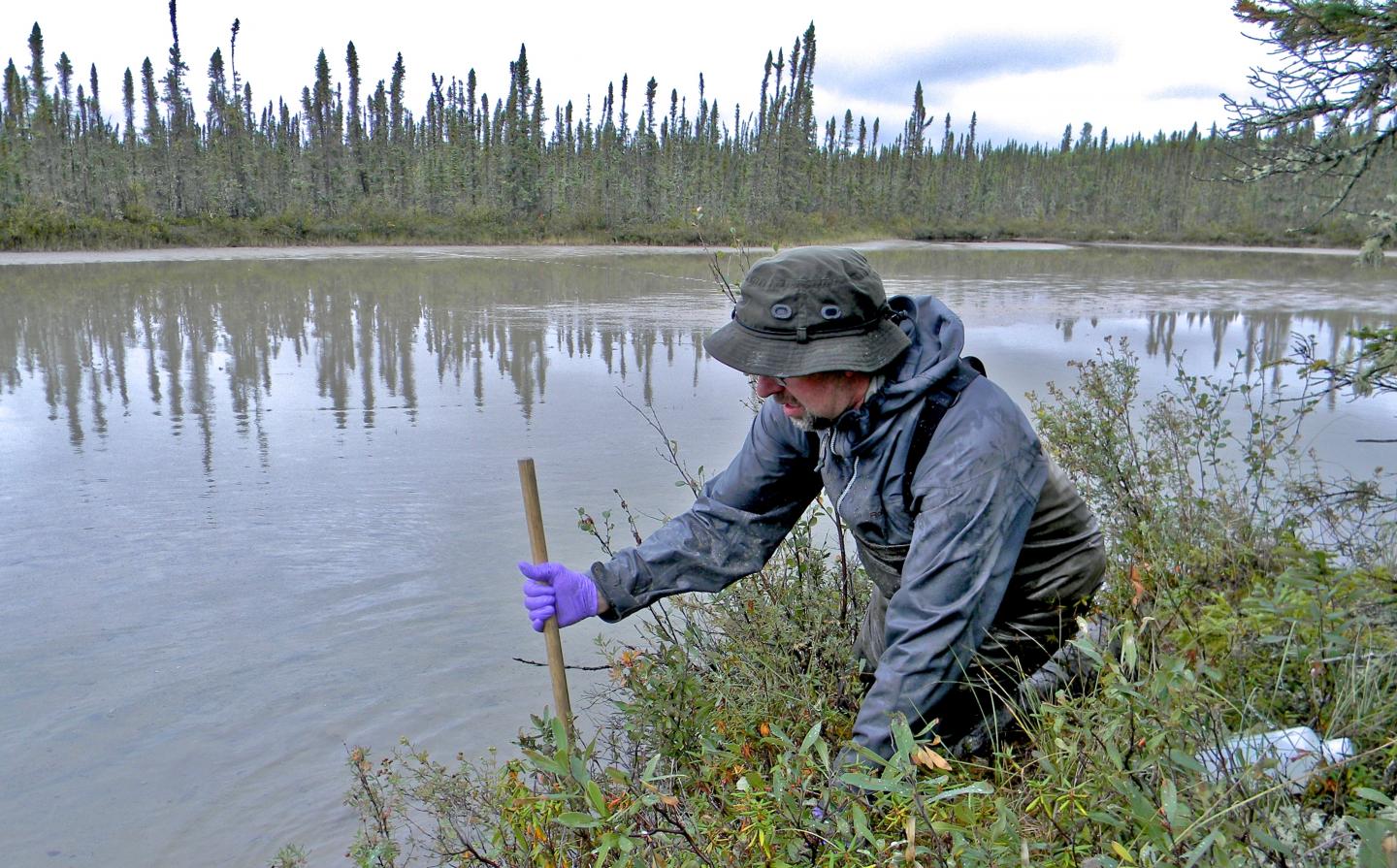
To address this, a recent collaboration between the Hajibabaei Lab (Centre for Biodiversity Genomics, University of Guelph) and scientists at Environment and Climate Change Canada resulted in a paper in PLOS One investigating the recovery of macroinvertebrates, in particular EPTO, in shallow open-water wetlands by comparing matched water and bulk-tissue DNA samples.
Overall, they found that very few taxa were shared between bulk-benthos and water samples, with a much greater richness of macroinvertebrate taxa recovered from benthos. EPTO groups in particular were associated strongly with bulk-benthos samples, with limited EPTO families detected in all matched water samples.
“This pristine, wetland study system is excellent for comparing the relative detection of these taxa without the influence of water flow,” said lead author Prof. Mehrdad Hajibabaei. The study illustrates how sample choice is a critical factor for a comprehensive assessment of total macroinvertebrate biodiversity. “This research is vitally important for informing large-scale projects such as STREAM, where a high volume of benthic macroinvertebrate data is now being generated using a standardised DNA-based methodology.”
“Species detectability is an important consideration when designing biomonitoring programs,” said Dr. Donald Baird, co-author and Research Scientist with Environment and Climate Change Canada’s Water Science and Technology Directorate. “Our study shows clearly that to access macroinvertebrates DNA water samples are no substitute for bulk organism collection, as the majority of critical indicator taxa are simply not detected when we know they are present.”
Eliminating false negatives and positives is crucial for creating high quality baseline data for determining the health status of Canadian watersheds. “There is a need for consistency of biomonitoring data when assessing total biodiversity, and bulk-benthos samples provide sufficient taxonomic coverage that is both cost-effective and efficient,” said Dr. Chloe Robinson, co-author and project manager for STREAM.
This study emphasises the critical nature of choosing representative sampling methods to maximise DNA capture from target organisms whilst avoiding diluting the diversity, to enable informed decisions regarding freshwater health.
###
Media Contact
Mehrdad Hajibabaei
[email protected]
519-824-4120 x52487
Original Source
https:/
Related Journal Article
http://dx.