• HOME
  • NEWS
  • EXPLORE
    • CAREER
      • Companies
      • Jobs
    • EVENTS
    • iGEM
      • News
      • Team
    • PHOTOS
    • VIDEO
    • WIKI
  • BLOG
  • COMMUNITY
    • FACEBOOK
    • INSTAGRAM
    • TWITTER
Saturday, February 7, 2026
BIOENGINEER.ORG
No Result
View All Result
  • Login
  • HOME
  • NEWS
  • EXPLORE
    • CAREER
      • Companies
      • Jobs
        • Lecturer
        • PhD Studentship
        • Postdoc
        • Research Assistant
    • EVENTS
    • iGEM
      • News
      • Team
    • PHOTOS
    • VIDEO
    • WIKI
  • BLOG
  • COMMUNITY
    • FACEBOOK
    • INSTAGRAM
    • TWITTER
  • HOME
  • NEWS
  • EXPLORE
    • CAREER
      • Companies
      • Jobs
        • Lecturer
        • PhD Studentship
        • Postdoc
        • Research Assistant
    • EVENTS
    • iGEM
      • News
      • Team
    • PHOTOS
    • VIDEO
    • WIKI
  • BLOG
  • COMMUNITY
    • FACEBOOK
    • INSTAGRAM
    • TWITTER
No Result
View All Result
Bioengineer.org
No Result
View All Result
Home NEWS Science News Health

Was Mona Lisa’s smile a lie?

Bioengineer by Bioengineer
June 5, 2019
in Health
Reading Time: 3 mins read
0
IMAGE
Share on FacebookShare on TwitterShare on LinkedinShare on RedditShare on Telegram

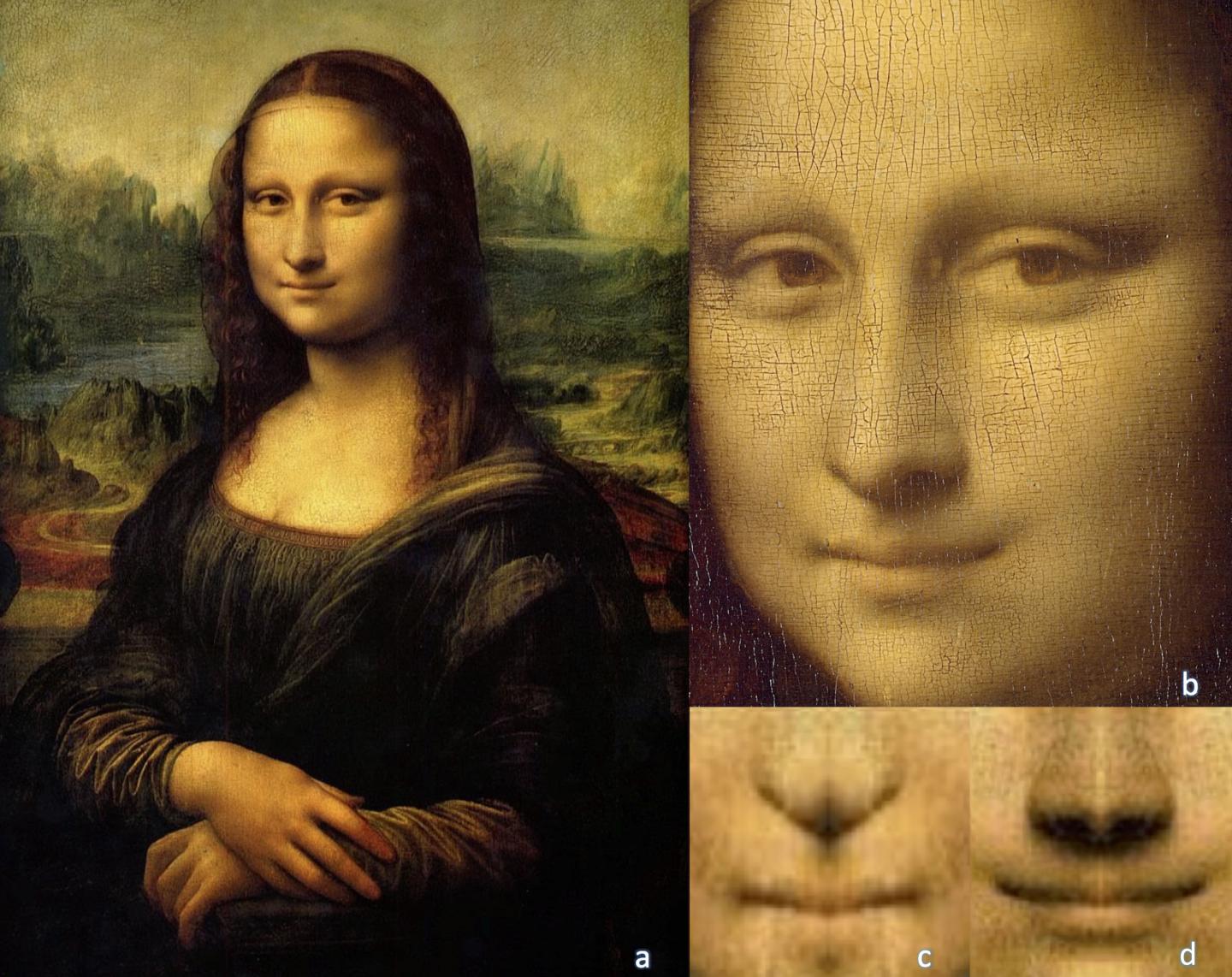
An international research team has found that Mona Lisa’s smile was non-genuine because of its asymmetry
IMAGE

Credit: Musee du Louvre, Paris

CINCINNATI–Mona Lisa’s smile has intrigued mankind since famed artist Leonardo da Vinci painted the portrait in the early 16th century. A research team that includes a University of Cincinnati (UC) neurologist now says that her smile was non-genuine because of its asymmetry.

“Our results indicate that happiness is expressed only on the left side. According to some influential theories of emotion neuropsychology, we here interpreted the Mona Lisa asymmetric smile as a none genuine smile, also thought to occur when the subject lies,” the authors write in their study published recently in the April 2019 issue of the journal Cortex. Luca Marsili, MD, PhD, an instructor in neurology and rehabilitation medicine at the UC College of Medicine, was the lead author of the paper.

Marsili and his colleagues Lucia Ricciardi, MD, PhD, with St. George’s University of London, and Matteo Bologna, PhD, of the Sapienza University of Rome, asked 42 people to judge which of six basic emotions were expressed by two chimeric images of the left and right sides of Mona Lisa’s smile. A chimeric image is a mirror image of, in this case, just one side of the smile. Thirty-nine, or 92.8%, of the raters indicated that the left half of the smile displayed happiness while none indicated the right side showed happiness. In assessing the right side smile, 35 said the expression was neutral, five said it was disgust and two indicated sadness.

The authors also point out that there also is no upper face muscle activation in the Mona Lisa painting. A genuine smile causes the checks to raise and muscles around the eyes to contract, and is called a Duchenne smile, after 19th century French neurologist Guillaume Duchenne. The asymmetric smile, also known as a non-Duchenne smile, “reflects a non-genuine emotion and is thought to occur when the subject lies,” the authors note.

“Considering it is unlikely that a person who sits motionless for hours to be painted is able to constantly smile in genuine happiness, the simplest explanation is that the Mona Lisa asymmetric smile is the manifestation of an ‘untrue enjoyment’ in spite of all the efforts that Leonardo’s jesters used to make in order to keep his models merry,” the researchers write. “An alternative intriguing possibility, however, is that Leonardo already knew the true meaning of asymmetric smile more than three centuries before Duchenne’s reports and deliberately illustrated a smile expressing a ‘non-felt’ emotion.”

If da Vinci was aware of the meaning of an asymmetric smile, the authors speculate that Mona Lisa’s smile might hide cryptic messages, for example, that this was in reality a self-portrait or that the portrait referred to a man or a dead woman.

“While the Mona Lisa smile continues to attract attention of its observers, the true message it conveys remains elusive and many unsolved mysteries remain to be elucidated, perhaps via the knowledge of emotion neuropsychology,” the researchers conclude.

###

This research did not receive any specific grant from funding agencies in the public, commercial or not-for-profit sectors.

Media Contact
Richard Puff
[email protected]

Original Source

https://www.uc.edu/news/articles/2019/06/n20837546.html

Related Journal Article

http://dx.doi.org/10.1016/j.cortex.2019.03.020

Tags: Arts/CultureMedicine/Healthneurobiology
Share15Tweet9Share2ShareShareShare2

Related Posts

Palmitoylation of Tfr1 Drives Platelet Ferroptosis and Exacerbates Liver Damage in Heat Stroke

February 7, 2026

Oxygen-Enhanced Dual-Section Microneedle Patch Improves Drug Delivery and Boosts Photodynamic and Anti-Inflammatory Treatment for Psoriasis

February 7, 2026

Scientists Identify SARS-CoV-2 PLpro and RIPK1 Inhibitors Showing Potent Synergistic Antiviral Effects in Mouse COVID-19 Model

February 7, 2026

Neg-Entropy: The Key Therapeutic Target for Chronic Diseases

February 7, 2026
Please login to join discussion

POPULAR NEWS

  • Robotic Ureteral Reconstruction: A Novel Approach

    Robotic Ureteral Reconstruction: A Novel Approach

    82 shares
    Share 33 Tweet 21
  • Digital Privacy: Health Data Control in Incarceration

    63 shares
    Share 25 Tweet 16
  • Study Reveals Lipid Accumulation in ME/CFS Cells

    57 shares
    Share 23 Tweet 14
  • Breakthrough in RNA Research Accelerates Medical Innovations Timeline

    53 shares
    Share 21 Tweet 13

About

We bring you the latest biotechnology news from best research centers and universities around the world. Check our website.

Follow us

Recent News

Palmitoylation of Tfr1 Drives Platelet Ferroptosis and Exacerbates Liver Damage in Heat Stroke

Oxygen-Enhanced Dual-Section Microneedle Patch Improves Drug Delivery and Boosts Photodynamic and Anti-Inflammatory Treatment for Psoriasis

Scientists Identify SARS-CoV-2 PLpro and RIPK1 Inhibitors Showing Potent Synergistic Antiviral Effects in Mouse COVID-19 Model

Subscribe to Blog via Email

Enter your email address to subscribe to this blog and receive notifications of new posts by email.

Join 73 other subscribers
  • Contact Us

Bioengineer.org © Copyright 2023 All Rights Reserved.

Welcome Back!

Login to your account below

Forgotten Password?

Retrieve your password

Please enter your username or email address to reset your password.

Log In
No Result
View All Result
  • Homepages
    • Home Page 1
    • Home Page 2
  • News
  • National
  • Business
  • Health
  • Lifestyle
  • Science

Bioengineer.org © Copyright 2023 All Rights Reserved.