• HOME
  • NEWS
  • EXPLORE
    • CAREER
      • Companies
      • Jobs
    • EVENTS
    • iGEM
      • News
      • Team
    • PHOTOS
    • VIDEO
    • WIKI
  • BLOG
  • COMMUNITY
    • FACEBOOK
    • INSTAGRAM
    • TWITTER
Friday, May 15, 2026
BIOENGINEER.ORG
No Result
View All Result
  • Login
  • HOME
  • NEWS
  • EXPLORE
    • CAREER
      • Companies
      • Jobs
        • Lecturer
        • PhD Studentship
        • Postdoc
        • Research Assistant
    • EVENTS
    • iGEM
      • News
      • Team
    • PHOTOS
    • VIDEO
    • WIKI
  • BLOG
  • COMMUNITY
    • FACEBOOK
    • INSTAGRAM
    • TWITTER
  • HOME
  • NEWS
  • EXPLORE
    • CAREER
      • Companies
      • Jobs
        • Lecturer
        • PhD Studentship
        • Postdoc
        • Research Assistant
    • EVENTS
    • iGEM
      • News
      • Team
    • PHOTOS
    • VIDEO
    • WIKI
  • BLOG
  • COMMUNITY
    • FACEBOOK
    • INSTAGRAM
    • TWITTER
No Result
View All Result
Bioengineer.org
No Result
View All Result
Home NEWS Science News Biology

Warmer nights prompt forest birds to lay eggs earlier in spring

Bioengineer by Bioengineer
October 16, 2019
in Biology
Reading Time: 2 mins read
0
IMAGE
Share on FacebookShare on TwitterShare on LinkedinShare on RedditShare on Telegram

IMAGE

Credit: Gergana Daskalova

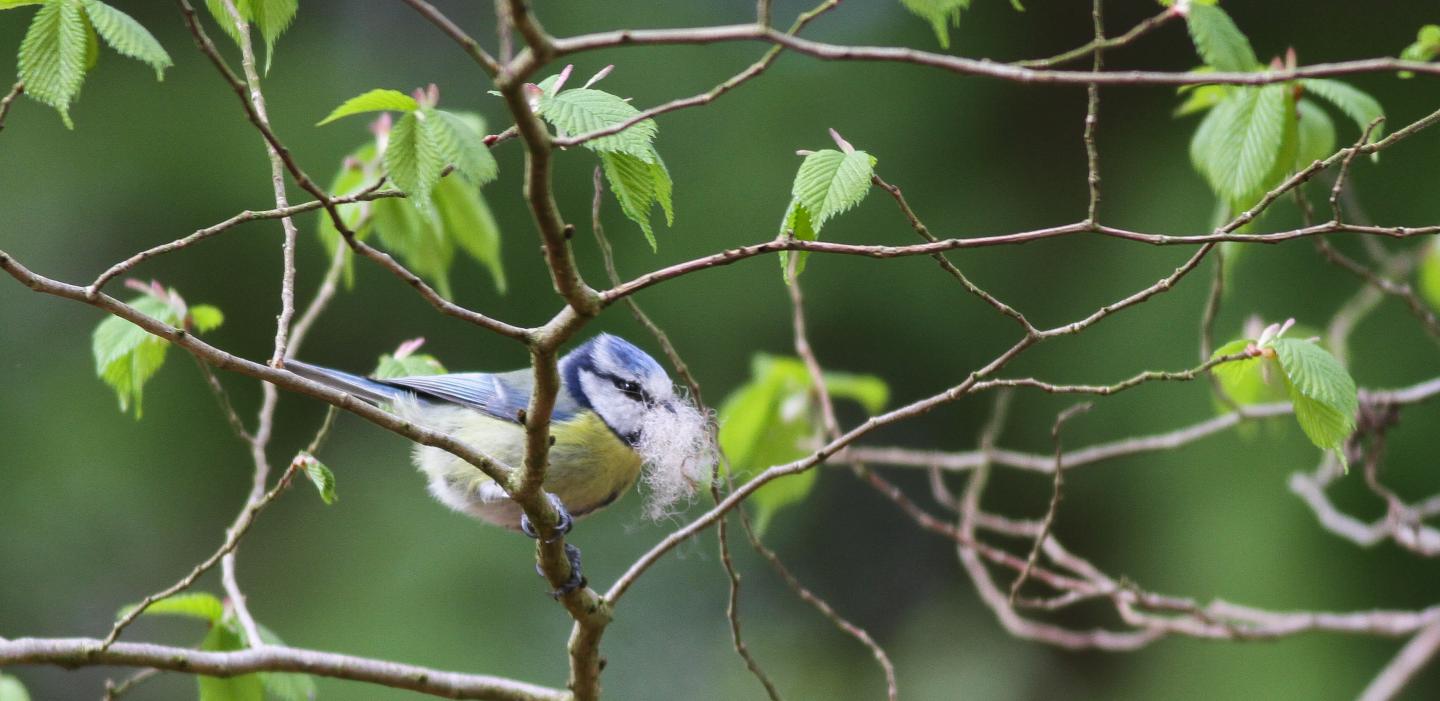
As climate change continues to cause temperatures to rise, the breeding patterns of birds such as blue tits are being altered as evenings in spring get warmer, researchers say.

Previous research has shown that warmer springs have led birds to begin breeding earlier. However, until now, scientists had not identified the key factors that cause this behaviour.

With increasing spring warming, chicks may begin hatching after periods when caterpillars – their main food source – are most plentiful, scientists say.

Warmer temperatures are causing the peak in caterpillar numbers to occur earlier in the year, and birds like blue tits are responding too, but often not fast enough, the team says.

A team of biologists from the University of Edinburgh analysed data from 40 Scottish sites over a five-year period.

They found that birds decide when to reproduce based on night-time temperatures in springtime. Their findings suggest that colder temperatures may act as a constraint that delays the processes of building nests and laying eggs.

Blue tits were also found to lay eggs sooner if birch trees come into leaf earlier. This is some of the first evidence that birds use trees as a cue for timing breeding. Blue tits may use birch trees as a signal because they come into leaf earlier than other species, the team says.

Using data gained from two national citizen science projects, researchers found that night-time temperature and birch leafing have very similar effects on the breeding behaviour of woodland birds across the UK.

Dr Jack Shutt, of the University of Edinburgh’s School of Biological Sciences, who led the study, said: “Working out what information birds use to time breeding is key to us accurately predicting how this may change under future conditions, and what effect this will have on them.”

###

The study, published in Proceedings of the Royal Society B, was funded by the Natural Environment Research Council. It involved researchers from the Woodland Trust, British Trust for Ornithology, University of Exeter, and Royal Society for the Protection of Birds.

Media Contact
Corin Campbell
[email protected]
44-131-650-6382

Related Journal Article

http://dx.doi.org/10.1098/rspb.2019.0952

Tags: BiologyClimate ChangeClimate ScienceDevelopmental/Reproductive BiologyEcology/EnvironmentZoology/Veterinary Science
Share12Tweet8Share2ShareShareShare2

Related Posts

Why Are Nearly Everyone Right-Handed? It Might Be Linked to How We Learned to Walk — Biology

Why Are Nearly Everyone Right-Handed? It Might Be Linked to How We Learned to Walk

May 15, 2026
Excessive Neuronal Activity Initiates Severe Autoimmune Brain Disorder — Biology

Excessive Neuronal Activity Initiates Severe Autoimmune Brain Disorder

May 15, 2026

Precision Anti-Aging Strategies Focus on Eliminating Harmful Senescent Cells While Preserving Beneficial Ones

May 15, 2026

Root-Knot Nematodes Hijack Plant Signaling Peptides

May 15, 2026
Please login to join discussion

POPULAR NEWS

  • Research Indicates Potential Connection Between Prenatal Medication Exposure and Elevated Autism Risk

    843 shares
    Share 337 Tweet 211
  • New Study Reveals Plants Can Detect the Sound of Rain

    729 shares
    Share 291 Tweet 182
  • Salmonella Haem Blocks Macrophages, Boosts Infection

    62 shares
    Share 25 Tweet 16
  • Breastmilk Balances E. coli and Beneficial Bacteria in Infant Gut Microbiomes

    58 shares
    Share 23 Tweet 15

About

We bring you the latest biotechnology news from best research centers and universities around the world. Check our website.

Follow us

Recent News

Detecting Colinear Blocks and Evolution with MCScanX

CRISPR Uncovers Melioidosis Risks in Northeast Thailand

Indocyanine Green Fluorescence Differentiates Neuroblastic Tumors

Subscribe to Blog via Email

Enter your email address to subscribe to this blog and receive notifications of new posts by email.

Join 82 other subscribers
  • Contact Us

Bioengineer.org © Copyright 2023 All Rights Reserved.

Welcome Back!

Login to your account below

Forgotten Password?

Retrieve your password

Please enter your username or email address to reset your password.

Log In
No Result
View All Result
  • Homepages
    • Home Page 1
    • Home Page 2
  • News
  • National
  • Business
  • Health
  • Lifestyle
  • Science

Bioengineer.org © Copyright 2023 All Rights Reserved.