Korber’s Epigraph algorithm used for HIV, Ebola, Marburg thus far
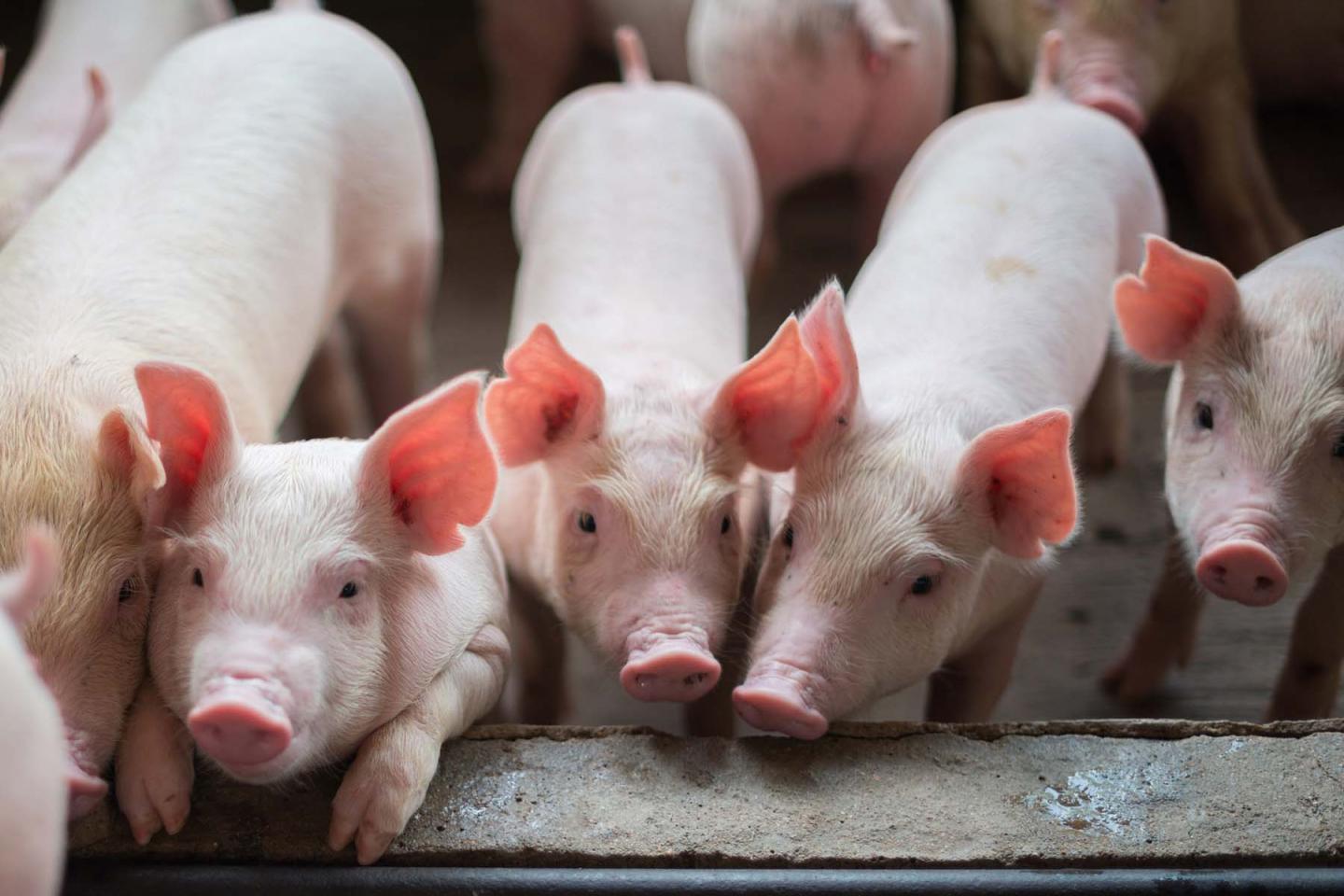
Credit: Dreamstime
LOS ALAMOS, N.M., March 1, 2021– A novel computer algorithm that could create a broadly reactive influenza vaccine for swine flu also offers a path toward a pan-influenza vaccine and possibly a pan-coronavirus vaccine as well, according to a new paper published in Nature Communications.
“This work takes us a step closer to a pan-swine flu virus vaccine,” said Bette Korber, a computational biologist at Los Alamos National Laboratory and a co-author on the paper. “The hope is to eventually be prepared with an effective and rapid response if another swine flu epidemic begins to spread in humans, but this swine flu vaccine could also be useful in a veterinary setting.” The immune responses to the vaccine showed very promising breadth against diverse viral variants. “The same basic principles may be applicable to developing a pan-coronavirus vaccine to enable a rapid vaccine response to future coronavirus cross-species jumps,” said Korber.
The algorithm, Epigraph, has already been used to predict therapeutic HIV vaccine candidates, and it has also shown promising potential as a pan-filovirus vaccine against highly diverse Ebola and Marburg viruses, protecting against disease when tested in an animal model.
Vaccination with the Epigraph-designed product led to the development of a strong cross-reactive antibody response in mice, the study showed. In swine, it induced strong cross-reactive antibody and T-cell responses. The research was conducted in close collaboration with researchers from the Nebraska Center for Virology at the University of Nebraska, St. Jude Children’s Research Hospital, and Los Alamos National Laboratory.
“We developed the Epigraph strategy for this kind of problem, and it can, in theory, be applied to many diverse pathogens,” said Korber, who created it in partnership with her husband, James Theiler, a Los Alamos Fellow. “The tool creates a cocktail of vaccine antigens designed to maximize efficacy across a highly diverse population.”
Since 2010, more than 460 swine-flu variant infections have been reported in humans in the United States. Pigs are susceptible to swine, avian, and human influenza viruses, making them the perfect “mixing vessel” for novel reassorted influenza viruses, the authors note. These novel reassorted viruses have significant pandemic potential if zoonosis (transfer from pigs to humans) occurs, as seen with 2009 H1N1 swine flu pandemic.
###
The paper: Bullard, B.L., Corder, B.N., DeBeauchamp, J. et al. Epigraph hemagglutinin vaccine induces broad cross-reactive immunity against swine H3 influenza virus. Nat Commun 12, 1203 (2021). https:/
The funding: The Biodefense and Emerging Infectious Disease (BEI) Repository provided the USDA Swine Surveillance Influenza A virus isolates repository for reagents used in this study. This research was supported by the National Institutes of Health under Ruth L. Kirschstein National Research Service Award 1 T32 AI125207.
About Los Alamos National Laboratory
Los Alamos National Laboratory, a multidisciplinary research institution engaged in strategic science on behalf of national security, is managed by Triad, a public service oriented, national security science organization equally owned by its three founding members: Battelle Memorial Institute (Battelle), the Texas A&M University System (TAMUS), and the Regents of the University of California (UC) for the Department of Energy’s National Nuclear Security Administration.
Los Alamos enhances national security by ensuring the safety and reliability of the U.S. nuclear stockpile, developing technologies to reduce threats from weapons of mass destruction, and solving problems related to energy, environment, infrastructure, health, and global security concerns.
LA-UR-21-21903
Media Contact
Nancy Ambrosiano
[email protected]
Original Source
https:/
Related Journal Article
http://dx.