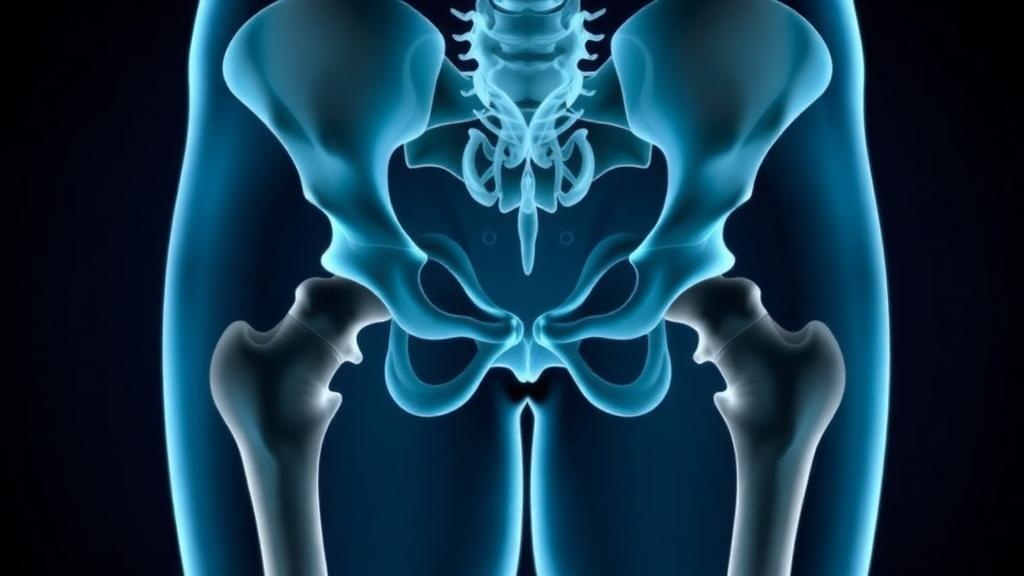
A single measurement of the admission uric acid-to-high-density lipoprotein cholesterol ratio, or UHR, showed an exploratory nonlinear association with long-term all-cause mortality in a retrospective cohort of 304 older adults who underwent surgery for hip fracture. Patients were treated at Honghui Hospital in Xi’an, China, between January 1, 2015, and September 30, 2019. Their mean age was 80.00 ± 6.50 years, and 82 died during mean follow-up of 34.42 ± 14.76 months. The results do not establish UHR as an independent prognostic marker or a clinical cutoff, but they identify a relationship that merits prospective testing in larger, multicenter populations.
The investigators calculated UHR by dividing the first available serum uric acid concentration after admission, expressed in micromoles per liter, by the first available HDL-C concentration, expressed in millimoles per liter. Because the numerical value depends on the units used, the study’s estimated inflection point of 166.17 is specific to that unit convention. The cohort included 104 men and 200 women. Of the fractures, 214 were intertrochanteric and 90 were femoral neck fractures; 296 injuries resulted from falls, five from accidents and three from other mechanisms. Most patients received closed or open reduction and internal fixation, while smaller groups received hemiarthroplasty or total hip arthroplasty. Survival status after discharge was established through telephone contact with family members, allowing the researchers to examine whether a ratio derived from routine laboratory measurements was associated with subsequent mortality. As a retrospective observational study, however, it could not determine whether the ratio itself caused differences in outcomes.
When UHR was analyzed as a continuous variable in a conventional Cox proportional-hazards model, its unadjusted association with mortality was statistically significant at P = 0.0213. That relationship weakened after adjustment for age and sex and was no longer significant in the fully adjusted model, which also accounted for the age-adjusted Charlson Comorbidity Index, coronary heart disease, arrhythmia and dementia. The fully adjusted continuous-UHR result was P = 0.1413. Dividing participants into low, medium and high UHR tertiles produced a similar pattern: crude mortality was 18.00% in the low group, 30.69% in the middle group and 32.04% in the high group, but neither adjusted category comparison nor the adjusted trend test reached statistical significance. The fully adjusted hazard ratio for the high versus low tertile was 1.54, with a 95% confidence interval of 0.84–2.84 and P = 0.1624. These results therefore do not support describing UHR as an independent predictor under a linear or tertile-based parameterization.
Those conventional results motivated the researchers to examine whether a straight-line model was masking a different functional shape. Using restricted cubic splines for visual assessment and an exploratory two-piecewise Cox model, the team estimated an inflection point at a UHR of 166.17 under the study’s micromole-per-liter-to-millimole-per-liter convention. Below that value, each one-unit increase in UHR was associated with a hazard ratio for death of 1.01, with a 95% confidence interval of 1.00–1.03 and P = 0.0326. Above the inflection point, the estimated additional slope was effectively flat and not statistically significant, with P = 0.8050. A likelihood-ratio test comparing the single-slope and two-piecewise models favored the nonlinear specification, P = 0.037. The analysis therefore identified a possible association concentrated within the lower portion of the observed UHR range, rather than a consistent increase in mortality risk across the entire range.
The fitted shape should not be mistaken for proof of a biological threshold. “Plateau” is a description of the model’s estimated curve, not a demonstration that a specific mechanism switches on at 166.17. Nor does the flat slope above that point mean that patients with higher UHR have the same absolute mortality risk as those with low UHR. It means only that, within this dataset, additional increases above the estimated inflection point were not detectably associated with further increases in the modeled hazard. The threshold and both slopes were estimated from the same small cohort, creating scope for overfitting and optimism. For the fully adjusted continuous-UHR model there were approximately 11.7 deaths per regression parameter, while models using tertiles or two UHR slopes had approximately 10.3. Those conventional ratios do not capture the additional uncertainty introduced by choosing an inflection point from the same data.
Groups also differed in ways that complicate simple interpretations of the tertile results. The proportion of men increased from 18.00% in the low-UHR group to 37.62% in the middle group and 46.60% in the high group, although women still slightly outnumbered men in the highest group, 55 to 48. Fracture classification, prevalence of coronary heart disease, time to admission and surgical treatment also varied across tertiles. Time to admission followed a non-monotonic pattern—66.49, 190.73 and 83.06 hours from low to high UHR—so the difference cannot be interpreted as a dose-response relationship or as a consequence of UHR. The higher crude mortality in the highest tertile is compatible with a plateau above the estimated inflection point because a null slope above 166.17 means that additional increases within the higher range were not detectably associated with further risk. It does not erase differences accumulated across lower UHR values. Nevertheless, because the fully adjusted tertile comparison was not significant, UHR cannot be described as an independent predictor on the basis of these data.
UHR is attractive as a candidate marker because it combines two inexpensive measurements already obtained in routine care. The investigators noted that uric acid has been associated in prior research with adverse outcomes in cardiovascular disease, metabolic syndrome and chronic kidney disease, while HDL-C has been linked with vascular functions including anti-inflammatory and antioxidant activity and cholesterol reverse transport. The ratio was proposed as a possible combined indicator of metabolic and inflammatory disturbance accompanying hip fracture and therefore as a marker that might supplement conventional prognostic assessment. However, this study did not measure inflammasome activation, cytokines, oxidative injury or HDL function. Links involving oxidative stress, inflammation, endothelial dysfunction or reduced HDL-related antioxidant capacity remain possible biological explanations rather than demonstrated mechanisms in these patients.
Several limitations constrain how far the findings can be generalized. The cohort came from one trauma center and included 304 participants and 82 deaths, limiting statistical precision and generalizability. UHR was measured only once after admission for an acute fracture. Trauma, fasting status, hydration, renal function, medications and perioperative stress may alter uric acid or HDL-C, so the admission value may not represent a patient’s pre-fracture metabolic state. The analysis also could not adjudicate cardiovascular, infectious, malignant or other causes of death because only all-cause mortality was available. Residual confounding from lifestyle, medication use, renal function, frailty, sarcopenia and socioeconomic conditions remains possible. The study did not evaluate whether UHR adds information beyond established clinical, frailty, muscle, inflammatory or nutritional assessments, and it did not test whether adding the ratio would improve discrimination, calibration or clinical decision-making.
A value of 166.17 is therefore a cohort- and unit-specific estimated inflection point, not a validated clinical benchmark, and patients with values above it should not automatically receive intensified treatment on the basis of UHR alone. The researchers called for prospective multicenter studies to confirm the functional form of the association, repeat UHR measurements after the acute stress period, validate any threshold externally and determine whether UHR adds useful prognostic information beyond established measures. Until then, the result is best understood as hypothesis-generating evidence: an accessible candidate marker with an exploratory nonlinear signal, but no demonstrated independent predictive value for guiding care after hip fracture.
Subject of Research: Association between admission uric acid-to-HDL cholesterol ratio and long-term mortality in older adults after hip fracture surgery
Article Title: Admission uric acid to HDL-C ratio and long-term mortality after hip fracture in older adults: a retrospective cohort study
Article References: Han, S., Fu, Y.-H., Ke, C., & Zhang, B.-F. (2026). Admission uric acid to HDL-C ratio and long-term mortality after hip fracture in older adults: a retrospective cohort study. Frontiers in Medicine, 13, Article 1906596. https://doi.org/10.3389/fmed.2026.1906596
Image Credits: AI Generated
DOI: 10.3389/fmed.2026.1906596
Keywords: hip fracture, uric acid, HDL cholesterol, UHR, older adults, mortality, retrospective cohort, nonlinear association, survival analysis, prognostic biomarker, Admission, uric
News Source: Ophelia Keating. (October 21, 2026). Uric Acid–HDL Ratio Shows Exploratory Mortality Pattern After Hip Fracture. Scienmag.