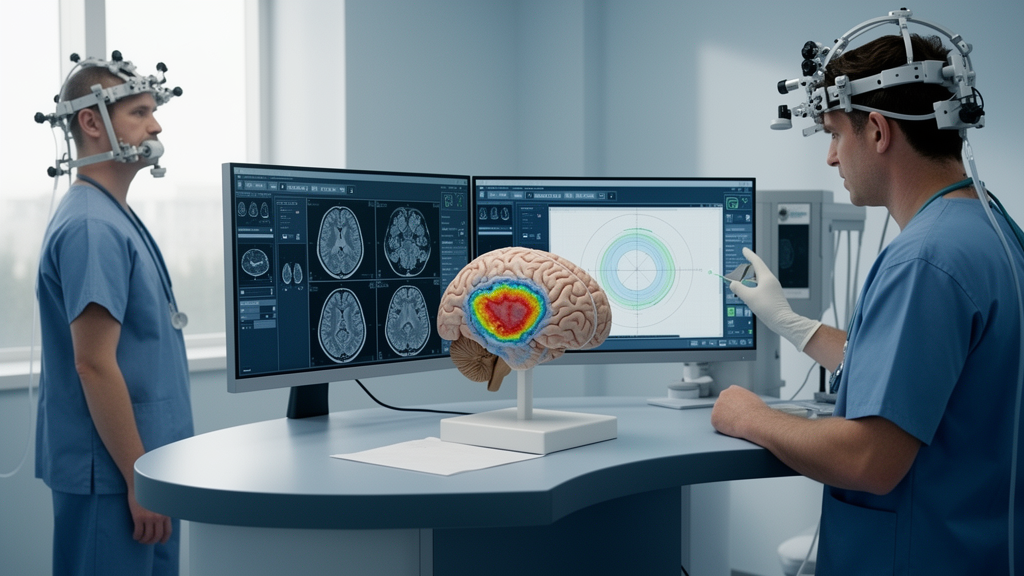
Artificial intelligence is being developed for multiple stages of the Gamma Knife radiosurgery workflow, from tumor segmentation and treatment planning to prediction of treatment response and toxicity assessment. A narrative review of learning-based approaches finds promising results in several tasks, but concludes that the evidence is predominantly retrospective and task-specific, with limited external or prospective validation.
The review, published in Journal of Neuro-Oncology, evaluated research that applied AI to Gamma Knife clinical, imaging or treatment-planning data. The authors searched PubMed/MEDLINE, Embase and Scopus through September 20, 2026. Studies outside the field of Gamma Knife radiosurgery and those not using learning-based methods were excluded, while eligible studies were synthesized according to major stages of the radiosurgery workflow. As a narrative review, the analysis maps the applications of AI rather than testing one model or intervention in a clinical trial.
Identified applications include tumor segmentation, isocenter selection, prescription and dose-distribution prediction, synthetic computed tomography generation, and assessment of treatment-plan quality. These tools address different parts of the technical planning process, from identifying anatomy to supporting decisions about where to focus treatment and how a proposed radiation dose is distributed. Several models have reported promising performance, but the review does not establish that routine use of these methods would improve patient outcomes. The evidence for each application also remains tied to the specific data, task and clinical setting in which its model was evaluated.
Post-treatment applications include longitudinal tumor monitoring and prediction of response, functional outcomes and toxicity. The reviewed toxicity models address outcomes such as peritumoral edema and radiation necrosis. Some studies have produced encouraging results within their respective datasets, but those findings do not demonstrate clinical benefit across Gamma Knife centers or among individual patients. Predictive performance alone therefore does not show that an AI tool can meaningfully improve treatment decisions, and the review emphasizes the need to demonstrate clinical benefit separately from technical performance.
Across the literature, the central limitation is the gap between promising model results and dependable clinical use. Many studies rely on small or single-center datasets, while external and prospective validation has been limited. This restricts the strength of the conclusions that can be drawn for broader clinical adoption. The review calls for multicenter validation, prospective evaluation, integration into clinical workflows, and evidence of meaningful clinical benefit before AI becomes routine in Gamma Knife radiosurgery. Until that evidence is available, the authors characterize AI as a decision-support tool that can support radiosurgical expertise rather than replace it. The current evidence therefore supports further evaluation of AI across specific Gamma Knife tasks, but not autonomous use or claims of improved safety, effectiveness or consistency in clinical practice.
Subject of Research: Artificial intelligence applications in Gamma Knife radiosurgery
Article Title: Artificial intelligence in gamma knife radiosurgery: applications in treatment planning, response prediction, and toxicity assessment
Article References: Zidan, A., El-Sherbini, A., Burns, L., & Soliman, H. (2026). Artificial intelligence in gamma knife radiosurgery: applications in treatment planning, response prediction, and toxicity assessment. Journal of Neuro-Oncology, 180(2), Article 27. https://doi.org/10.1007/s11060-026-05834-7
Image Credits: AI Generated
DOI: 10.1007/s11060-026-05834-7
Keywords: artificial intelligence, Gamma Knife radiosurgery, treatment planning, tumor segmentation, outcome prediction, toxicity assessment, radiation necrosis, medical imaging, clinical validation, decision support, Artificial, intelligence
News Source: Nathaniel Bowman. (October 21, 2026). AI tools emerge for Gamma Knife planning and outcome prediction. Scienmag.