• HOME
  • NEWS
  • EXPLORE
    • CAREER
      • Companies
      • Jobs
    • EVENTS
    • iGEM
      • News
      • Team
    • PHOTOS
    • VIDEO
    • WIKI
  • BLOG
  • COMMUNITY
    • FACEBOOK
    • INSTAGRAM
    • TWITTER
Wednesday, July 8, 2026
BIOENGINEER.ORG
No Result
View All Result
  • Login
  • HOME
  • NEWS
  • EXPLORE
    • CAREER
      • Companies
      • Jobs
        • Lecturer
        • PhD Studentship
        • Postdoc
        • Research Assistant
    • EVENTS
    • iGEM
      • News
      • Team
    • PHOTOS
    • VIDEO
    • WIKI
  • BLOG
  • COMMUNITY
    • FACEBOOK
    • INSTAGRAM
    • TWITTER
  • HOME
  • NEWS
  • EXPLORE
    • CAREER
      • Companies
      • Jobs
        • Lecturer
        • PhD Studentship
        • Postdoc
        • Research Assistant
    • EVENTS
    • iGEM
      • News
      • Team
    • PHOTOS
    • VIDEO
    • WIKI
  • BLOG
  • COMMUNITY
    • FACEBOOK
    • INSTAGRAM
    • TWITTER
No Result
View All Result
Bioengineer.org
No Result
View All Result
Home NEWS Science News Chemistry

Upcycling spongy plastic foams from shoes, mattresses and insulation

Bioengineer by Bioengineer
April 29, 2020
in Chemistry
Reading Time: 2 mins read
0
IMAGE
Share on FacebookShare on TwitterShare on LinkedinShare on RedditShare on Telegram

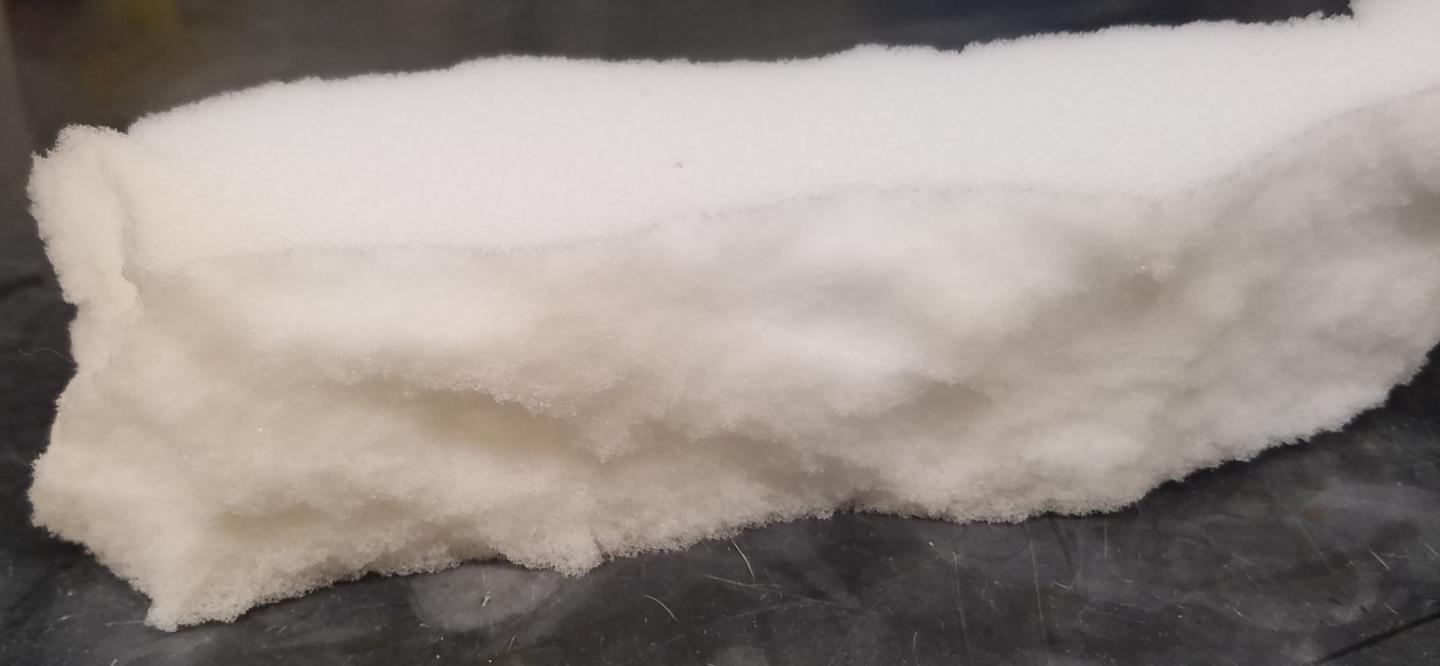
New method turns foam into higher value rubber and hard plastics
IMAGE

Credit: Northwestern University

EVANSTON, Ill. — Researchers have developed a new method for upcycling polyurethane foams, the spongy material found in mattresses, insulation, furniture cushions and shoes.

This process, developed by researchers at Northwestern University and the University of Minnesota, first involves mixing postconsumer polyurethane foam waste with a catalyst solution that allows the foam to become malleable. Next, the method uses a “twin-screw” extrusion process that both removes air from the foam to create a new material in the shape of a hard, durable plastic or soft, flexible film as well as remolds the material.

This allows foam waste to be processed into higher quality rubbers and hard plastics for use in shoe cushioning, watch wristbands, hard durable wheels (for shopping carts and skateboards) and in automotive applications, such as bumpers.

“Polyurethane foam waste has historically been landfilled and burned or downcycled for use in carpeting,” said Northwestern’s William Dichtel, who co-led the research. “Our latest work effectively removes air from polyurethane foams and remolds them into any shape. This could pave the way for industry to begin recycling polyurethane foam waste for many relevant applications.”

The research will be published April 29 in the journal ACS Central Science.

Dichtel is the Robert L. Letsinger Professor of Chemistry in Northwestern’s Weinberg College of Arts and Sciences. He co-led the research with Christopher Ellison, an associate professor of chemical engineering and materials science at the University of Minnesota.

Often made from toxic building blocks, polyurethane foam is a stubborn material that frequently ends up at the bottom of landfills. While other types of plastics can be melted down and recycled, polyurethane foam’s chemical bonds are so strong that it does not melt — even in extreme heat. At best, people can shred it into synthetic fibers, which can then be downcycled into carpet and brushes.

Other upcycling efforts have compressed the foam to remove its air, but this resulted in cracked or unevenly blended materials. Dichtel and Ellison’s approach uses two intermeshing, co-rotating screws to simultaneously mix and remold the foam. This improved mixing and air removal.

###

The study, “Reprocessing postconsumer polyurethane foam using carbamate exchange catalysis and twin-screw extrusion,” was supported by the National Science Foundation and the Keck Foundation.

More news at Northwestern Now

Find experts on our Faculty Experts Hub

Follow @NUSources for expert perspectives

Media Contact
Amanda Morris
[email protected]

Tags: Chemistry/Physics/Materials SciencesMaterialsPolymer Chemistry
Share12Tweet8Share2ShareShareShare2

Related Posts

Over 90% of Mar Menor nutrient pollution stems from underground water flows

Over 90% of Mar Menor nutrient pollution stems from underground water flows

July 8, 2026
Weakening Atlantic current drives stronger California storms

Weakening Atlantic current drives stronger California storms

July 8, 2026

New approach simplifies black hole mergers, universe’s most violent events.

July 8, 2026

Salt adaptation linked to higher disease risk, Mizzou study finds

July 6, 2026
Please login to join discussion

POPULAR NEWS

  • Detection of EDCs in Breast Milk and Infant Urine Up to Six Months Highlights Early Exposure Risks

    77 shares
    Share 31 Tweet 19
  • New Drug Candidate Developed at McMaster Shows Potential for Treating Brain Cancer

    58 shares
    Share 23 Tweet 15
  • KTU Researchers Explore Ultrasound’s Role in Enhancing Blood Flow Beyond Diagnostics

    53 shares
    Share 21 Tweet 13
  • 高齢者の骨粗鬆症治療の持続性比較

    51 shares
    Share 20 Tweet 13

About

We bring you the latest biotechnology news from best research centers and universities around the world. Check our website.

Follow us

Recent News

Harnessing Neglected Livestock for Sustainable Food Systems in the Global South

Proteomic Analysis Identifies Prognostic Subgroups in SMARCA-Deficient Esophageal Cancer

DNA from bees and honey reveals honeybee ecology and interactions over time

Subscribe to Blog via Email

Enter your email address to subscribe to this blog and receive notifications of new posts by email.

Join 83 other subscribers
  • Contact Us

Bioengineer.org © Copyright 2023 All Rights Reserved.

Welcome Back!

Login to your account below

Forgotten Password?

Retrieve your password

Please enter your username or email address to reset your password.

Log In
No Result
View All Result
  • Homepages
    • Home Page 1
    • Home Page 2
  • News
  • National
  • Business
  • Health
  • Lifestyle
  • Science

Bioengineer.org © Copyright 2023 All Rights Reserved.