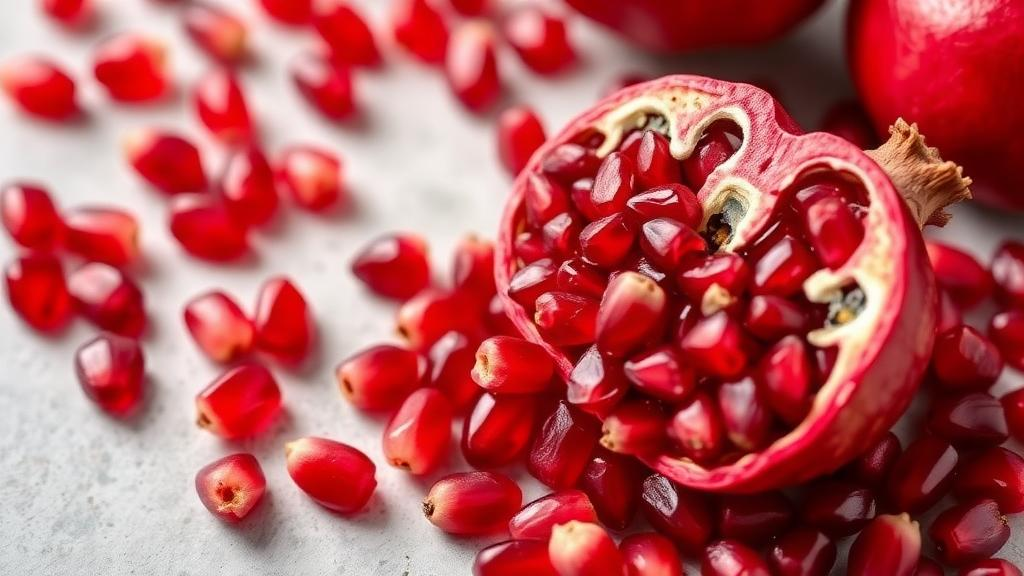
Every year, the global juice industry presses millions of pomegranates and discards the seeds, a fibrous by-product that can account for more than half of the total pomace. Those seeds, it turns out, contain roughly 20 to 30 percent protein, complete in its amino acid make-up and relatively rich in essential amino acids. A new study published in Food Chemistry: X has now taken the most detailed look yet at what that protein is actually made of, and the results suggest that the humble pomegranate seed could become a serious contender in the search for sustainable plant protein ingredients.
A research team led by Lin Yuan and Min Zhu recovered seeds from juice-processing residues of hard-seeded sour pomegranates grown in Artux, Xinjiang, China, ground and defatted them, and extracted the protein using alkaline solubilization followed by isoelectric precipitation. Rather than treating the resulting crude protein as a single material, the researchers applied Osborne sequential fractionation, a century-old technique that separates plant proteins into four classes based on solubility: water-soluble albumins, salt-soluble globulins, alcohol-soluble prolamins, and alkali-soluble glutelins. The logic is simple but powerful. If each fraction behaves differently, then the crude extract is not one ingredient but a toolkit of several, each suited to different jobs in food formulation.
The first surprise came from the physical measurements. Using dynamic light scattering and folded capillary cells, the team found that particle sizes ranged dramatically, from about 777 nanometers for the prolamin fraction to nearly 1586 nanometers for albumin. Zeta potential measurements told a complementary story: the glutelin fraction carried a surface charge of −30.14 millivolts, far stronger than the weakly charged albumin, globulin, and prolamin fractions, which hovered between −3.68 and −5.75 millivolts. The researchers attributed the glutelin’s strong negative charge to alkaline extraction, which unfolds proteins and exposes ionizable groups, while the prolamin’s compact size reflected its high hydrophobic amino acid content, which favors tight intramolecular packing over hydration-driven swelling.
Surface hydrophobicity, measured with a fluorescent ANS probe, varied more than sixfold across the fractions. The prolamin fraction topped the scale at 472.62, consistent with its alcohol-soluble nature and its extraordinary hydrophobic amino acid content of 76.35 percent, while the globulin fraction sat at the bottom with a value of just 73.23. Thermal analysis by differential scanning calorimetry showed that albumin resisted initial unfolding to the highest temperature, with an onset of 145.2 degrees Celsius, while glutelin demanded the most energy to denature, with a denaturation enthalpy of 201.65 joules per gram. The team linked glutelin’s thermal robustness to disulfide-linked subunit structures resembling 11S globulins, the same architecture that stabilizes soybean storage proteins.
Spectroscopy added a molecular dimension to the picture. Fourier-transform infrared analysis of the amide I band revealed that the prolamin fraction contained the highest alpha-helix content of all samples, at 44 percent, while albumin showed the greatest beta-sheet proportion, a feature associated with strong interchain hydrogen bonding and backbone rigidity. Circular dichroism spectra confirmed that albumin, globulin, and glutelin maintained ordered conformations in solution, whereas the crude extract, with the highest random coil content at 18 percent, was the most structurally disordered. Interestingly, the prolamin’s weak circular dichroism signals despite its high fitted helix content hinted at local conformational heterogeneity, possibly arising from its abundant alanine, which favors helices, and proline, whose rigid ring restricts the polypeptide backbone.
Where the fractions truly diverged was in function. Albumin, rich in polar residues, achieved the highest solubility at 24.32 percent but the lowest oil-holding capacity at 0.41 grams per gram. The prolamin fraction flipped that relationship entirely, dissolving at a mere 1.35 percent yet binding 2.32 grams of oil per gram, a figure that exceeds the roughly 0.8 to 1.7 grams per gram reported for most commercial soy, pea, chickpea, oat, and wheat protein ingredients. Glutelin emerged as the interfacial star: despite only intermediate solubility, it produced a foaming capacity of 112 percent, beating commercial wheat and potato proteins, and the highest emulsifying activity index at 2.26 square meters per gram. The prolamin fraction, meanwhile, delivered the highest emulsion stability at 96.33 minutes, comparable to or better than soy and pea proteins.
Nutrition told a more nuanced story. The albumin fraction was the clear winner on essential amino acids, posting the highest amino acid score, essential amino acid content, and essential amino acid index at 15.24 percent, and it also showed the lowest trypsin inhibition rate at 5.08 percent. However, chemical scoring revealed that methionine was the first limiting amino acid in every fractionated sample, meaning that sulfur-containing amino acids remain the principal nutritional bottleneck for pomegranate seed protein, just as they are for many other plant protein sources. The prolamin fraction, despite its unbalanced amino acid profile dominated by alanine and proline, offered a different virtue: the highest intestinal digestibility at 21.18 percent and the lowest phytic acid content at 1.03 micromoles per gram, a combination that reduces concerns about mineral chelation.
Digestion experiments using a simulated gastrointestinal model showed that the fractions responded very differently to the journey through the gut. During the acidic gastric phase, electrostatic stabilization weakened and particles grew, with albumin swelling to 1662.83 nanometers. In the intestinal phase, charges shifted negative and aggregates partially dissociated, shrinking albumin, globulin, and glutelin particles to between 403 and 606 nanometers. Glutelin was the exception, its digestibility actually falling from 13.45 to 11.42 percent as secondary aggregation under intestinal conditions likely shielded cleavage sites from trypsin. The correlation analysis tied these behaviors together quantitatively: digestibility correlated positively with random coil content and solubility and negatively with particle size, while surface hydrophobicity tracked oil-binding and emulsion stability with coefficients reaching 0.85.
Perhaps the most forward-looking part of the study was its proteomic layer. Using data-independent acquisition mass spectrometry, the team identified roughly 3900 proteins across the five samples and found that only about 21 percent were shared by all fractions. Principal component analysis separated the samples cleanly, and differential abundance analysis revealed fraction-specific enrichment of 2S albumin-like proteins, non-specific lipid-transfer proteins, 11S globulin-like proteins, vicilin-like storage proteins, and cupin domain-containing proteins. The enrichment of lipid-transfer-related proteins in the hydrophobic fractions offers a plausible molecular explanation for their superior oil-binding and emulsion-stabilizing behavior, while the accumulation of storage globulins in glutelin aligns with its thermal resilience. The researchers were careful to note that these are annotation-based associations rather than direct functional validation.
The proteomic screen also carried a caution flag. Six potential allergenic proteins were detected, including three isoforms of the known pomegranate allergen Pun g 1, Pun g 14, and two 2S albumins, with the mass spectrometry signals showing that fractionation redistributed but did not eliminate these proteins. The authors stress that relative spectral signals do not equate to clinical allergenicity and that targeted immunological testing will be needed before any food application. Still, the overall message is striking: a by-product that the juice industry throws away by the ton contains not one but several protein ingredients, each with a distinct structural identity, functional specialty, and nutritional profile. With methionine supplementation to address the limiting amino acid and further testing in real food systems, pomegranate seed protein fractions could find roles ranging from water-dispersible beverage bases to lipid-rich emulsions and aerated foams, turning an agricultural waste stream into a molecularly understood resource for the plant protein era.
Subject of Research: Osborne fractionation and characterization of pomegranate seed protein fractions
Article Title: Osborne fractionation of pomegranate seed protein: Structural characteristics, processing properties, proteomic profiles and nutritional value
Article References: Yuan, L., Qiu, Y., Yang, J., Fang, Q., Deng, Q., Hong, J., Zhao, M., & Zhu, M. (2026). Osborne fractionation of pomegranate seed protein: Structural characteristics, processing properties, proteomic profiles and nutritional value. Food Chemistry: X, Article 104551. https://doi.org/10.1016/j.fochx.2026.104551
Image Credits: AI Generated
DOI: 10.1016/j.fochx.2026.104551
Keywords: pomegranate seed protein, Osborne fractionation, plant protein, albumin, globulin, prolamin, glutelin, proteomics, food chemistry, in vitro digestion, amino acid profile, sustainable food ingredients
News Source: Bethany Barker. (October 5, 2026). Pomegranate Seeds, Long Thrown Away, Yield Protein Fractions With Surprising Food Power. Scienmag.