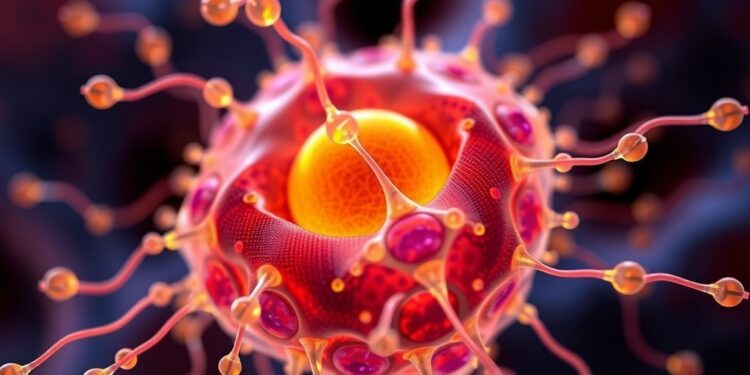
Researchers have made a monumental leap in the field of developmental biology thanks to a revolutionary new technology known as Moscot, which stands for “Multi-Omics Single-Cell Optimal Transport.” This innovative technique empowers scientists to visualize and track the development of millions of cells simultaneously as they form complex organs, such as the pancreas. Developed by a pioneering international team led by Helmholtz Munich, Moscot has garnered significant attention and was published in the prestigious journal Nature, reflecting its groundbreaking nature and profound implications for both medical research and therapeutics.
Historically, our understanding of cellular development within natural environments has been limited. Previous research methods primarily offered static snapshots, often focusing on isolated cells or limited clusters, which provided little insight into the complex and dynamic interactions that unfold during organ formation and associated disease processes. As Dominik Klein, a PhD candidate from the Institute of Computational Biology at Helmholtz Munich, emphasizes, existing technologies were unable to effectively link these dynamic phenomena in both spatial and temporal contexts. This gap has hindered the comprehensive understanding of cellular interactions that play crucial roles during organogenesis and pathology.
Moscot marks a significant paradigm shift in the way cells are studied. By drawing upon an 18th-century mathematical framework known as the theory of optimal transport, researchers have devised a method that allows for the efficient mapping of cell migration and interactions. Traditionally, the application of optimal transport was limited by the constraints of available biomedical datasets, but advances in artificial intelligence, particularly influenced by co-author Marco Cuturi from Apple, have surmounted these limitations. The result is a sophisticated mathematical model adapted to accurately represent the intricate molecular landscape and positioning of cells during development, facilitating unprecedented observational capabilities.
Through Moscot, researchers can now meticulously analyze and map the cellular development of entire organs and organisms. This technology provides real-time, multimodal mappings of single cells within their spatial contexts, bridging the gap between genetic expression and cellular behavior through time. This leap in capability allows scientists to unravel the complexities of cellular processes within living systems, paving the way for novel insights and breakthroughs in our understanding of how organs develop and function.
The implications of this new technology extend beyond basic research; they hold the potential to redefine medical practice. Professor Fabian Theis, the Director of the Institute of Computational Biology and a professor at TUM, underscores Moscot’s transformative role in biomedical research. He asserts that the technology not only captures the dynamic processes of cell development with unmatched precision but also enhances predictive capabilities regarding disease progression. This foresight is crucial for the development of personalized therapeutic approaches, which can be tailored to the individual characteristics of patients and their unique disease profiles.
Moscot exemplifies the power of interdisciplinary collaboration in modern science. The successful merging of mathematics and biology, as orchestrated by the research teams from Helmholtz Munich and the Helmut Diabetes Center, highlights the significance of cooperative efforts across diverse fields in achieving true scientific breakthroughs. Such collaborations are essential for validating theoretical models through experimental procedures, thereby ensuring that predictions made by Moscot are grounded in real-world biological data.
As researchers harness the power of Moscot, they anticipate a deeper understanding of not just normal organ development but also the pathological changes that underlie various diseases. This technology offers invaluable insights into the molecular and cellular dynamics that occur during critical developmental windows, potentially unveiling novel therapeutic targets for conditions such as diabetes, cancer, and other degenerative diseases. The ability to observe these processes in real-time equips researchers with tools to investigate cellular functions and their implications for health and disease, marking a significant step forward in biomedical research.
Ultimately, Moscot is set to revolutionize the landscape of cell biology and organ development studies. By facilitating high-resolution analysis of cell dynamics within their environmental contexts, this technology offers biologists an intuitive yet powerful interface for working with complex datasets generated from living systems. As researchers continue to refine and expand upon Moscot’s capabilities, the potential for groundbreaking discoveries only appears to grow.
In summary, the development of Moscot is a milestone in the field of biology, offering a novel technology capable of mapping cell development with unparalleled detail. Through this innovation, researchers stand on the brink of monumental advancements in understanding organ formation and disease mechanisms, which could ultimately lead to impactful medical interventions and therapies.
Subject of Research: Developmental biology and cellular dynamics
Article Title: AI in Cell Research: Moscot Reveals Cell Dynamics in Unprecedented Detail
News Publication Date: 22-Jan-2025
Web References: moscot-tools.org
References: 10.1038/s41586-024-08453-2
Image Credits:
Keywords: Cell development, computational biology, artificial intelligence.