• HOME
  • NEWS
  • EXPLORE
    • CAREER
      • Companies
      • Jobs
    • EVENTS
    • iGEM
      • News
      • Team
    • PHOTOS
    • VIDEO
    • WIKI
  • BLOG
  • COMMUNITY
    • FACEBOOK
    • INSTAGRAM
    • TWITTER
Thursday, May 21, 2026
BIOENGINEER.ORG
No Result
View All Result
  • Login
  • HOME
  • NEWS
  • EXPLORE
    • CAREER
      • Companies
      • Jobs
        • Lecturer
        • PhD Studentship
        • Postdoc
        • Research Assistant
    • EVENTS
    • iGEM
      • News
      • Team
    • PHOTOS
    • VIDEO
    • WIKI
  • BLOG
  • COMMUNITY
    • FACEBOOK
    • INSTAGRAM
    • TWITTER
  • HOME
  • NEWS
  • EXPLORE
    • CAREER
      • Companies
      • Jobs
        • Lecturer
        • PhD Studentship
        • Postdoc
        • Research Assistant
    • EVENTS
    • iGEM
      • News
      • Team
    • PHOTOS
    • VIDEO
    • WIKI
  • BLOG
  • COMMUNITY
    • FACEBOOK
    • INSTAGRAM
    • TWITTER
No Result
View All Result
Bioengineer.org
No Result
View All Result
Home NEWS Science News Chemistry

Universities join forces to develop materials for the fight against COVID-19

Bioengineer by Bioengineer
August 25, 2020
in Chemistry
Reading Time: 2 mins read
0
IMAGE
Share on FacebookShare on TwitterShare on LinkedinShare on RedditShare on Telegram

IMAGE

Credit: Virginia Tech

Researchers around the world are racing to find treatments to tackle the COVID-19 pandemic that has caused more than 16 million human infections globally.

COVID-19 is caused by the new coronavirus, SARS-CoV-2. A person becomes infected when the virus makes its way through the mouth or nose into the lungs and from there into the cells that line the inside of our lungs.

Exactly how the virus gets past the protective barriers in our lungs is unknown, but scientists have recently discovered that SARS-CoV-2 binds to a type of carbohydrate-based polymer called glycosaminoglycan (GAG). The widely used anticoagulant heparin belongs to this class of natural polymers, and hospitalized patients with COVID-19 who were administered heparin to treat blood clotting disorders also experienced a lower risk of dying from COVID-19.

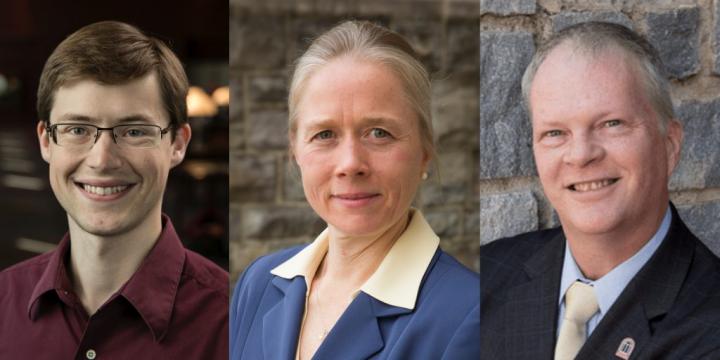
Researchers at Virginia Tech and the University of Georgia are collaborating to explore whether the tendency of the virus to bind to carbohydrate-based polymers, such as heparin, can be used to develop virus-trapping gels and surfaces.

“The virus passes a large number of carbohydrate-based molecules on its way into the cells in our body,” explained Maren Roman, associate professor of sustainable biomaterials in Virginia Tech’s College of Natural Resources and Environment and affiliated faculty member of the Fralin Life Sciences Institute. “If we can determine which carbohydrates or carbohydrate chains the virus binds to, we can develop materials that work like a fly trap and capture virus particles before they get into our bodies.”

“We will use cutting-edge computational tools to study which carbohydrate molecules bind most strongly to the virus,” said Robert Woods, professor of biochemistry and molecular biology, and chemistry, at the University of Georgia’s Complex Carbohydrate Research Center. “This work is a natural extension of our prior work on the virus, which has given us detailed computer models of one of its surface proteins, namely the Spike protein. This protein is responsible for the virus’s ability to enter cells and its tendency to bind to carbohydrates.”

“Once we know exactly which carbohydrates the virus binds to, we will synthesize materials that contain these carbohydrates on a tether,” added Michael Schulz, assistant professor of chemistry in the College of Science at Virginia Tech. “We hypothesize that these materials can filter out virus particles from liquids and possibly even air streams.”

The research is supported by a $200,000 National Science Foundation RAPID COVID-19 grant, with contributions from the Division of Materials Research and the Division of Molecular and Cellular Biosciences.

“Our ability to successfully stop this pandemic depends on researchers from different fields and even institutions joining forces and collaborating.” Roman said. “Only together will we figure this virus out.”

###

Media Contact
Kristin Rose Jutras |
[email protected]

Original Source

https://vtnews.vt.edu/articles/2020/08/07-28-20-Fralin-Life-Sci-Roman-COVID-NSF-grant.html

Tags: Chemistry/Physics/Materials SciencesInfectious/Emerging DiseasesMedicine/Health
Share12Tweet8Share2ShareShareShare2

Related Posts

Scientists Achieve Breakthrough in Molecular ‘Sandwich’ Assembly — Chemistry

Scientists Achieve Breakthrough in Molecular ‘Sandwich’ Assembly

May 21, 2026
Advancing In Vivo and In Situ Monitoring: Science Bulletin Highlights Host-Based Antifouling Gold Nanotube Sensor for Selective Detection of Mechanically Sensitive Serotonin Release in Intestinal Mucosa — Chemistry

Advancing In Vivo and In Situ Monitoring: Science Bulletin Highlights Host-Based Antifouling Gold Nanotube Sensor for Selective Detection of Mechanically Sensitive Serotonin Release in Intestinal Mucosa

May 20, 2026

How Magnetic Orientation Could Influence the Building Blocks of Life

May 20, 2026

Breaking a 200-Year-Old Belief: Novel Surface Design Achieves Two Distinct Wetting States on One Substrate

May 20, 2026
Please login to join discussion

POPULAR NEWS

  • blank

    New Study Reveals Plants Can Detect the Sound of Rain

    733 shares
    Share 292 Tweet 183
  • ESMO 2025: mRNA COVID Vaccines Enhance Efficacy of Cancer Immunotherapy

    304 shares
    Share 122 Tweet 76
  • Research Indicates Potential Connection Between Prenatal Medication Exposure and Elevated Autism Risk

    846 shares
    Share 338 Tweet 212
  • Breastmilk Balances E. coli and Beneficial Bacteria in Infant Gut Microbiomes

    58 shares
    Share 23 Tweet 15

About

We bring you the latest biotechnology news from best research centers and universities around the world. Check our website.

Follow us

Recent News

Innovative Reusable Brick Walls Revolutionize Construction Industry

Nonlinear Atomic Tunneling Enhanced by Bright Squeezed Vacuum

Label-Free Super-Resolution Imaging of Live Cells

Subscribe to Blog via Email

Enter your email address to subscribe to this blog and receive notifications of new posts by email.

Join 82 other subscribers
  • Contact Us

Bioengineer.org © Copyright 2023 All Rights Reserved.

Welcome Back!

Login to your account below

Forgotten Password?

Retrieve your password

Please enter your username or email address to reset your password.

Log In
No Result
View All Result
  • Homepages
    • Home Page 1
    • Home Page 2
  • News
  • National
  • Business
  • Health
  • Lifestyle
  • Science

Bioengineer.org © Copyright 2023 All Rights Reserved.