Credit: University of Central Florida
A team of researchers at the University of Central Florida has discovered a potential new weapon in the fight against tuberculosis, and it lives in the Little Mermaid's realm.
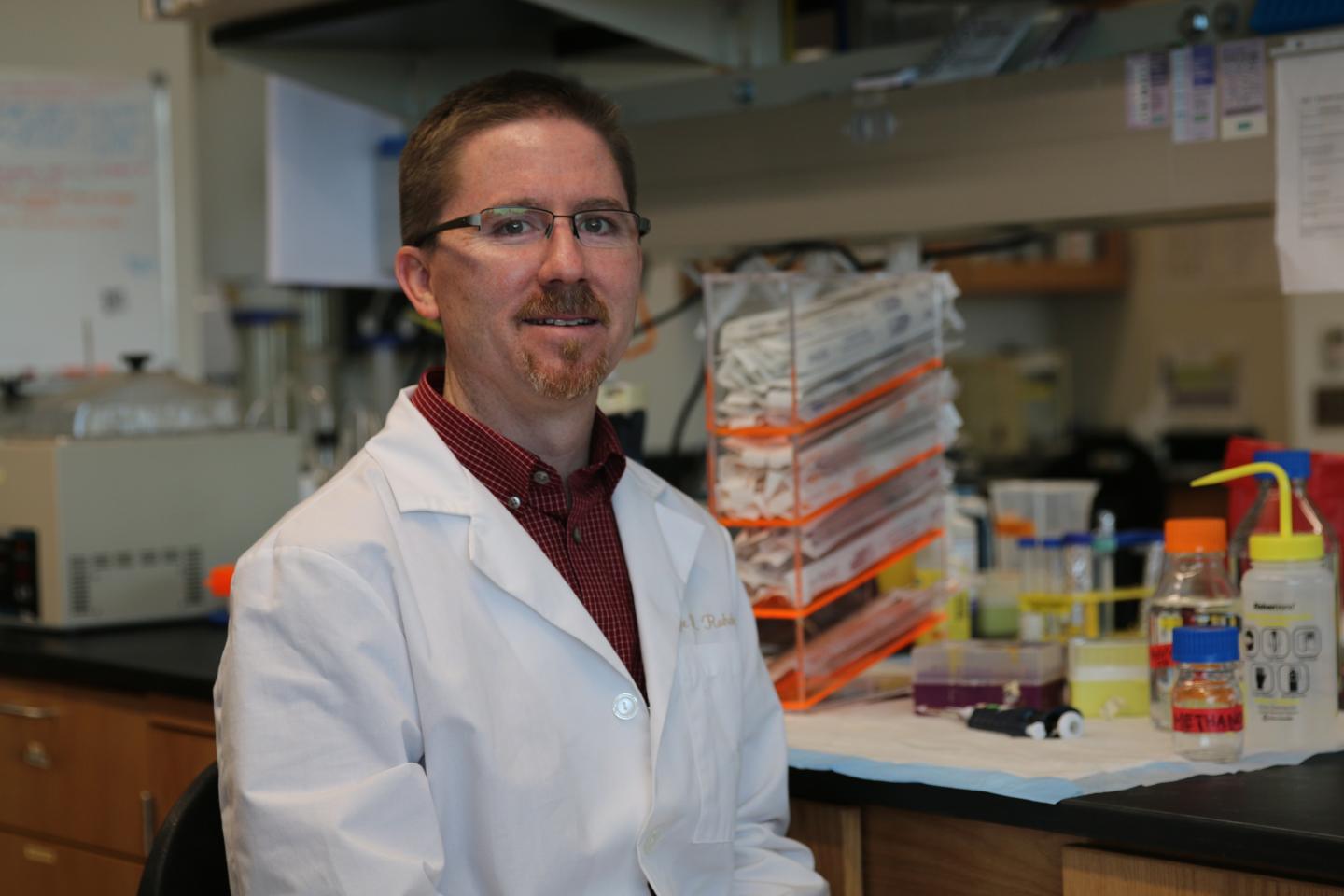
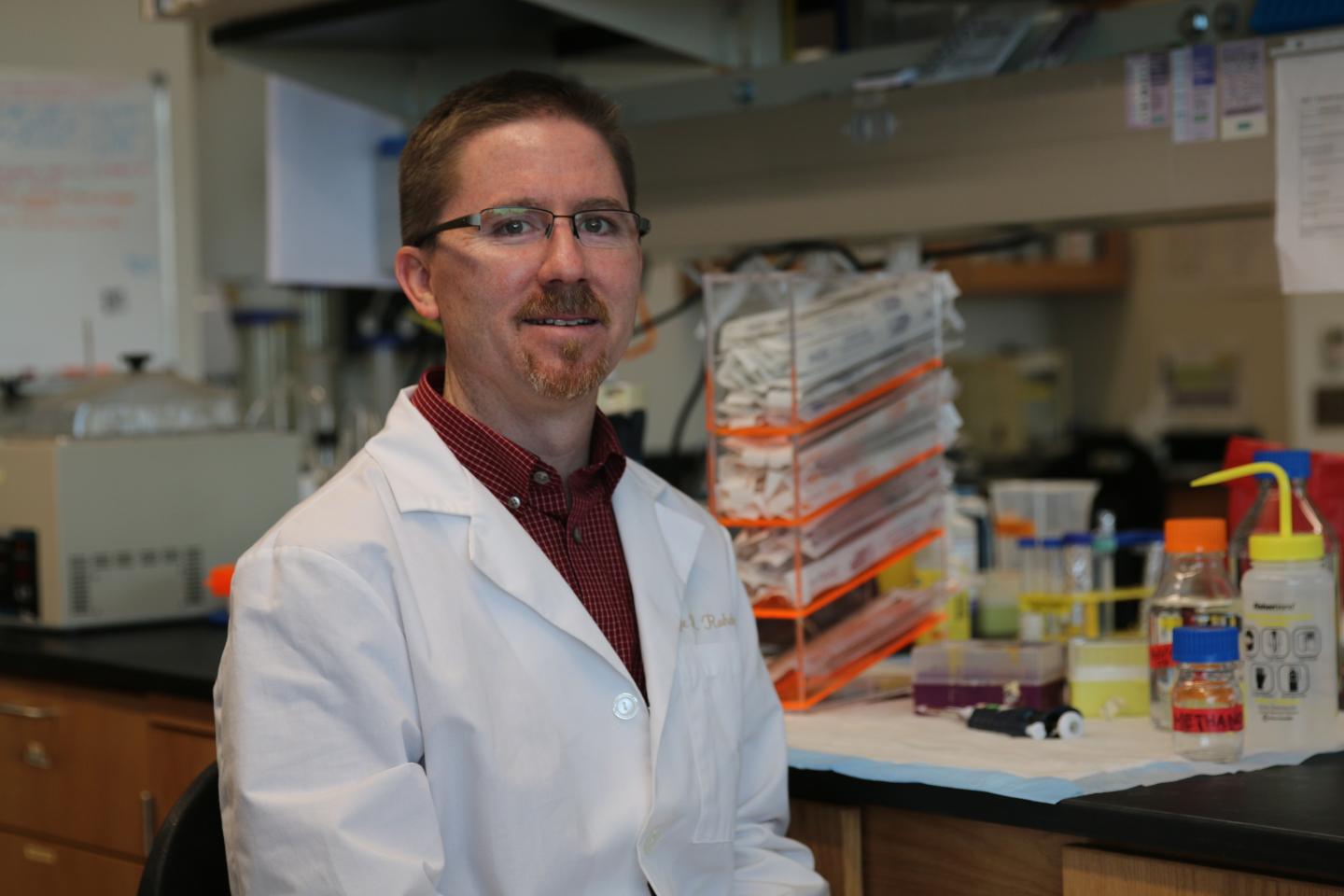
UCF graduate student Carolina Rodrigues Felix led the study in UCF Assistant Professor Kyle Rohde's lab. Through a partnership with graduate student Amy Wright of the Florida Atlantic University's Harbor Branch Oceanographic Institute, the team screened 4,400 chemical extracts derived from extracts of sponges and other marine organisms to see if they could kill the dormant tuberculosis bacteria. Tuberculosis is a highly contagious disease that is one of the top 10 causes of death worldwide.
"To our knowledge this is the largest marine natural product screening on TB and the only one that focused on dormant bacteria," Rohde said. The team identified 26 compounds that were active against replicating tuberculosis bacteria, 19 killed dormant bacteria including seven that were active against both.
"There were some that actually killed the dormant bacteria better than the replicating bacteria, which is a novelty," he said, "as existing drugs are better at killing replicating bacteria."
Findings of the study published in June in the journal Antimicrobial Agents and Chemotherapy, which is published by the American Society of Microbiology. The National Institutes of Health funded the study. (R21AI105977 and R33AI105977)
Tuberculosis, an infectious bacterial disease that mainly affects the lungs, is spread from person to person through the air. Globally, there are about 10.5 million new cases and about 1.5 million deaths reported each year.
"One of the biggest problems is the lack of effective treatments," Rohde said. "Tuberculosis is very difficult to treat and in most cases, takes six to nine months of taking at least four drugs daily. And most patients don't stick to their drug regimens for six to nine months because they have undesirable side effects, or they stop taking it when they feel better."
Tuberculosis bacteria have thick cell walls that drugs have difficulty penetrating. The bacteria also express proteins that make it resistant to treatment. And the bacteria can hide within the immune system and become dormant, only to reappear after treatment ends. "Most of the drugs we have only kill bacteria that are trying to replicate," he said, "so we need drugs that can kill those dormant ones."
Scientists have been isolating marine natural compounds from sea sponges and other marine organisms to find treatments for diseases such as cancer and tuberculosis. Rohde said many of these compounds are not in the sponges themselves, but are made from microorganisms such as fungi or bacteria that live on the sponges.
Rohde and his team plan to purify and further isolate the individual compounds in these extracts to identify which ones have antibacterial properties. So far, they have identified five pure compounds with verified antibiotic potential against tuberculosis.
"Once we've identified these compounds, we want to study them to understand how they work," Rohde said. "That way if the compound turns out not to be a great drug for use in humans as is, at least we would have identified a new target for antibiotics. Alternatively, we could work with chemists to modify the drug to improve its clinical usefulness."
###
The University of Central Florida, one of the largest universities in the nation with more than 64,000 students, uses the power of scale and the pursuit of excellence to make a better future for our students and society. Described by The Washington Post as demolishing "the popular belief that exclusivity is a virtue in higher education" and credited by Politico with creating a "seamless pipeline of social mobility," UCF is recognized as one of the best values in higher education. UCF aligns its teaching, research and service with the needs of the community and beyond, offering more than 200 degree programs at more than a dozen locations, including its main campus in Orlando. Faculty and students are creating innovations in areas as diverse as simulation and training, optics and lasers, hospitality management, video game design, business, education and health care to solve local and global problems. For more information, visit http://www.ucf.edu.
Media Contact
Zenaida Gonzalez Kotala
[email protected]
407-823-6120
@UCF
http://www.ucf.edu
############
Story Source: Materials provided by Scienmag