• HOME
  • NEWS
  • EXPLORE
    • CAREER
      • Companies
      • Jobs
    • EVENTS
    • iGEM
      • News
      • Team
    • PHOTOS
    • VIDEO
    • WIKI
  • BLOG
  • COMMUNITY
    • FACEBOOK
    • INSTAGRAM
    • TWITTER
Friday, November 27, 2026
BIOENGINEER.ORG
No Result
View All Result
  • Login
  • HOME
  • NEWS
  • EXPLORE
    • CAREER
      • Companies
      • Jobs
        • Lecturer
        • PhD Studentship
        • Postdoc
        • Research Assistant
    • EVENTS
    • iGEM
      • News
      • Team
    • PHOTOS
    • VIDEO
    • WIKI
  • BLOG
  • COMMUNITY
    • FACEBOOK
    • INSTAGRAM
    • TWITTER
No Result
View All Result
Bioengineer.org
No Result
View All Result
Home NEWS Science News Health

Ultra-precision nano-sensor could detect iron disorders

Bioengineer by Bioengineer
April 29, 2020
in Health
Reading Time: 3 mins read
0
IMAGE
Share on FacebookShare on TwitterShare on LinkedinShare on RedditShare on Telegram

IMAGE

Credit: Dr Pooria Lesani, University of Sydney

Chronic iron imbalances – having either too little or too much iron in the blood – can result in medical conditions ranging from anaemia and haemochromatosis through to more severe diseases, such as cancer, Parkinson’s Disease and Alzheimer’s Disease.

Haemochromatosis is one of Australia’s most common hereditary diseases and the Australian Bureau of Statistics estimates approximately 780,000 people live with anaemia.

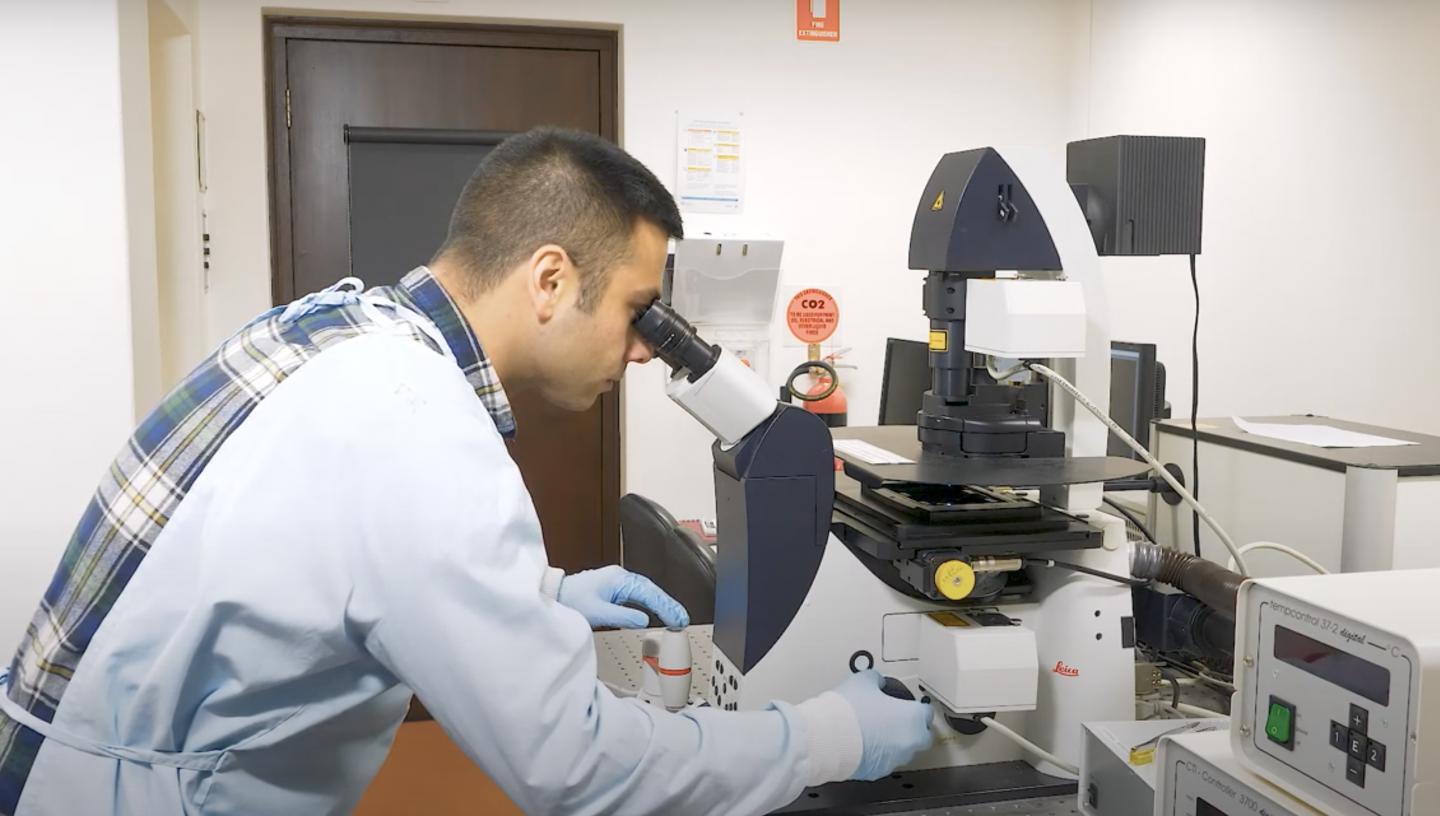
School of Biomedical Engineering PhD candidate and Sydney Nano Institute student ambassador, Pooria Lesani, who is undertaking his studies under the supervision of Professor Hala Zreiqat and Dr Zufu Lu, has developed a multipurpose nanoscale bio-probe that allows researchers to precisely monitor iron disorders in cells, tissue, and body fluids as small as 1/1000th of a millimolar[1].

The test is more sensitive and specific than blood testing currently used to detect iron disorders, which begin at very low, cellular level concentrations.

Using novel carbon-based fluorescent bio-nanoprobe technology, the test, which involves non-invasive subcutaneous or intravenous injections, allows for a more accurate disease diagnosis before the onset of symptoms, potentially allowing for the early treatment and prevention of more serious diseases.

“More than 30% of the world’s population lives with an iron imbalance, which over time can lead to certain forms of cancer, as well Parkinson’s Disease and Alzheimer’s Disease,” said Mr Lesani from the Tissue Engineering and Biomaterials Research Unit and the ARC Centre for Innovative BioEngineering.

“Current testing methods can be complex and time consuming. To counter this, and to enable the early detection of serious diseases, we have developed a hyper-sensitive and cost-efficient skin testing technique for detecting iron in the body’s cells and tissue.

“Our most recent testing demonstrated a rapid detection of free iron ions with remarkably high sensitivity. Iron could be detected at concentrations in the parts per billion range, a rate ten times smaller than previous nano-probes.

“Our sensor is multifunctional and could be applied to deep-tissue imaging, involving a small probe that can visualise structure of complex biological tissues and synthetic scaffolds.”

Tested on pig skin, the nanoprobe outperformed current techniques for deep tissue imaging, and rapidly penetrated biological tissue to depths of 280 micrometres and remained detectable at depths of up to 3,000 micrometres – about three millimetres – in synthetic tissue.

The team aims to test the nanoprobe in larger animal models, as well as investigate other ways in which it can be used to determine the structure of complex biological tissues.

We hope to integrate the nanoprobe into a “lab-on-a-chip” sensing system – a portable, diagnostic blood testing tool which could allow clinicians to remotely monitor their patients’ health.

“Lab-on-a-chip systems are relatively simple to operate and require only small blood volume samples from the patient to gain an accurate insight of potential ferric ion disorders in the body, assisting early intervention and prevention of disease,” he said.

The nano-sensors can also be made from agricultural and petrochemical waste products, allowing for low-cost, sustainable manufacturing.

###

DISCLOSURE:

The authors acknowledge funding from The Australian Research Council, The National Health and Medical Council and The Australian Centre for Microscopy and Microanalysis.

1. Refers to the number of moles of iron per litre of blood.

Media Contact
Luisa Low
luisa.low@sydney.edu.au

Original Source

https://www.sydney.edu.au/news-opinion/news/2020/04/27/ultra-precision-nano-sensor-could-detect-iron-disorders.html

Related Journal Article

http://dx.doi.org/10.1021/acsami.0c05217

Tags: Biomedical/Environmental/Chemical EngineeringBiotechnologyHematologyMedicine/HealthNanotechnology/Micromachines
Share12Tweet8Share2ShareShareShare2

Related Posts

High Drug-Loading Amorphous Nanoparticles Balance Physical Stability and Passive Membrane Permeability

High Drug-Loading Amorphous Nanoparticles Balance Physical Stability and Passive Membrane Permeability

November 27, 2026
Atypia Wording in Frozen Breast Biopsy Reports Linked to Malignant Pathology

Atypia Wording in Frozen Breast Biopsy Reports Linked to Malignant Pathology

November 27, 2026

NUP98 Rearrangements in Acute Myeloid Leukemia Drive Quiescence and Activate IL3RA

November 27, 2026

Lactylation Mechanism Promotes Gastric Cancer Spread Through Organelle Calcium Signaling

November 27, 2026
Please login to join discussion

POPULAR NEWS

  • Global Hepatitis B Fibrosis Research Reaches 3,684 Studies With Shift Toward Precision Medicine

    Global Hepatitis B Fibrosis Research Reaches 3,684 Studies With Shift Toward Precision Medicine

    29 shares
    Share 12 Tweet 7
  • High Drug-Loading Amorphous Nanoparticles Balance Physical Stability and Passive Membrane Permeability

    29 shares
    Share 12 Tweet 7
  • Spectroscopic Model Predicts Wine Tannin Polymerization and Links Fractions to Dynamic Astringency

    29 shares
    Share 12 Tweet 7
  • Attention-Based Model Reduces Highway Trajectory Prediction Error by Six Percent

    29 shares
    Share 12 Tweet 7

About

We bring you the latest biotechnology news from best research centers and universities around the world. Check our website.

Follow us

Recent News

Review Evaluates Bioengineered Lymphoid Organoids for Restoring Complex Human Immune Functions

Balanced Nitrogen and Sulfur Supply Maximizes Hydroponic White Mustard Growth and Vitality

Local AI Model Autonomously Completes Online Surveys on Consumer Laptop Hardware

Subscribe to Blog via Email

Enter your email address to subscribe to this blog and receive notifications of new posts by email.

Join 89 other subscribers
  • Contact Us

Bioengineer.org © Copyright 2023 All Rights Reserved.

Welcome Back!

Login to your account below

Forgotten Password?

Retrieve your password

Please enter your username or email address to reset your password.

Log In
No Result
View All Result
  • Homepages
    • Home Page 1
    • Home Page 2
  • News
  • National
  • Business
  • Health
  • Lifestyle
  • Science

Bioengineer.org © Copyright 2023 All Rights Reserved.