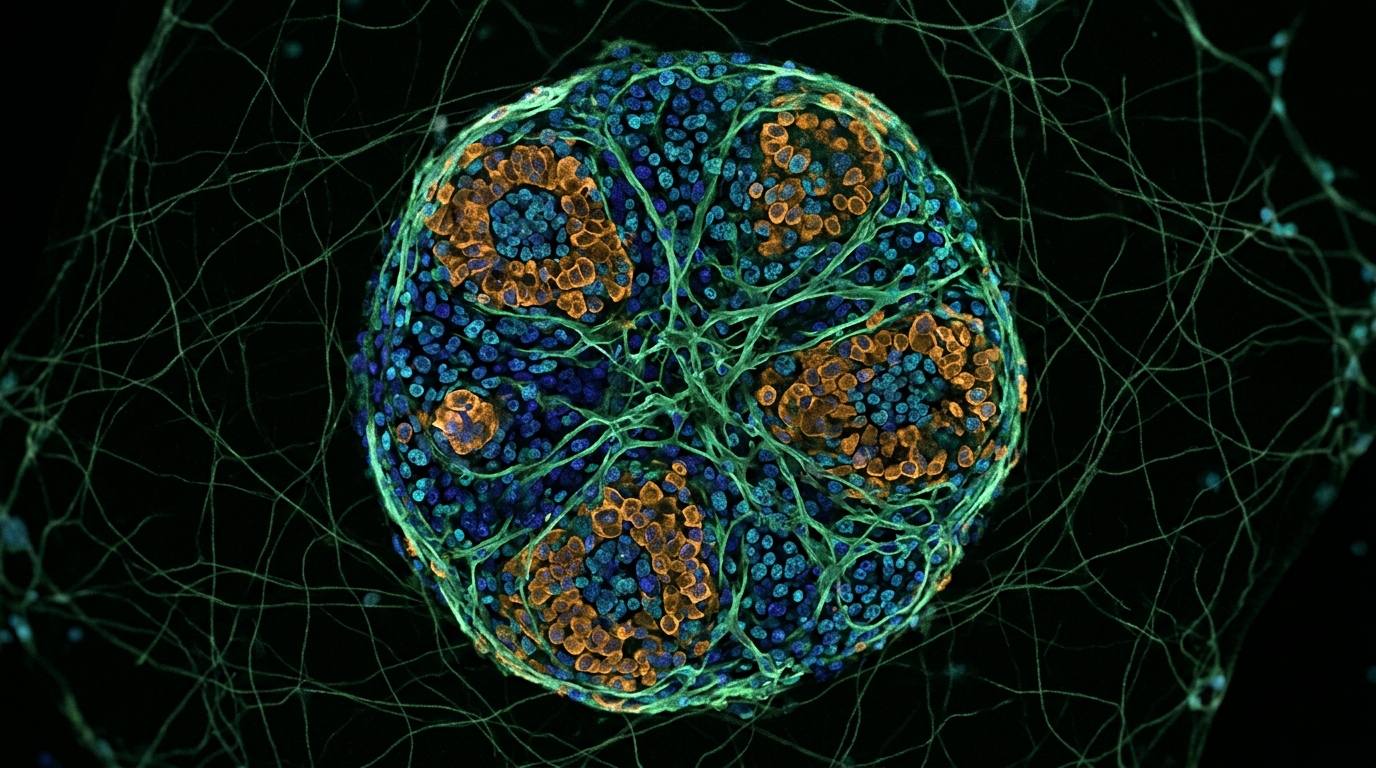
Restoring functional immunity after congenital immunodeficiencies, aging, disease, or aggressive cancer therapies requires regenerating primary immune-cell development alongside the intricate tissue interactions that govern antigen-specific responses. Conventional two-dimensional cell cultures lack essential three-dimensional spatial organization and stromal interactions, whereas animal models introduce significant species-dependent differences that limit translation to human physiology. A comprehensive review published in Frontiers in Bioengineering and Biotechnology by biomedical researchers Yue Ou, Qianyi Cui, Xuqiao Wang, and Xinyue Song evaluates bioengineered three-dimensional platforms, spanning primary bone marrow and thymic constructs, engineered secondary lymphoid organs, and biomaterial-driven tertiary lymphoid structures. The authors emphasize that establishing cellular viability or reproducing superficial microscopic architecture within engineered niches does not prove sustained immune recovery. Translating bioengineered constructs into clinical medicine requires strict functional benchmarks that separate simple in vitro model assembly from durable multilineage reconstitution, self-tolerance selection, and regulated peripheral immunity.
Engineering bone marrow microenvironments begins by distinguishing between reproducing a supportive cellular niche and reconstituting active hematopoiesis. In hematopoietically active red marrow, hematopoietic stem cells self-renew and give rise to multilineage progenitors through coordinated interactions with mesenchymal stromal cells, endothelial cells, resident macrophages, and sympathetic nerve fibers within a complex extracellular matrix of collagens, glycoproteins, and proteoglycans. Soluble signaling mediators, including prostaglandin E2, sphingosine-1-phosphate, ATP, and UTP, regulate progenitor trafficking and homing, while endothelial AKT-mTOR signaling supports stem-cell self-renewal and MAPK coactivation promotes lineage differentiation. In addition, resident CD169-positive macrophages anchor stem cells by regulating mesenchymal niche cells. While collagen scaffolds seeded with mesenchymal stromal cells maintain primitive stem-cell phenotypes and vascularized platforms introduce vital perfusion, neither modification alone establishes sustained stem-cell function. Inverted colloidal crystal scaffolds have supported ex vivo B-cell differentiation, and microfluidic bone marrow chips have successfully maintained myelerythroid production under controlled shear flow. However, while self-organizing organoids derived from induced pluripotent stem cells can produce neutrophils and progenitor-like cells, proving authentic stem-cell generation requires rigorous serial transplantation tests.
In post-transplantation contexts, bone marrow engineering highlights the critical difference between supportive niche grafts and autonomous host hematopoietic recovery. Humanized ossicles enhance the engraftment of both healthy and malignant human cells in recipient mice, confirming their value as experimental in vivo niche models without proving restoration of host marrow function. Functionalized biomaterials can also deliver regenerative cues to downstream organs, as demonstrated by cryogels presenting bone morphogenetic protein 2 and the Notch ligand DLL4, which accelerated thymic seeding and subsequent T-cell recovery following murine hematopoietic stem cell transplantation. Similarly, degradable hyaluronic acid scaffolds engineered to release granulocyte colony-stimulating factor accelerated neutrophil reconstitution in transplanted mice, demonstrating a meaningful single-lineage therapeutic benefit that nonetheless cannot verify persistent stem-cell engraftment or systemic adaptive immunity. For disease modeling, collagen-based acute myeloid leukemia scaffolds, multiple myeloma co-cultures, and myelofibrotic marrow organoids preserve patient-specific stromal contacts and drug response profiles that are lost in standard suspension cultures. In each system, clinical concordance requires explicit evaluation of viable malignant cell recovery, clonal integrity, and active drug penetration.
Thymic tissue engineering addresses the specialized microenvironment where bone marrow-derived progenitors undergo lineage commitment, somatic receptor gene rearrangement, and stringent selection. Primary lymphoid organs present complex structural and signaling cues, and postnatal thymic involution combined with treatment-related damage severely impairs naive T-cell generation. Early biomaterial studies using porous tantalum matrices proved that three-dimensional architectures could support thymic fragments and hematopoietic progenitors, producing newly generated T cells and detectable T-cell receptor excision circles. However, the non-degradable metallic architecture prevents clinical tissue remodeling, and excision circles confirm receptor rearrangement within the measured population rather than sustained export or comprehensive central tolerance. Collagen-coated polycaprolactone scaffolds seeded with fibroblasts, keratinocytes, and human progenitors supported early thymocytes expressing CD7 and CD1a alongside rearrangement transcripts, yet mature functional T-cell yields were not established. Decellularized thymic extracellular matrices preserve native tissue-derived geometry and support adult thymic epithelial cells alongside graft-resident thymopoiesis, but decellularization introduces batch variation and potential ligand loss. Across all structural scaffolds, isolating matrix benefits from cellular contributions requires rigorous comparisons using matched progenitor and epithelial inputs.
Hydrogel biomaterials permit precise adjustments of mechanical resistance, degradation kinetics, and localized ligand presentation to direct thymocyte differentiation. Self-assembling EAK16-II and EAKII-H6 peptide hydrogels promote thymic epithelial cell clustering and support T-cell development following transplantation into athymic mice, demonstrating developmental support without establishing comprehensive tolerance. Gelatin microgels maintain embryonic mouse epithelial phenotypes and sustain OP9-DL4-mediated T-lineage induction at levels comparable to standard two-dimensional controls, proving microcarrier compatibility rather than superior mature yield. Tunable collagen-alginate matrices functionalized with DLL4 and vascular cell adhesion molecule 1 show that soft, viscous physical conditions enhance Notch-associated signaling to favor pro-T cell differentiation. In fibrin-based hydrogels, reaggregating 2,500 primary human early thymic progenitors with pluripotent stem-cell-derived epithelial progenitors generated approximately 15,000 CD3-positive cells per organoid at day 40, yielding roughly 4,000 CD8-positive and 500 CD4-positive cells. This quantitative measurement demonstrates substantial output while exposing significant lineage imbalance. Suspension culture advances using alginate and adhesive RGD-containing hydrogels revealed that rotational agitation increased lymphocyte output nearly twentyfold relative to stationary cultures, yielding approximately 30 million CD7-positive, CD5-positive, CD3-positive cells in a 450-milliliter volume before activation-dependent maturation.
Artificial thymic organoids and thymic epithelial organoids address distinct developmental challenges in T-cell production and immunological tolerance. Artificial thymic organoids utilize stromal feeder cells displaying Notch ligands on porous culture inserts, facilitating stepwise differentiation from human stem cells into mature single-positive T cells. This platform has enabled rescue studies of receptor-assembly defects, such as correcting RAG1 and RAG2 mutations in patient-derived stem cells, yet feeder-dependent systems fail to reconstruct the complex cortical and medullary selecting epithelium. Conversely, epithelial organoids focus on the cellular supply of self-antigen-presenting stroma. Embryonic mouse epithelial organoids achieved an organoid-forming efficiency of 78% ± 3%, whereas adult mouse epithelial organoids demonstrated long-term expansion exceeding two years. In functional deletion assays, ovalbumin-expressing adult epithelial organoids induced Annexin V positivity in approximately 35% of OT-II transgenic thymocytes compared with 1.4% in controls, demonstrating antigen-specific negative selection ex vivo. In translational benchmarks, cultured human thymus tissue implantation in congenital athymia achieved 77% one-year and 76% two-year survival, underscoring that tissue viability must ultimately correlate with durable clinical protection.
Secondary lymphoid organ engineering aims to reconstruct specialized microenvironments where mature lymphocytes encounter antigens to generate coordinated adaptive responses. In splenic reconstruction, biodegradable scaffolds carrying mouse or human spleen organoid units formed red and white pulp in splenectomized immunodeficient mice, restoring physiological erythrocyte clearance as measured by reduced circulating Howell-Jolly bodies. Germinal center models reproduce the follicular dendritic cell and helper T-cell interactions essential for somatic hypermutation and affinity-dependent B-cell selection. Gelatin-silicate hydrogels combining murine B cells with CD40L- and BAFF-expressing stromal cells induced germinal center-like differentiation and antibody secretion, while synthetic hydrogels presenting chemokine CXCL12 supported somatic hypermutation, class switching, and clonal evolution in human B cells. In addition, tonsil immune cell reaggregates preserve diverse native cell mixtures, generating antigen-specific antibodies and affinity maturation. Analysis across 100 donors revealed significant host-dependent variations in influenza virus neutralization and helper T-cell activation. Complementary blood-derived models assembling B cells, memory CD4 T cells, and dendritic cells on fibronectin linked IgG secretion directly to individual donor vaccination responsiveness.
Engineering lymph node stroma highlights how mechanical architecture, cellular composition, and fluid transport govern immune regulation. Within lymph nodes, fibroblastic reticular cells organize lymphocyte contacts, while lymphatic endothelial cells form specialized conduits for fluid and cell trafficking. Collagen scaffolds bearing stromal cells and dendritic cells formed organized lymphocytic compartments, high endothelial venule-like vessels, and antigen-specific IgG responses in mice, and decellularized matrices seeded with stromal progenitors restored lymphatic drainage at resected nodal sites. In vitro studies demonstrate that enriching fibroblastic reticular cells improves lymphocyte viability while actively restricting stimulated T-cell proliferation, proving that stromal support involves essential regulatory restraint rather than uncontrolled expansion. Introducing lymphatic endothelial cells and interstitial flow further modulates T-cell egress, alters endothelial permeability, and regulates inflammatory cytokine secretion, establishing fluid transport as an active biological stimulus. While intact lymph node explants maintain native cellular neighborhoods with less compositional control, engineered reconstructed systems permit component-level testing, bridging localized immune initiation with downstream microvascular and niche trafficking.
Tertiary lymphoid structures assemble de novo within non-lymphoid tissues during sustained inflammation, including solid tumors and organ transplant rejection, offering targets for localized immune intervention. Interleukin-33 stimulates group 2 innate lymphoid cells to drive lymphoid aggregate formation through lymphotoxin-associated signaling with LTβR-positive myeloid cells, while combined STING and LTβR activation induces high endothelial venules, germinal center-like B-cell responses, and protection against tumor recurrence. Cell-free delivery approaches utilizing lipid-coated microparticles in chitosan hydrogels released chemokines CCL19, CCL21, CXCL13, and lymphotoxin, generating lymphoid aggregates that enhanced antigen-specific T-cell responses without achieving mature follicular organization. In contrast, supramolecular hyaluronic acid hydrogels delivering CXCL13 and LIGHT promoted mature lymphoid architecture and potentiated anti-PD1 antitumor activity in melanoma models. Cell-loaded scaffolds containing microparticles and stimulatory cytokines directly support lymphocyte interactions and enhance chimeric antigen receptor T-cell activity. Subcutaneous delivery niches presenting CD40 agonism separate immune activation from direct tumor suppression, while clinical analyses in chronically rejecting kidney allografts demonstrate that tertiary lymphoid structures can drive destructive pathology, proving that induction strategies must match disease context.
Translating bioengineered lymphoid models into clinically dependable platforms requires establishing rigorous, standardized benchmarks that match specific therapeutic goals. Researchers caution against conflating short-term culture viability, initial organoid establishment rates, or superficial phenotypic marker expression with authentic immune reconstitution. For hematopoietic stem-cell engineering, functional benchmarks require durable donor chimerism across native marrow alongside serial multilineage repopulation. In thymic reconstruction, models must prove extensive T-cell receptor repertoire diversity, rigorous negative selection against autoimmunity, and recipient-matched HLA restriction to prevent graft-versus-host disease. For secondary and tertiary platforms, sustained antigen-specific antibody affinity maturation, robust immunological memory, and vascular and lymphatic integration represent the necessary criteria for functional validation. By systematically decoupling the mechanical and structural influences of biomaterials from cytokine delivery and cellular identity, bioengineers can transform lymphoid organoids from descriptive laboratory models into reliable, reproducible instruments for regenerative medicine, transplantation biology, and precision immunotherapy.
Subject of Research: Bioengineered lymphoid organoids and biomaterial scaffolds for functional immune reconstitution
Article Title: Bioengineered lymphoid organoids for immune reconstitution: design principles, functional benchmarking, and translational challenges
Article References: Ou, Y., Cui, Q., Wang, X., & Song, X. (2026). Bioengineered lymphoid organoids for immune reconstitution: design principles, functional benchmarking, and translational challenges. Frontiers in Bioengineering and Biotechnology, 14, Article 1956090. https://doi.org/10.3389/fbioe.2026.1956090
Image Credits: AI Generated
DOI: 10.3389/fbioe.2026.1956090
Keywords: lymphoid organoids, immune reconstitution, bone marrow engineering, thymic organoids, hematopoietic stem cells, T-cell development, artificial thymic organoids, secondary lymphoid organs, tertiary lymphoid structures, biomaterial scaffolds, germinal centers, stromal niches, lymphatic drainage, central tolerance, organoid benchmarking, regenerative medicine
News Source: Gregory Coleman. (November 27, 2026). Review Evaluates Bioengineered Lymphoid Organoids for Restoring Complex Human Immune Functions. Scienmag.