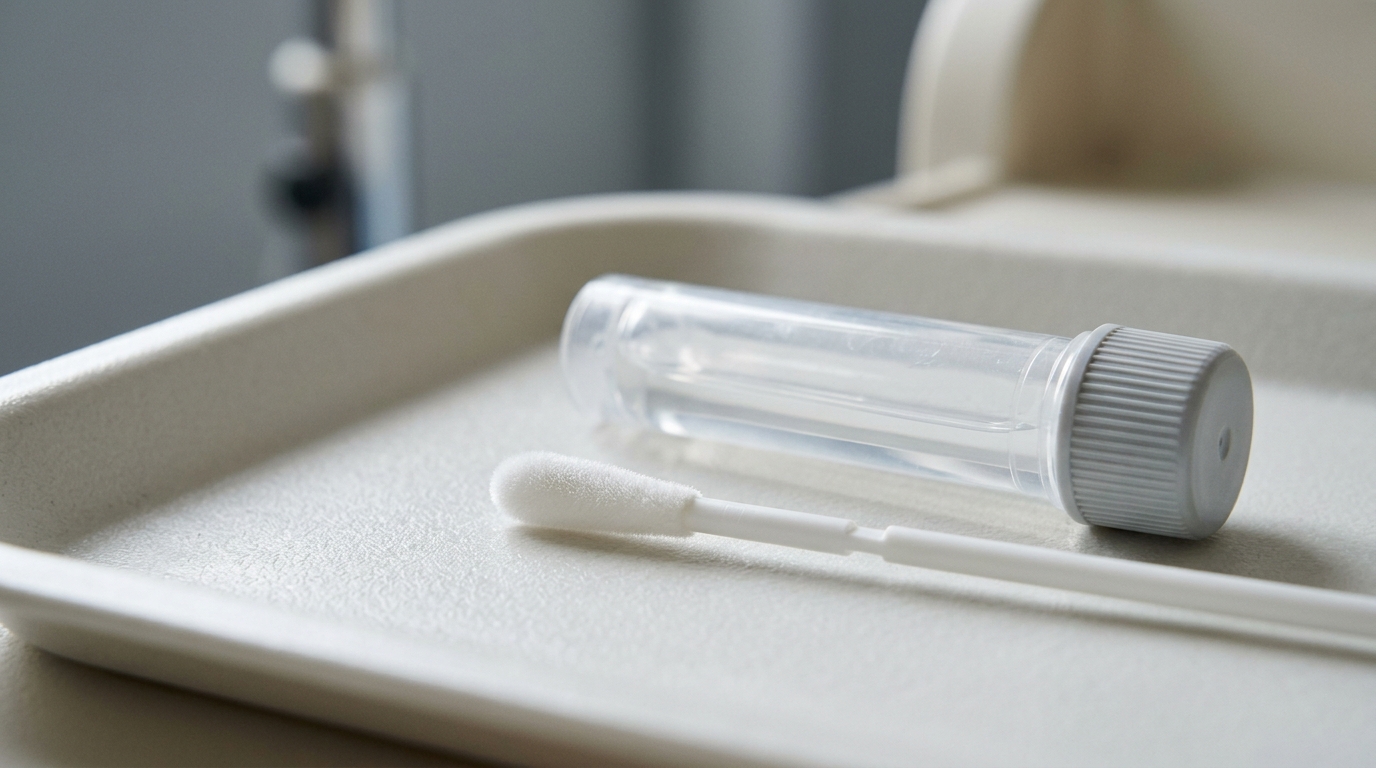
Swab-based collection of stool largely preserves the broad structure of the human gut microbiome compared to fresh samples, although small device-dependent differences prevent the tools from being completely interchangeable. In a fully intra-individual evaluation of twenty healthy adult volunteers providing a total of one hundred sixty samples, researchers examined how different swab collection systems and processing conditions influence microbiome profiles.
The investigation evaluated fresh stool alongside three commercial swab preservation systems: FecalSwab, eNAT, and MSwab. Each sampling method was assessed under two distinct preparation protocols, comparing non-homogenized samples directly against homogenized and diluted conditions. To evaluate analytical robustness across sequencing depths and phylogenetic measures, the team conducted primary analyses using operational taxonomic unit profiles derived from MicrobAT software, alongside independent amplicon sequence variant analyses of both forward and reverse sequencing reads.
All one hundred sixty collected samples successfully produced valid operational taxonomic unit profiles through the MicrobAT pipeline. Laboratory extractions revealed that swab-collected samples generally yielded lower concentrations of extracted DNA than fresh stool specimens. Despite these lower yields, standard community metrics including Shannon diversity, Pielou’s evenness, and dominant taxonomic profiles remained broadly comparable between the swab systems and fresh stool.
In the primary participant-stratified analysis, the chosen sampling method accounted for only a minor fraction of genus-level Bray-Curtis compositional variation, with an R-squared value of 0.0203 and a significant P-value of 0.001. When analyzed without participant stratification, the corresponding unrestricted test yielded no statistically significant difference, with a P-value of 0.333. Independent amplicon sequence variant analyses conducted at standardized sequencing depths confirmed minor device effects on weighted UniFrac and Bray-Curtis metrics across both forward and reverse reads, explaining between 0.835 percent and 2.285 percent of variation.
Individual participant identity explained the vast majority of observed variation, accounting for 80.5 percent to 93.2 percent of the compositional differences. When researchers evaluated intra-individual comparisons within each subject, the devices displayed consistent relative performance against fresh stool. FecalSwab ranked closest to fresh stool across measurements, MSwab showed intermediate similarity, and eNAT emerged as the most dissimilar of the tested collection devices.
The impact of homogenization and dilution varied depending on the specific device and analytical endpoint. Initial paired evaluations indicated higher software-derived richness following homogenization and dilution of MSwab samples, with a Holm-adjusted P-value of 0.040. However, this difference ceased to be statistically significant after adjusting for sequencing depth and multiple testing, yielding a P-value of 0.115. Conversely, adjusted richness remained significantly higher following the homogenization and dilution of fresh stool, showing a Holm-adjusted P-value of 0.00684. Additionally, measurements of Faith’s phylogenetic diversity varied depending on read direction and rarefaction depth.
Because small device-dependent differences persist and richness estimates remain sensitive to sequencing depth and processing conditions, the authors concluded that sampling and processing procedures must remain standardized across longitudinal and multicentre research. The researchers also noted that proprietary processing within the MicrobAT software restricts independent reconstruction of the original operational taxonomic unit profiles. Consequently, the complementary amplicon sequence variant analyses provide supporting evidence rather than an exact reproduction of the original software-generated profiles.
Subject of Research: Gut microbiome preservation across swab collection devices and processing conditions
Article Title: Swab-based stool collection largely preserves gut microbiome structure with small device-dependent effects: an intra-individual evaluation of sampling devices and processing conditions
Article References: Guerra, M., Sancisi, C., Brandolini, M., Dionisi, L., De Pascali, A. M., Ingletto, L., Colosimo, C., Gatti, G., Montanari, M. S., Marzucco, A., Grumiro, L., Dirani, G., Zannoli, S., Scagliarini, A., Cricca, M., & Sambri, V. (2026). Swab-based stool collection largely preserves gut microbiome structure with small device-dependent effects: an intra-individual evaluation of sampling devices and processing conditions. BMC Microbiology. https://doi.org/10.1186/s12866-026-05947-z
Image Credits: AI Generated
DOI: 10.1186/s12866-026-05947-z
Keywords: gut microbiome, stool collection, swab devices, FecalSwab, eNAT, MSwab, pre-analytical variation, microbiome profiling, homogenization, operational taxonomic units, amplicon sequence variants, Bray-Curtis variation, weighted UniFrac, DNA concentration, MicrobAT, Faith phylogenetic diversity
News Source: Morgan Morrow. (November 27, 2026). Swab Stool Collection Preserves Gut Microbiome Structure With Minor Device Differences. Scienmag.