• HOME
  • NEWS
  • EXPLORE
    • CAREER
      • Companies
      • Jobs
    • EVENTS
    • iGEM
      • News
      • Team
    • PHOTOS
    • VIDEO
    • WIKI
  • BLOG
  • COMMUNITY
    • FACEBOOK
    • INSTAGRAM
    • TWITTER
Tuesday, July 7, 2026
BIOENGINEER.ORG
No Result
View All Result
  • Login
  • HOME
  • NEWS
  • EXPLORE
    • CAREER
      • Companies
      • Jobs
        • Lecturer
        • PhD Studentship
        • Postdoc
        • Research Assistant
    • EVENTS
    • iGEM
      • News
      • Team
    • PHOTOS
    • VIDEO
    • WIKI
  • BLOG
  • COMMUNITY
    • FACEBOOK
    • INSTAGRAM
    • TWITTER
  • HOME
  • NEWS
  • EXPLORE
    • CAREER
      • Companies
      • Jobs
        • Lecturer
        • PhD Studentship
        • Postdoc
        • Research Assistant
    • EVENTS
    • iGEM
      • News
      • Team
    • PHOTOS
    • VIDEO
    • WIKI
  • BLOG
  • COMMUNITY
    • FACEBOOK
    • INSTAGRAM
    • TWITTER
No Result
View All Result
Bioengineer.org
No Result
View All Result
Home NEWS Science News Biology

UIC researchers find unique organ-specific signature profiles for blood vessel cells

Bioengineer by Bioengineer
February 13, 2020
in Biology
Reading Time: 2 mins read
0
IMAGE
Share on FacebookShare on TwitterShare on LinkedinShare on RedditShare on Telegram

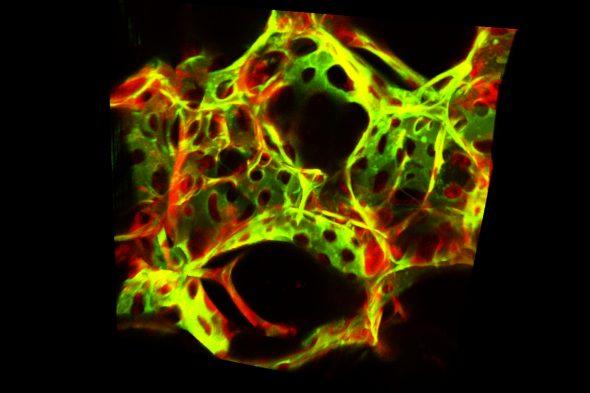
Probing the molecular biology of blood vessels in the heart, brain and lungs
IMAGE

Credit: Jalees Rehman


Researchers from the University of Illinois at Chicago have discovered that endothelial cells — those that create the inner lining of blood vessels — have unique genetic signatures based on their location in the body.

Their study, which is published in the journal eLife, used a genetic mouse model to compare endothelial cells in their natural organ environment. The researchers first looked at healthy mice and compared how genes were expressed in endothelial cells from heart, lung and brain tissues. Next, they studied the blood vessel endothelial cells of unhealthy mice — those exposed to a bacterial toxin, which mimicked inflammation in the whole body.

Under both conditions, endothelial cells from various organs expressed distinct genetic signatures.

“One of the most surprising findings of this study is that blood vessel endothelial cells in the brain express genes that were previously thought to be primarily found in neurons — such as the genes involved in the transport of neurotransmitters and synaptic vesicles,” said Dr. Jalees Rehman, UIC professor of medicine, pharmacology and bioengineering at the College of Medicine.

Similar results were found for heart endothelial cells, which expressed the genes known to help heart muscle cells beat and pump blood.

“We have had anecdotal descriptions that blood vessel cells function differently in each organ for some time, but newer genetic tools allowed us to perform a global analysis of thousands of genes in the blood vessels of these vital organs,” Rehman said.

Rehman said the results of this study can be used to inform the bioengineering of blood vessels that are specific to different organs and that the findings suggest there are untapped avenues for developing more targeted treatments.

“Our findings provide organ-specific blood vessel ‘ZIP codes’ for the potential delivery of drugs to specific tissues,” Rehman said. “Right now, most treatments for vascular disease target all blood vessels regardless of where they are. Imagine if we could develop more effective treatments to uniquely improve the function of blood vessels in the heart or the brain?”

Rehman said that this research suggests that blood vessels may play previously unrecognized roles in some neurological diseases such as Alzheimer’s disease and other forms of dementia because the brain’s endothelial cells expressed genes involved in cognitive function.

###

Co-authors on the paper include UIC’s Ankit Jambusaria, Zhigang Hong, Lianghui Zhang, Shubhi Srivastava, Arundhati Jana, Peter Toth, Yang Dai, and Asrar Malik.

This research was conducted with support from the National Institutes of Health (R01HL126515, R01HL90152, P01HL60678 and T32HL007829).

Media Contact
Jackie Carey
[email protected]
312-996-8277

Original Source

https://today.uic.edu/uic-researchers-find-unique-organ-specific-signature-profiles-for-blood-vessel-cells

Related Journal Article

http://dx.doi.org/10.7554/eLife.51413

Tags: BiologyCell BiologyGeneticsMedicine/HealthMolecular Biology
Share12Tweet8Share2ShareShareShare2

Related Posts

Here are a few rewritten headlines for a science magazine post, each with a slightly different tone: Intriguing & poetic: How do organs sculpt themselves? Sea stars hold the secret Direct & research-focused: Sea stars reveal the hidden rules of organ formation Metaphorical & inviting: Tiny architects beneath the waves: What sea stars teach us about building organs Short & punchy: Star-shaped clues to how our organs take shape Question-led: Could a sea star show us how organs form? Elegant & feature-style: The body’s blueprint, glimpsed in a sea star’s arm

July 6, 2026
Bacteria evolve faster with unconventional gene copies — Biology

Bacteria evolve faster with unconventional gene copies

July 6, 2026

Neighbours rewire soil feedback via root microbiome shifts

July 6, 2026

Evolution-Inspired Biosensors Revolutionize Lipid Tracking in Real Time

July 2, 2026
Please login to join discussion

POPULAR NEWS

  • Detection of EDCs in Breast Milk and Infant Urine Up to Six Months Highlights Early Exposure Risks

    77 shares
    Share 31 Tweet 19
  • New Drug Candidate Developed at McMaster Shows Potential for Treating Brain Cancer

    58 shares
    Share 23 Tweet 15
  • Saying Goodbye to PGY-6: Pediatric Fellowship Realities

    103 shares
    Share 41 Tweet 26
  • KTU Researchers Explore Ultrasound’s Role in Enhancing Blood Flow Beyond Diagnostics

    53 shares
    Share 21 Tweet 13

About

We bring you the latest biotechnology news from best research centers and universities around the world. Check our website.

Follow us

Recent News

Flame retardant BDE-209 targets molecularly linked to ulcerative colitis

Ultra-high frequency particle impacts mimic rockbursts to shatter hard rock

Kidney transplant outcomes in older adults studied by German researchers

Subscribe to Blog via Email

Enter your email address to subscribe to this blog and receive notifications of new posts by email.

Join 83 other subscribers
  • Contact Us

Bioengineer.org © Copyright 2023 All Rights Reserved.

Welcome Back!

Login to your account below

Forgotten Password?

Retrieve your password

Please enter your username or email address to reset your password.

Log In
No Result
View All Result
  • Homepages
    • Home Page 1
    • Home Page 2
  • News
  • National
  • Business
  • Health
  • Lifestyle
  • Science

Bioengineer.org © Copyright 2023 All Rights Reserved.