• HOME
  • NEWS
  • EXPLORE
    • CAREER
      • Companies
      • Jobs
    • EVENTS
    • iGEM
      • News
      • Team
    • PHOTOS
    • VIDEO
    • WIKI
  • BLOG
  • COMMUNITY
    • FACEBOOK
    • INSTAGRAM
    • TWITTER
Sunday, August 16, 2026
BIOENGINEER.ORG
No Result
View All Result
  • Login
  • HOME
  • NEWS
  • EXPLORE
    • CAREER
      • Companies
      • Jobs
        • Lecturer
        • PhD Studentship
        • Postdoc
        • Research Assistant
    • EVENTS
    • iGEM
      • News
      • Team
    • PHOTOS
    • VIDEO
    • WIKI
  • BLOG
  • COMMUNITY
    • FACEBOOK
    • INSTAGRAM
    • TWITTER
  • HOME
  • NEWS
  • EXPLORE
    • CAREER
      • Companies
      • Jobs
        • Lecturer
        • PhD Studentship
        • Postdoc
        • Research Assistant
    • EVENTS
    • iGEM
      • News
      • Team
    • PHOTOS
    • VIDEO
    • WIKI
  • BLOG
  • COMMUNITY
    • FACEBOOK
    • INSTAGRAM
    • TWITTER
No Result
View All Result
Bioengineer.org
No Result
View All Result
Home NEWS Science News

UC Riverside helps secure the future of food

Bioengineer by Bioengineer
October 16, 2019
in Science News
Reading Time: 2 mins read
0
IMAGE
Share on FacebookShare on TwitterShare on LinkedinShare on RedditShare on Telegram

$3 million program to train tomorrow’s plant scientists
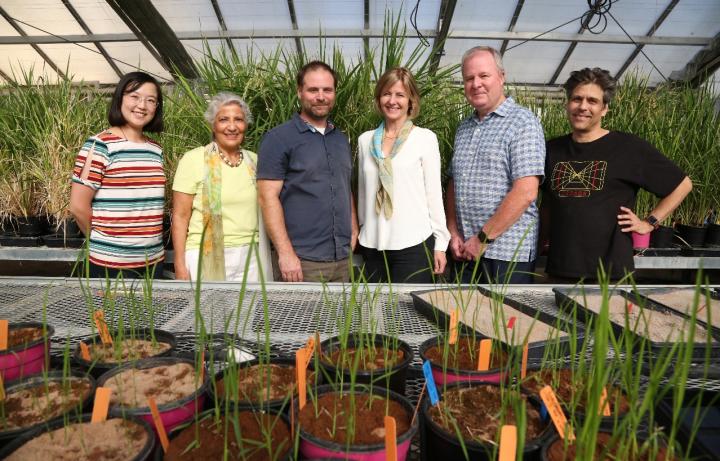
IMAGE

Credit: Stan Lim/UCR

If you’re eating fruits, nuts, grains, or vegetables in a few years, you’ll likely owe a debt of gratitude to UC Riverside. The university has created a program to transition today’s undergraduates into professional scientists solving tomorrow’s farming challenges.

The program, called Plants-3D, will train students to discover, design, and deploy biology and engineering solutions to the projected problem of massive-scale food insecurity due to climate change.

“It’s exciting that 50 students, many of whom are traditionally underrepresented in academia and the biotech sector, will now learn to use the most cutting-edge technologies in biology and engineering to help increase crop yields and nutritional value, while also helping themselves professionally,” said Julia Bailey-Serres, a UC Riverside professor of genetics who is leading the new program.

The program was made possible by a $3 million grant from the National Science Foundation Research Traineeship program. It will fund a total of 50 students who will receive academic and entrepreneurial training, as well as mentorship and stipends to help them travel to professional conferences.

Plants-3D will foster a synthetic biology approach to solving agricultural problems, meaning students will learn to design biological systems that do not already exist in the natural world. This approach will enable plants to tolerate increased levels of stress due to drought, flooding, and extreme heat, as well as boost protection from pests, pathogens, and invasive plants.

An example project would be the discovery and design of chemical compounds to attract beneficial microbes that could reduce plant requirements for fertilizer.

“Not only will our trainees help improve crop resilience and yields, but many plant metabolites they discover will have applications in other fields as well, including medicine and nutrition,” said Plants-3D co-leader Ian Wheeldon, associate professor of chemical and environmental engineering.

The program has already established relationships with companies for internships, helping ensure participants will go on to leadership positions in agricultural fields after graduate school.

The program will provide opportunities for UC Riverside undergraduates to participate in team research, enhancing their candidacy for graduate programs and jobs in agriculture and biotechnology.

Agriculture and related industries provide nearly 10% of U.S. employment opportunities, but the number of students graduating with degrees that would prepare them for these jobs is not meeting industry demand. Nearly 40% of positions are projected to go unfilled, according to the U.S. Department of Agriculture.

Making the problem even more dire is the rapid pace of retirement from the current agricultural workforce, which is the oldest and least diverse of all scientific workforces in the U.S., the USDA reported.

“There is a giant need for scientists who can not only update the aging agricultural technologies of today, but who can find solutions to the challenges that climate change will pose for the farmers of tomorrow,” said Sean Cutler, UCR professor of plant cell biology. “This program will definitely help fill that need.”

###

Media Contact
Jules Bernstein
[email protected]
951-827-4580

Original Source

https://news.ucr.edu/articles/2019/10/15/uc-riverside-helps-secure-future-food

Tags: Agricultural Production/EconomicsAgricultureBiochemistryBiotechnologyCell BiologyClimate ChangeEducationFood/Food SciencePlant Sciences
Share12Tweet8Share2ShareShareShare2

Related Posts

KAIST develops semiconductor neuron that harnesses noise to selectively process signals

KAIST develops semiconductor neuron that harnesses noise to selectively process signals

August 16, 2026
Imagining natural and extra robotic thumbs together strengthens kinesthetic sensorimotor networks

Imagining natural and extra robotic thumbs together strengthens kinesthetic sensorimotor networks

August 16, 2026

PARP1 Drives Neuropathic Pain Through GPX4-Dependent Ferroptosis in Injured Mice’s Sensory Neurons

August 15, 2026

Strubbelig–NHL3 Receptor Complex Helps Arabidopsis Respond to Cellulose Deficiency

August 15, 2026
Please login to join discussion

POPULAR NEWS

  • KAIST develops semiconductor neuron that harnesses noise to selectively process signals

    29 shares
    Share 12 Tweet 7
  • Imagining natural and extra robotic thumbs together strengthens kinesthetic sensorimotor networks

    29 shares
    Share 12 Tweet 7
  • PARP1 Drives Neuropathic Pain Through GPX4-Dependent Ferroptosis in Injured Mice’s Sensory Neurons

    29 shares
    Share 12 Tweet 7
  • Strubbelig–NHL3 Receptor Complex Helps Arabidopsis Respond to Cellulose Deficiency

    29 shares
    Share 12 Tweet 7

About

We bring you the latest biotechnology news from best research centers and universities around the world. Check our website.

Follow us

Recent News

KAIST develops semiconductor neuron that harnesses noise to selectively process signals

Imagining natural and extra robotic thumbs together strengthens kinesthetic sensorimotor networks

PARP1 Drives Neuropathic Pain Through GPX4-Dependent Ferroptosis in Injured Mice’s Sensory Neurons

Subscribe to Blog via Email

Success! An email was just sent to confirm your subscription. Please find the email now and click 'Confirm' to start subscribing.

Join 85 other subscribers
  • Contact Us

Bioengineer.org © Copyright 2023 All Rights Reserved.

Welcome Back!

Login to your account below

Forgotten Password?

Retrieve your password

Please enter your username or email address to reset your password.

Log In
No Result
View All Result
  • Homepages
    • Home Page 1
    • Home Page 2
  • News
  • National
  • Business
  • Health
  • Lifestyle
  • Science

Bioengineer.org © Copyright 2023 All Rights Reserved.