Bone repair has long been pictured as the work of individual cells responding to injury, but a new study argues that the process depends on a partnership between two molecular sensors embedded in the cell surface. In research made available online in the International Journal of Oral Science on August 18, 2026, investigators report that two collagen receptors, β1 integrin and discoidin domain receptor 2 (DDR2), act together to control skeletal progenitor cells during the regeneration of large cranial bone defects in mice. When either receptor was removed, healing faltered; when both were deleted, bone formation collapsed to a fraction of normal, revealing a cooperative system rather than two redundant pathways.
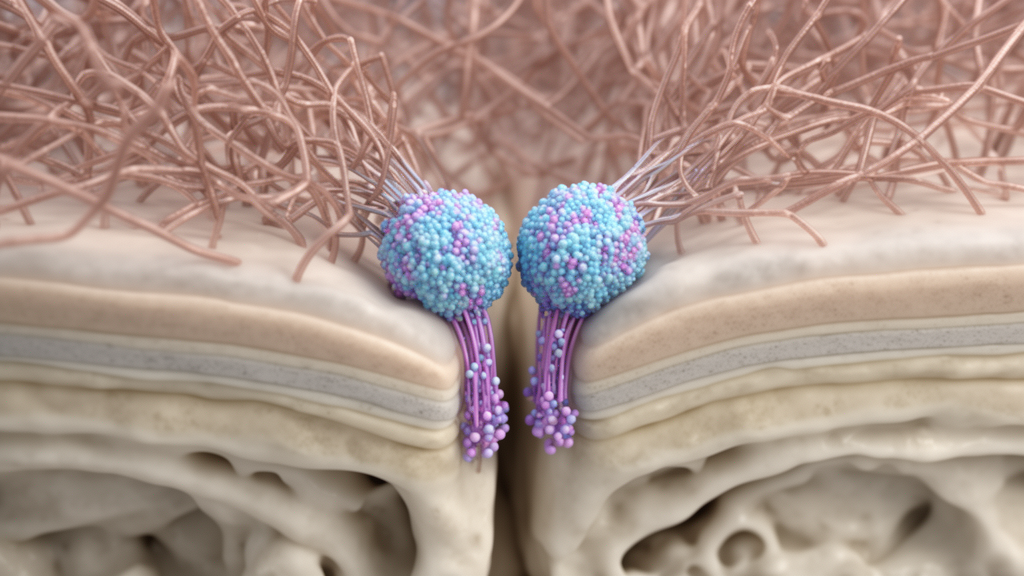
The study focused on skeletal progenitor cells, or SPCs, the multipotent cells that multiply, migrate to an injury site and develop into bone-forming cells during healing. A central question in skeletal regeneration is how these cells interpret the collagen-rich extracellular matrix that surrounds them at a wound site. That dialogue is mediated largely by collagen receptors, and the two best studied in bone are β1 integrins and DDR2. β1 integrins span the cell membrane and physically connect the extracellular matrix to the cell’s internal actin cytoskeleton, allowing cells to respond to both mechanical and biochemical cues from their surroundings. DDR2, by contrast, is a collagen-activated receptor tyrosine kinase that is strongly expressed in bone and mesenchymal tissues. Although each receptor had been examined individually in earlier work, their specific roles, and any possible cooperation between them, had remained unclear in the context of regenerating large cranial defects.
To disentangle those roles, the researchers built conditional knockout mice in which they deleted Itgb1, the gene encoding β1 integrin, Ddr2, the gene encoding DDR2, or both genes simultaneously, and they did so selectively in GLI1+ skeletal progenitor cells, a population known to contribute to bone regeneration. Into a critical-sized skull defect in each animal, a wound too large to heal on its own, the team applied BMP2, a protein that promotes bone formation, and then tracked regeneration over four weeks. In control mice with both receptors intact, new bone formed extensively across the injury site, producing almost complete healing of the defect.
The genetic deletions told a strikingly dose-like story. Removing β1 integrin alone reduced bone volume by 47 percent, while deleting DDR2 alone cut it by 36 percent. When both genes were removed together, bone volume fell by 73 percent, leaving only a small amount of new bone at the site. That pattern, in which the combined loss far exceeds the effect of either single deletion, is a classic signature of two molecules working in the same biological process rather than in parallel backup circuits.
To see how the receptors influenced progenitor cell behavior in the healing wound itself, the researchers tracked GLI1+ cells within the regenerating defects. In control animals, these cells migrated out of the cranial sutures, the natural growth seams of the skull, and moved into the injury site, where they contributed to the newly forming bone. Loss of either receptor reduced both the migration and the proliferation of the GLI1+ progenitor population, and the reduction was greatest when both receptors had been removed. In other words, the cells could not efficiently reach the wound or expand their numbers there without their collagen-sensing apparatus.
Differentiation suffered as well. The team measured reduced levels of molecular markers associated with chondrocytes, the cartilage-forming cells, and with preosteoblasts and mature osteoblasts, the successive stages of bone-forming cells. Once again the strongest reduction appeared when both receptors were absent, indicating that the receptors support not only the movement and multiplication of progenitor cells but also their commitment to the bone and cartilage lineages that actually rebuild the defect.
Parallel experiments in cell culture pointed to the cellular machinery behind those tissue-level effects. Cells lacking either receptor showed reduced spreading, a disrupted actin cytoskeleton, and diminished formation of focal adhesions, the specialized contact points that anchor cells to their surroundings and transmit mechanical signals inward. Notably, cells missing DDR2 had less active β1 integrin, suggesting that DDR2 helps promote the activation state of β1 integrin during collagen engagement. Loss of either receptor also reduced the nuclear localization of YAP1, a transcriptional regulator that helps cells respond to mechanical signals from their environment, with the effect again strongest when both receptors were gone. Together these observations sketch a pathway in which collagen contact, sensed jointly by the two receptors, feeds into cytoskeletal organization, focal adhesion formation and mechanosensitive gene regulation.
The most direct evidence for cooperation came from a heterozygous strategy, in which the researchers inactivated only one copy of Itgb1, only one copy of Ddr2, or one copy of both genes at once, and then examined skeletal progenitor cell function. Having a single working copy of either gene alone produced little effect. But when one copy of both genes was inactivated simultaneously, SPC function was significantly impaired. That non-additive result in cells with only half the normal gene dosage provides genetic evidence that β1 integrin and DDR2 function cooperatively rather than independently in these progenitor cells.
Taken together, the findings portray β1 integrin and DDR2 as components of a cooperative collagen-sensing system that governs migration, proliferation, spreading and differentiation of skeletal progenitor cells during cranial bone regeneration, with DDR2 additionally supporting the activation of β1 integrin. The authors suggest that targeting both receptors could offer a more effective strategy for enhancing bone repair than aiming at either one alone. “These findings offer new insight into how matrix receptors integrate mechanical and biochemical signals and inform future therapeutic strategies aimed at enhancing cranial bone regeneration in degenerative or injury-related skeletal disorders,” the researchers state in their study. Because the work was performed in mice with genetically altered progenitor cells and BMP2-assisted defect healing, translating the result into clinical approaches for patients will require further investigation, but the study supplies a clear mechanistic framework for why large cranial defects heal poorly when collagen sensing is weakened.
The research, titled “Roles of integrin β1 and discoidin domain receptor 2 in cranial regeneration and skeletal progenitor cell function,” was supported by NIH/NIDCR grant DE029465, a Department of Defense CDMRP grant (W81XWH-20-1-0571), research funds from the Department of Periodontics and Oral Medicine at the University of Michigan School of Dentistry, and the Michigan Musculoskeletal Health Core Center (NIH/NIAMS P30 AR069620). The authors declared no competing interests. As large critical-sized cranial defects remain a difficult challenge in reconstructive medicine, a defined receptor partnership that coordinates progenitor cell recruitment, expansion and differentiation offers a concrete molecular target for future regenerative strategies, one that reflects the increasingly appreciated truth that healing a bone is, at the cellular level, a genuinely collective enterprise.
Subject of Research: Cooperation between β1 integrin and DDR2 collagen receptors in skeletal progenitor cells during cranial bone regeneration in mice
Article Title: Bone healing is a team effort, study finds
Article References: Bone healing is a team effort, study finds. Original publication (Bibliographic details unavailable.)
Image Credits: AI Generated
DOI: Not provided
Keywords: bone regeneration, β1 integrin, DDR2, skeletal progenitor cells, collagen receptors, cranial defect, GLI1+ cells, YAP1, mechanotransduction, BMP2, mouse study, International Journal of Oral Science
News Source: Drew Townsend. (October 25, 2026). Two Collagen Receptors Team Up to Rebuild Skull Bone in Mice, Study Shows. Scienmag.