• HOME
  • NEWS
  • EXPLORE
    • CAREER
      • Companies
      • Jobs
    • EVENTS
    • iGEM
      • News
      • Team
    • PHOTOS
    • VIDEO
    • WIKI
  • BLOG
  • COMMUNITY
    • FACEBOOK
    • INSTAGRAM
    • TWITTER
Wednesday, October 28, 2026
BIOENGINEER.ORG
No Result
View All Result
  • Login
  • HOME
  • NEWS
  • EXPLORE
    • CAREER
      • Companies
      • Jobs
        • Lecturer
        • PhD Studentship
        • Postdoc
        • Research Assistant
    • EVENTS
    • iGEM
      • News
      • Team
    • PHOTOS
    • VIDEO
    • WIKI
  • BLOG
  • COMMUNITY
    • FACEBOOK
    • INSTAGRAM
    • TWITTER
No Result
View All Result
Bioengineer.org
No Result
View All Result
Home NEWS Science News Health

TRIM29 drives liver cancer growth by tagging DAPK3 for destruction

by
October 28, 2026
in Biology, Health
Reading Time: 2 mins read
0
TRIM29 drives liver cancer growth by tagging DAPK3 for destruction

TRIM29 drives liver cancer growth by tagging DAPK3 for destruction

Share on FacebookShare on TwitterShare on LinkedinShare on RedditShare on Telegram

The research team, led by Yi Guo and Shi Zuo with colleagues at several institutions, found that TRIM29 was upregulated in human hepatocellular carcinoma specimens compared with normal tissue, and that higher levels of the protein correlated with poor survival in patients with the disease. TRIM29 belongs to the tripartite motif family of E3 ubiquitin ligases, enzymes that attach ubiquitin tags to other proteins to control their fate inside cells.

In laboratory experiments using the hepatocellular carcinoma cell lines MHCC97H and Hep3B, TRIM29 acted as an oncogene: it enhanced cell proliferation and inhibited apoptosis, the programmed cell death process that normally eliminates damaged or abnormal cells. When researchers depleted TRIM29, cell survival dropped and apoptosis increased.

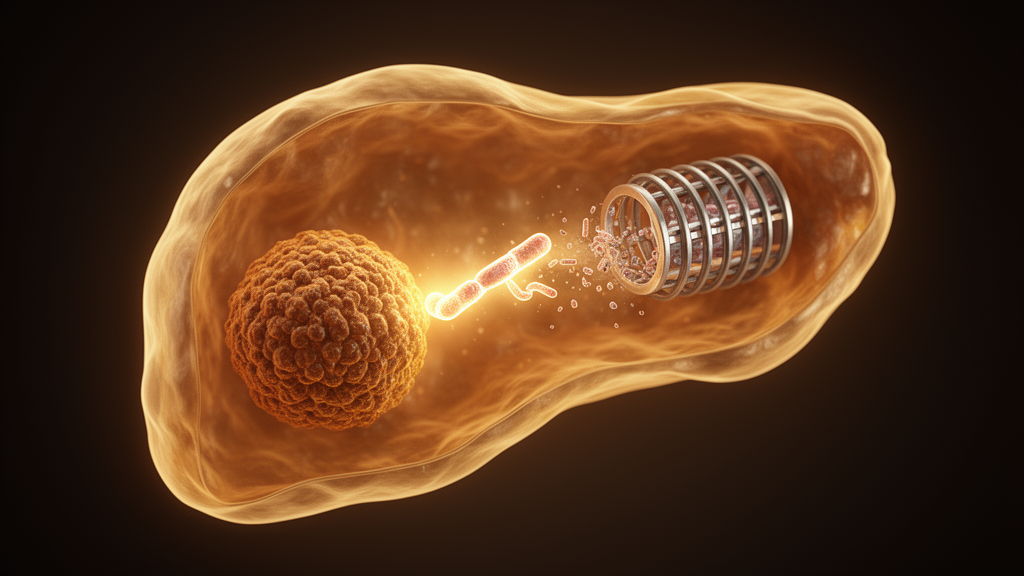
The study showed that TRIM29 directly interacts with DAPK3 and promotes its K48-linked ubiquitination, a specific molecular tag that directs proteins to the proteasome, the cell’s protein-degradation machinery, for destruction. The researchers identified lysine 261 on DAPK3 as the site through which this ubiquitination occurs, leading to proteasomal degradation of the kinase.

Crucially, the team demonstrated that the reduction in cell survival and the increase in apoptosis caused by TRIM29 depletion could be reversed by simultaneously downregulating DAPK3. This rescue experiment supports the conclusion that DAPK3 is a functional target of TRIM29 in the pathway driving tumour cell growth and survival.

The findings also have implications for hepatocellular carcinoma treatment. In cell line experiments, TRIM29 negatively regulated the apoptotic response induced by sorafenib, and its depletion promoted drug sensitization, suggesting that the protein contributes to treatment resistance through its suppression of apoptosis.

Overall, the authors conclude that TRIM29 promotes proliferation and inhibits apoptosis in hepatocellular carcinoma through ubiquitination-mediated degradation of DAPK3, positioning the protein both as a promising therapeutic target and as a candidate biomarker for prognosis. Because the work relies on human tissue comparisons, cell line experiments and mechanistic assays, further studies would be needed to establish clinical utility in patients.

Subject of Research: The role of the E3 ubiquitin ligase TRIM29 in promoting hepatocellular carcinoma progression through degradation of DAPK3.

Article Title: TRIM29 promotes hepatocellular carcinoma progression by inducing K48-linked ubiquitination and degradation of DAPK3

Article References: Guo, Y., Yuan, J., Hu, C., Xiao, B., Zhao, Q., Zhang, S., Wang, Z., Qiu, P., & Zuo, S. (2026). TRIM29 promotes hepatocellular carcinoma progression by inducing K48-linked ubiquitination and degradation of DAPK3. Cell Death Discovery. https://doi.org/10.1038/s41420-026-03346-x

Image Credits: AI Generated

DOI: 10.1038/s41420-026-03346-x

Keywords: TRIM29, DAPK3, hepatocellular carcinoma, ubiquitination, E3 ubiquitin ligase, proteasomal degradation, apoptosis, sorafenib, liver cancer, biomarker, cell proliferation, promotes

News Source: Nathaniel Bowman. (October 28, 2026). TRIM29 drives liver cancer growth by tagging DAPK3 for destruction. Scienmag.

Tags: ApoptosisbiomarkerCell proliferationDAPK3E3 ubiquitin ligaseHepatocellular Carcinomaliver cancerpromotesproteasomal degradationSorafenibTRIM29Ubiquitination
Share12Tweet7Share2ShareShareShare1

Related Posts

Microtubule Acetylation Softens the Nucleus to Speed DNA Break Repair

Microtubule Acetylation Softens the Nucleus to Speed DNA Break Repair

October 28, 2026
Circular RNA aptamers recruit natural ADAR1 to edit RNA with near-perfect efficiency

Circular RNA aptamers recruit natural ADAR1 to edit RNA with near-perfect efficiency

October 28, 2026

New mouse colorectal cancer cell line carries three key human mutations

October 28, 2026

SmartPE boosts prime editing efficiency in dicot crop plants

October 28, 2026

POPULAR NEWS

  • Resorbable Self-Locking Device for Canine Ovarian Pedicle Ligation Tested Across Four Veterinary Centres

    Resorbable Self-Locking Device for Canine Ovarian Pedicle Ligation Tested Across Four Veterinary Centres

    29 shares
    Share 12 Tweet 7
  • Faster Bandwidth Exploration Brings Near-Real-Time Spatial-Temporal Kernel Density Visualizations

    29 shares
    Share 12 Tweet 7
  • Marine heatwaves and typhoons reshaped Yellow Sea fungal communities, study finds

    29 shares
    Share 12 Tweet 7
  • Mixed reality office reads bodies and moods to reshape virtual space

    29 shares
    Share 12 Tweet 7

About

We bring you the latest biotechnology news from best research centers and universities around the world. Check our website.

Follow us

Recent News

Machine learning simulations trace how plastic turns into hard carbon atom by atom

Microtubule Acetylation Softens the Nucleus to Speed DNA Break Repair

Circular RNA aptamers recruit natural ADAR1 to edit RNA with near-perfect efficiency

Subscribe to Blog via Email

Enter your email address to subscribe to this blog and receive notifications of new posts by email.

Join 85 other subscribers
  • Contact Us

Bioengineer.org © Copyright 2023 All Rights Reserved.

Welcome Back!

Login to your account below

Forgotten Password?

Retrieve your password

Please enter your username or email address to reset your password.

Log In
No Result
View All Result
  • Homepages
    • Home Page 1
    • Home Page 2
  • News
  • National
  • Business
  • Health
  • Lifestyle
  • Science

Bioengineer.org © Copyright 2023 All Rights Reserved.