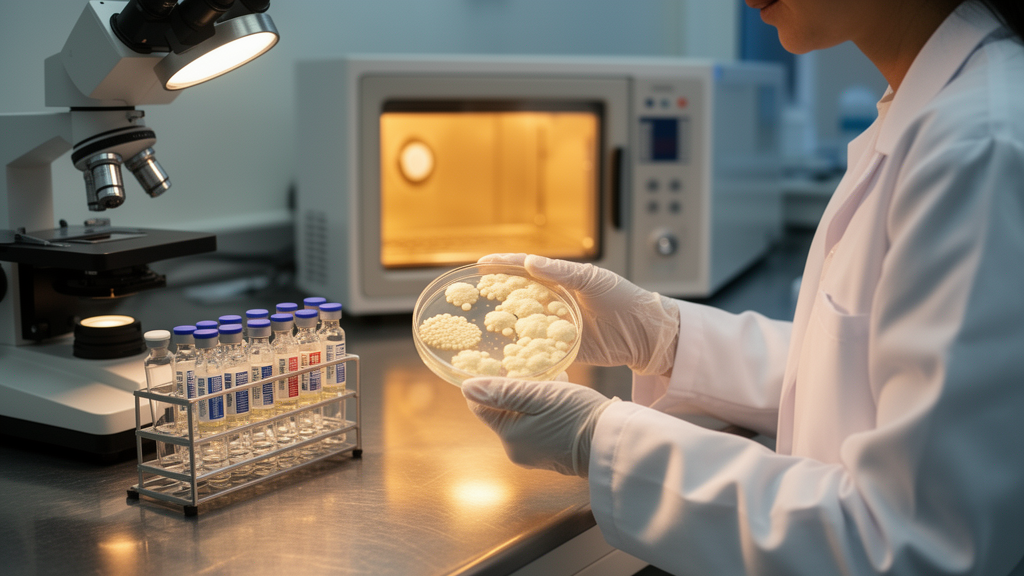
A multicenter study of 223 unique clinical Trichosporon isolates, collected from 18 centers across five South China provinces, has identified Trichosporon asahii as the region's predominant species and found voriconazole to be the most active antifungal agent in vitro. The isolates were identified using matrix-assisted laser desorption/ionization time-of-flight mass spectrometry (MALDI-TOF MS) and sequencing of the intergenic spacer 1 (IGS1) region. The findings are published in Frontiers in Cellular and Infection Microbiology.
IGS1 sequencing resolved 220 of the 223 isolates to the species level, revealing eight distinct species. T. asahii accounted for 171 isolates, or 77.7 percent of the identified collection, underscoring its clinical predominance in the region. The remaining isolates were distributed among seven less common species, illustrating that the genus recovered from patients in South China is more diverse than a single dominant species.
A key diagnostic concern emerged from the comparison between methods. Species-level concordance between MALDI-TOF MS and IGS1 sequencing was 85.5 percent, or 188 of 220 isolates, with substantial variation across species. Because species identification informs antifungal choice, the results suggest that laboratories relying solely on mass spectrometry may misclassify a meaningful minority of Trichosporon isolates, particularly among less prevalent species.
Among the 171 T. asahii isolates, IGS1 genotyping showed that genotypes 1 and 3 co-predominated, representing 32.7 percent and 32.2 percent of isolates respectively. The researchers tested whether particular genotypes were associated with particular specimen sources but found no significant relationship (P = 0.663). This statistical independence suggests that multiple genotypes circulate across specimen types rather than specializing in particular niches.
Antifungal susceptibility testing followed the broth microdilution method of the Clinical and Laboratory Standards Institute, measuring the minimum inhibitory concentrations (MICs) of six agents. Voriconazole stood out as the most potent drug, with a MIC90 of 0.125 micrograms per milliliter and a geometric mean MIC of 0.06 micrograms per milliliter. These low values indicate strong in vitro activity across the diversity of clinical Trichosporon species circulating in South China.
Fluconazole, by contrast, showed higher MICs among a subset of isolates, raising the question of what molecular features underlie reduced susceptibility. To investigate, the team performed whole-genome sequencing on isolates with high fluconazole MICs and on randomly selected low-MIC isolates, characterizing mutations in the ERG11 gene. The sequencing results revealed a consistent pattern: high fluconazole MICs were consistently associated with specific ERG11 amino acid substitutions, and these differed by species.
Substitution Y133F appeared in T. dohaense isolates with high MICs, while T. asteroides isolates carried L229I, V132A, and Y133F substitutions. The species-specific nature of these polymorphisms suggests that elevated fluconazole MICs in Trichosporon may be linked to different molecular changes depending on the species involved. The authors describe these ERG11 associations in their conclusions as potential links, since the study design does not establish that the substitutions directly confer resistance.
Similarly, the survey documents susceptibility profiles at a single point in time and does not assess clinical treatment outcomes. Even so, the large, geographically broad collection provides detailed epidemiological data for this genus in southern China. Within the study's scope, the results indicate that T. asahii was the species most frequently recovered from patients in the region and that voriconazole demonstrated the strongest in vitro activity of the six agents tested.
The moderate agreement between MALDI-TOF MS and sequencing highlights a role for molecular confirmation when precise species identification matters.
Subject of Research: Species distribution and antifungal susceptibility of clinical Trichosporon isolates in South China
Article Title: Species distribution and antifungal susceptibility profiles of Trichosporon species: a multicenter study of 223 clinical isolates from South China
Article References: Qiao, Y., Zhan, J., Yuan, K., Deng, J., Peng, Y., Yang, H., Yang, S., Liang, B., Qiu, D., Zhang, L., Cai, W., Wang, Y., & Guo, P. (2026). Species distribution and antifungal susceptibility profiles of Trichosporon species: a multicenter study of 223 clinical isolates from South China. Frontiers in Cellular and Infection Microbiology, 16, Article 1982885. https://doi.org/10.3389/fcimb.2026.1982885
Image Credits: AI Generated
DOI: 10.3389/fcimb.2026.1982885
Keywords: Trichosporon, Trichosporon asahii, antifungal susceptibility, voriconazole, fluconazole, ERG11, MALDI-TOF MS, IGS1 genotyping, South China, whole-genome sequencing, Species, distribution
News Source: Drew Townsend. (October 24, 2026). Trichosporon asahii Dominates Clinical Isolates in South China, With Voriconazole the Most Active Drug. Scienmag.