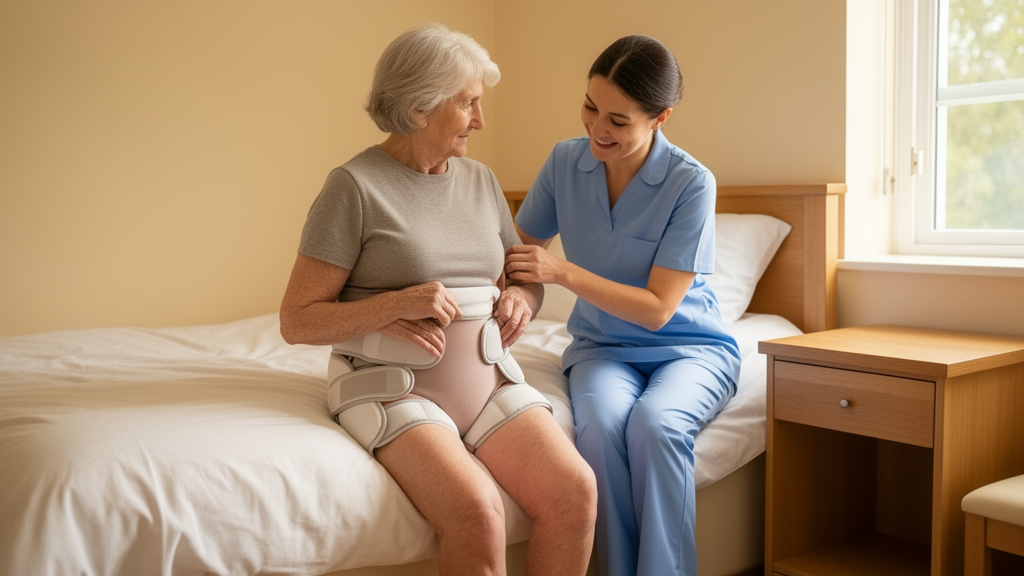
Hip fractures are a major health concern among older adults, and the risk of falls and fall-related injuries is substantially higher in residential care homes than in community settings. A research team in Hong Kong is now preparing to test a customized approach to a familiar preventive device: a hip protector tailored to each resident’s body through 3D printing. The study, registered with the Chinese Clinical Trial Registry on 3 November 2025, is published as a peer-reviewed, accepted protocol in BMC Geriatrics, and it describes planned methods rather than results.
The underlying problem the trial addresses is not whether hip protectors can work, but whether older adults will actually wear them. According to the protocol, hip protectors have been shown to reduce the risk of hip fracture when worn during a fall, yet poor user compliance limits their effectiveness. Conventional protectors are often uncomfortable and poorly fitted, which discourages regular use. The researchers propose that customization may change that: each participant in the intervention arm will receive a 3D-printed protector in the size that best fits their body size and pelvic shape, an approach the team hypothesizes will improve comfort and fit and, in turn, adherence. Participants in the control arm will receive conventional hip protectors.
The trial is designed as a 12-month, two-arm cluster randomized controlled trial conducted in residential care homes in Hong Kong. Thirty care homes will be randomly allocated to either the intervention or the control group, with approximately 10 participants recruited from each home, for a total of 300 participants. All participants will be encouraged to wear their hip protectors for the full 12 months. Because randomization occurs at the level of the care home, the statistical analysis must account for residents within the same facility, and the team plans to use regression models and generalized estimating equations for the quantitative data.
The primary outcomes focus squarely on the compliance question: acceptance rate, adherence rate measured separately for day and night wear, the percentage of protected falls, and the percentage of protected residents. Secondary outcomes extend the picture to clinical and practical consequences, including the incidence of hip injury, adverse effects related to hip protector use, the costs of using the devices, and perceived benefits reported both by the older adults and by care staff. Qualitative interview data will be analysed using thematic analysis, which may capture barriers and facilitators that numeric adherence measures alone could miss.
The choice of outcome measures reflects how complex adherence can be in a care home setting. A device that residents accept initially but remove at night would solve only part of the problem, which is why the protocol tracks day and night adherence separately. A protector that fits well but causes discomfort could also discourage use, making the systematic recording of adverse effects an important secondary outcome. Cost data and staff-reported perceptions will add practical context for any future adoption decisions.
It is important to be clear about what this study can and cannot show. As a protocol, it describes planned methods rather than findings; no results about effectiveness or safety yet exist. The trial’s stated aim is to determine whether customized 3D-printed hip protectors improve acceptance of and adherence to the devices compared with conventional protectors among older adults in care homes, with secondary evidence gathered on hip injuries, adverse effects, costs and user experiences over the 12-month follow-up.
If the results support the hypothesis, the researchers note that the findings could support the use of customized hip protection as part of fall-injury prevention in residential care. Any conclusion about whether customization ultimately translates into fewer fractures will depend on the trial’s eventual results and on whether any observed adherence gains prove durable beyond the study period.
For now, the trial stands as a structured test of whether personalization through 3D printing can improve on conventional, off-the-shelf hip protectors in the population where falls pose the greatest threat, and whether better-fitting devices can keep fragile older adults protected not just in principle, but in the moments when a fall actually happens.
Subject of Research: Protocol for a cluster randomized controlled trial of customized 3D-printed hip protectors and user compliance among older adults in Hong Kong care homes
Article Title: Effect of customized 3D-printed hip protectors on user compliance in older adults in care homes: protocol for a cluster randomized controlled trial
Article References: Yang, Y., Zheng, X., Song, X., Pang, M. Y., Kim, Y., Mo, H., Chan, K.-T., & Fung, C.-T. (2026). Effect of customized 3D-printed hip protectors on user compliance in older adults in care homes: protocol for a cluster randomized controlled trial. BMC Geriatrics. https://doi.org/10.1186/s12877-026-08556-7
Image Credits: AI Generated
DOI: 10.1186/s12877-026-08556-7
Keywords: hip protectors, 3D printing, older adults, care homes, hip fracture, falls prevention, cluster randomized controlled trial, compliance, customized devices, Hong Kong, Effect, customized
News Source: Ophelia Keating. (October 24, 2026). Trial to Test Whether 3D-Printed Hip Protectors Improve Wear Compliance in Care Homes. Scienmag.