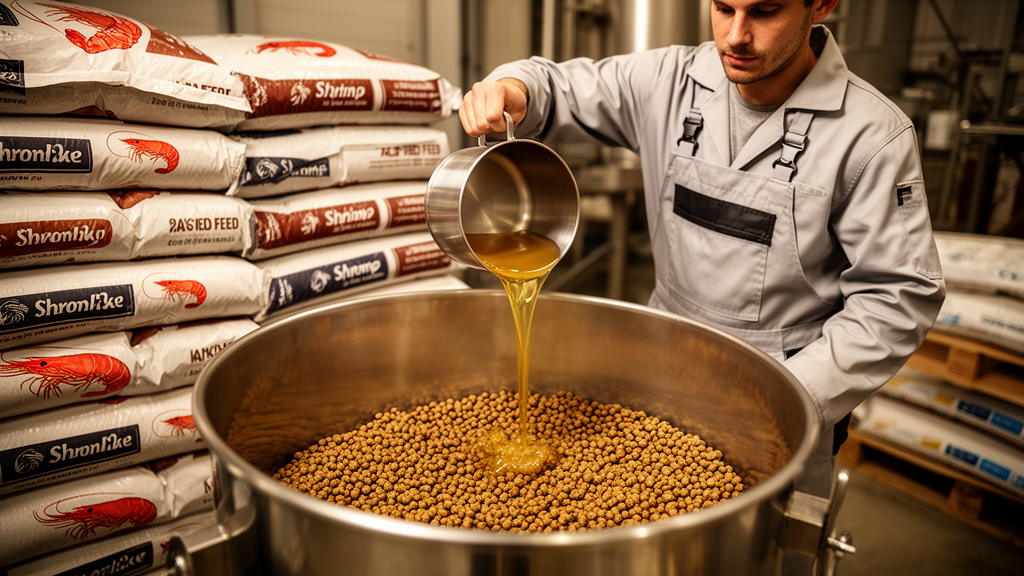
Aquaculture is under growing pressure to replace fishmeal and fish oil with plant-based ingredients, but soybean meal, corn gluten meal and algal meal often carry antinutritional compounds such as phytates, tannins, protease inhibitors and saponins that impair digestion and suppress immune function. A new review published in Aquaculture Science and Management examines tributyrin, a triglyceride ester of butyric acid, as a functional feed additive that may help farmed fish and shrimp cope with this dietary transition. The authors, led by Devkant and Kaliyaperumal Sriranjani, argue that tributyrin’s ability to deliver butyrate in a stable, controlled form makes it a candidate for supporting gut health, immunity and metabolic performance across a widening range of aquatic species.
Tributyrin is chemically tri(butyrate)glycerol: three butyric acid molecules esterified to a single glycerol backbone, with the molecular formula C15H26O6 and a molar mass of roughly 302.36 grams per mole. Although the central carbon is stereogenic, the molecule is achiral because the two end carbons of the glycerol carry identical substituents. In its purest form it is an oily liquid at room temperature, and its neutral lipid nature makes it insoluble in water, which matters because emulsification in the gut is required for digestion. The IUPAC name, 2,3-di[butanoyloxy]propyl butanoate, reflects butanoate groups attached at the 1, 2 and 3 positions of the glycerol.
That esterified structure is the key to the compound’s practical appeal. Free butyric acid is volatile, corrosive and foul-smelling, making it difficult to include in feed and prone to losses during storage and pelleting. Sodium butyrate is hygroscopic and can dissociate prematurely in the upper gastrointestinal tract. Tributyrin, by contrast, remains mostly intact through the acidic stomach of fish and shrimp and is hydrolysed gradually in the intestine, primarily by pancreatic lipase activated by bile salts, which in teleosts targets the 1 and 3 positions of triacylglycerols. Because each mole of tributyrin yields three moles of free butyric acid, the review describes it as a more efficient molar source of butyrate than monobutyrin or butyric acid diglycerides.
Once released, the four-carbon butyric acid is absorbed mainly through non-ionic passive diffusion across the apical membrane of enterocytes, with a minor carrier-mediated component. The review is careful to note that direct transporter-level evidence in fish is limited and that much of the mechanistic picture comes from mammalian studies, where the sodium-coupled monocarboxylate transporter SLC5A8 is primarily responsible for carrier-mediated transport. In fish, more than half of absorbed butyrate is consumed locally as an energy source by enterocytes, with the remainder travelling in portal blood bound to albumin. This gut-first pattern of delivery is consistent with the repeated observation that tributyrin supplementation improves intestinal histomorphology, including enlarged villi, increased crypt depth and a thickened muscularis.
At the cellular level, butyrate acts in three main ways: as a preferential oxidative energy source for enterocyte mitochondria, as an inhibitor of class I histone deacetylases with a reported IC50 of roughly 100 to 700 micromolar, and through the G-protein-coupled receptors FFAR2 and FFAR3. HDAC inhibition loosens chromatin and permits transcription of genes involved in epithelial differentiation, barrier restoration and anti-inflammatory signalling. In fish, tributyrin supplementation has been shown to alter transcription of genes linked to energy metabolism, fatty acid beta-oxidation and steroidogenesis, and to increase expression of tight-junction genes such as zo-1, claudin and occludin. In green mud crab, 0.20 percent dietary tributyrin increased transcription of several junction-related genes and reduced diamine oxidase activity, a marker of paracellular leakage.
Effects on the gut microbiome appear selective rather than indiscriminate. In Pacific white shrimp (Litopenaeus vannamei), dietary tributyrin at 500 to 1500 milligrams per kilogram reduced microbial species richness and diversity while enriching beneficial bacteria including Rhodobacteraceae and Pseudomonas. In rainbow trout, tributyrin selectively inhibited Enterobacteriaceae at high concentrations without altering overall microbiome diversity, and metabolic pathway analysis suggested reduced pathogenesis-related functional potential. In largemouth bass fed a low-fishmeal, high-Clostridium autoethanogenum protein diet, tributyrin cut the proportion of Mycoplasmataceae from 90 percent to 10 percent. In shrimp, tributyrin has also been reported to reduce Vibrio levels in the hepatopancreas and intestine, a finding relevant to vibriosis management.
Dose-response trials in finfish show both promise and variability. An eight-week study in juvenile large yellow croaker fed a high-Clostridium autoethanogenum protein diet found that 0.05 to 0.1 percent tributyrin restored weight gain and specific growth rate to levels comparable with a fishmeal control, with an optimum near 0.1 percent. Juvenile yellow drum fed high-soybean-meal diets showed improved growth, flesh quality and intestinal morphology at 0.1 percent, while grass carp responded most strongly at intermediate levels of roughly 400 to 600 milligrams per kilogram, with no benefit at zero or excessive dosing. In juvenile yellow catfish, 1000 milligrams per kilogram over 56 days produced the greatest final weight, specific growth rate and protein efficiency ratio while lowering intestinal inflammatory cytokines. Yet juvenile trout fed an 83 percent plant-ingredient diet with 0.05 to 0.2 percent tributyrin for 44 days showed no significant growth or feed-efficiency improvement, only enhanced immune, antioxidant and digestive-enzyme profiles at the highest inclusion levels.
Crustacean studies, though fewer, point to a similar pattern. In Litopenaeus vannamei, 500 to 1500 milligrams per kilogram enhanced growth over short trials, and 1 to 2 grams per kilogram improved growth, feed efficiency and, at the higher dose, phagocytic activity, glutathione peroxidase and resistance to Vibrio harveyi. One trial found that 0.1 percent tributyrin enhanced weight gain in shrimp on a moderate 25 percent soybean meal diet but not on a high 50 percent soybean meal diet, suggesting that background diet composition shapes effectiveness. A 10 grams per kilogram dose restored growth and intestinal structure in shrimp fed high soybean meal diets to levels similar to a fishmeal-based control. The review concludes that roughly 0.1 to 0.2 percent is a consistent effective range in shrimp, with 0.1 percent often the economical threshold, while cautioning that direct comparisons are hampered by differences in purity, basal diet, species, size and trial duration.
Beyond biology, tributyrin’s industrial behaviour suits commercial feed production. As a neutral ester it withstands the heat and mechanical stress of extrusion and pelleting better than ionic salts, and its low volatility and mild scent ease storage, though the review notes that liquid tributyrin remains susceptible to evaporative and thermal loss during high-temperature, high-shear extrusion, making retention in the final pellet variable and hard to standardize across feed mills. Its antibiotic-sparing potential aligns with efforts against antimicrobial resistance, including China’s 2020 nationwide prohibition of antibiotic growth promoters in livestock and aquaculture feed, which has spurred interest in non-antibiotic gut-health supplements. The compound also occurs naturally in ruminant milk fat and is Generally Recognized As Safe, and synthetic production relies on chemical or enzymatic esterification of glycerol with butyric acid.
The authors are explicit about the limits of the evidence. Findings are considerably stronger in finfish than in molluscs, shrimp and crustacean studies remain limited, and direct evidence in bivalves is largely missing. Most supporting trials are short-term and small-scale rather than covering full commercial production cycles, farm-level economic evaluations are scarce, and long-term storage stability under humid tropical hatchery conditions is untested. Much mechanistic work, including transporter data, derives from mammalian studies. The review concludes that tributyrin shows genuine promise for improving growth, nutrient utilization, gut health, immunity and disease resistance, but that future research must prioritize long-term, species-specific, economically relevant trials before wide-scale commercial use can be justified.
Subject of Research: The role of tributyrin as a functional feed additive in fish and shrimp aquaculture nutrition
Article Title: Tributyrin and its importance in fish and shrimp nutrition
Article References: Devkant, Ranjan, A., Thangarani, A. J., Prabu, E., Felix, N., Uma, A., & Sriranjani, K. (2026). Tributyrin and its importance in fish and shrimp nutrition. Aquaculture Science and Management, 3(1), Article 16. https://doi.org/10.1186/s44365-026-00045-7
Image Credits: AI Generated
DOI: 10.1186/s44365-026-00045-7
Keywords: tributyrin, butyric acid, aquaculture, fish nutrition, shrimp nutrition, gut health, feed additives, plant-based diets, immunity, microbiome, sustainable aquafeeds, importance
News Source: Alan Morgan. (October 28, 2026). Tributyrin emerges as a promising gut-health additive for fish and shrimp feeds. Scienmag.