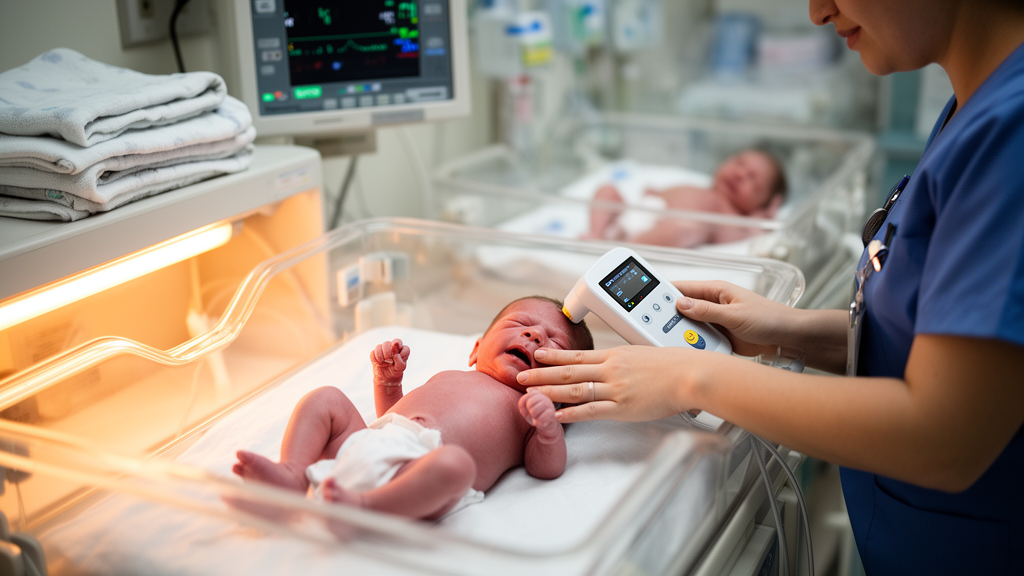
A randomized clinical trial involving 84 preterm infants with jaundice found that adding foot reflexology massage or kangaroo mother care to phototherapy was associated with lower serum bilirubin levels at 72 hours than phototherapy alone. Researchers recruited preterm neonates with jaundice between July and October 2023 and randomly assigned 28 infants each to foot reflexology, kangaroo mother care, or a control group. Every group underwent phototherapy, while the control group received no additional intervention.
Reflexology consisted of massaging specific areas of each foot for 15 minutes once daily, amounting to a 30-minute session. Kangaroo mother care involved skin-to-skin contact with the infants’ mothers for at least five 30-minute sessions per day. Both interventions began within the first 24 hours of hospitalization.
The groups began with similar serum bilirubin concentrations: 16.07 ± 2.51 milligrams per deciliter in the reflexology group, 16.29 ± 1.84 mg/dL in the kangaroo care group, and 16.56 ± 3.14 mg/dL in controls. The difference was not statistically significant (p = 0.77). Bilirubin levels progressively decreased at 24, 48, and 72 hours in all three groups (p < 0.05), showing that the overall downward trend was not confined to either intervention group.
At 72 hours, mean serum bilirubin was 11.44 ± 2.02 mg/dL in the reflexology group, 12.08 ± 1.68 mg/dL in the kangaroo care group, and 14.02 ± 3.14 mg/dL in controls. The overall difference was statistically significant (p < 0.05), with both intervention groups showing lower average values than the control group. Because the summary reports an overall p value rather than pairwise comparisons, it does not establish whether the difference between reflexology and kangaroo care was statistically significant.
Nor does it establish that the two interventions had equivalent effects. The reported values point to a lower 72-hour mean in the reflexology group than in the kangaroo care group, but the available results do not support a stronger claim that reflexology specifically produced the numerical pattern. The principal caution is the number of infants represented in the 72-hour analysis.
Although 84 participants were randomized, the reported endpoint included only nine infants in the reflexology group, 12 in the kangaroo care group, and 16 in controls—37 of the randomized participants in total. The supplied abstract does not explain whether the remaining infants were discharged, transferred, excluded, or missing for another reason. That loss of endpoint data could have influenced the comparison and limits generalizability.
The study was also conducted at one hospital, and bilirubin was measured during hospitalization and 24 hours after hospitalization; the summary does not establish whether treatment differences persisted beyond the reported assessment or affected longer-term health outcomes. The findings support the possibility that structured reflexology massage and kangaroo mother care may contribute to bilirubin reduction when used alongside phototherapy, but they do not show that either practice can replace standard treatment or establish their safety or effectiveness across broader neonatal populations.
Subject of Research: Randomized trial of foot reflexology and kangaroo mother care for bilirubin reduction in preterm infants receiving phototherapy
Article Title: Comparing the effects of foot reflexology, kangaroo care, and standard care on bilirubin levels in preterm infants with physiological jaundice undergoing phototherapy in neonatal intensive care unit: a randomized controlled trial
Article References: Nasrabadi, F., Sajadi, M., & Harorani, M. (2026). Comparing the effects of foot reflexology, kangaroo care, and standard care on bilirubin levels in preterm infants with physiological jaundice undergoing phototherapy in neonatal intensive care unit: a randomized controlled trial. BMC Pediatrics. https://doi.org/10.1186/s12887-025-06506-7
Image Credits: AI Generated
DOI: 10.1186/s12887-025-06506-7
Keywords: preterm infants, neonatal jaundice, bilirubin, phototherapy, foot reflexology, kangaroo mother care, skin-to-skin contact, randomized clinical trial, neonatal care, serum bilirubin, Comparing, effects
News Source: Ophelia Keating. (October 20, 2026). Trial links added care to lower bilirubin in preterm infants. Scienmag.