


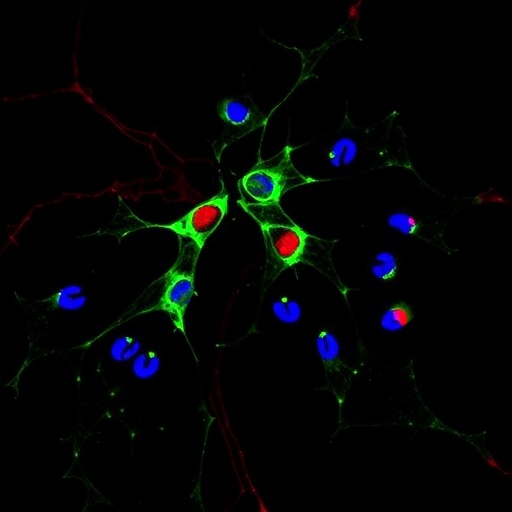
In a groundbreaking new study published on May 8, 2026, researchers have unveiled a crucial molecular axis regulating the immune system’s capacity to fight tumors. The study centers on TopBP1, a pivotal protein that orchestrates the transcriptional programming necessary for the differentiation of dendritic cells (DCs), which are essential components of tumor immunity. This discovery sheds new light on the complex interplay between transcription factors PU.1 and IRF8, and the growth factor Flt3L, providing a refined understanding of how immune responses can be modulated to combat cancer more effectively.
Dendritic cells serve as the immune system’s sentinels, detecting and presenting antigens to lymphocytes to initiate and regulate immune responses. Their differentiation from progenitor cells is tightly controlled at the transcriptional level by various factors, among which PU.1 and IRF8 stand out as master regulators. These transcription factors govern gene expression profiles that dictate the fate and functionality of DC subsets, enabling them to prime antitumor immunity. Until now, the upstream molecular signals coordinating this transcriptional network remained elusive.
The team led by Cha, Kang, Lee, and colleagues identified TopBP1 as a linchpin molecule that coordinates the transcriptional programming driven by PU.1 and IRF8. TopBP1, previously known for roles in DNA replication and repair, has emerged as a transcriptional co-regulator critical for immune cell lineage commitment. By interacting directly with these transcription factors, TopBP1 facilitates the activation of gene programs essential for DC differentiation. This regulatory axis promotes the generation of functionally competent dendritic cells capable of orchestrating robust immune responses.
Using state-of-the-art molecular biology techniques, the researchers demonstrated that TopBP1 enhances the binding efficiency of PU.1 and IRF8 to target gene promoters, effectively amplifying their transcriptional output. This cooperative mechanism ensures the precise and timely expression of genes requisite for dendritic cell maturation and specialization. Moreover, the presence of TopBP1 was found to be indispensable for the responsiveness of DC progenitors to Flt3 ligand (Flt3L), a potent cytokine that drives the expansion and differentiation of dendritic cells.
Flt3L-driven tumor immunity represents a promising therapeutic avenue, as this cytokine promotes the proliferation of dendritic cells, which in turn activate cytotoxic T cells to eradicate cancer cells. The newfound connection between TopBP1 and Flt3L signaling elucidates a previously unappreciated layer of regulation that could be exploited for immunotherapy enhancement. By modulating TopBP1 activity, it may be possible to amplify Flt3L-mediated dendritic cell responses, thereby boosting antitumor immunity in cancer patients.
The implications of this study reach far beyond basic immunology, as it provides a mechanistic blueprint for designing targeted interventions that harness the immune system’s intrinsic power. The ability to fine-tune dendritic cell differentiation has tremendous potential for improving cancer vaccines and checkpoint blockade therapies by ensuring a more potent and durable immune attack against tumor cells. TopBP1 thus emerges as a novel target with the capacity to reshape the tumor microenvironment in favor of immune eradication.
Importantly, the study also highlights the spatial and temporal dynamics of the TopBP1–PU.1–IRF8 axis. The researchers observed that this regulatory circuit is most active during specific windows of dendritic cell development and in response to external cues, such as inflammation or tumor-derived signals. This nuanced understanding offers insights into how the immune system adapts to various pathological conditions and how therapeutic interventions could be strategically timed or localized.
The investigation employed genome-wide chromatin immunoprecipitation sequencing (ChIP-seq) and transcriptomic analyses to map the binding landscapes of these transcriptional regulators. Results revealed that TopBP1-bound regions coincide with enhancer elements enriched for PU.1 and IRF8 motifs, underscoring its role in shaping the epigenetic landscape of dendritic cell precursors. These integrative epigenomic findings pave the way for future studies focused on chromatin remodeling and gene regulation in immune cell lineages.
On a functional level, mouse models deficient in TopBP1 exhibited marked impairments in dendritic cell populations and compromised Flt3L responses, leading to diminished antitumor immunity. Tumor-bearing mice lacking TopBP1 showed accelerated tumor growth and reduced infiltration of activated T cells within the tumor microenvironment. These in vivo findings validate the critical role of TopBP1 in sustaining effective immune surveillance and tumor control.
Furthermore, the study provides glimpses into potential feedback loops whereby activated dendritic cells can influence TopBP1 expression and activity, suggesting a self-reinforcing mechanism that stabilizes immunity during prolonged antigenic stimulation. This observation opens new doors to understanding chronic infections, autoimmune diseases, and how immune exhaustion might be circumvented by targeting this molecular node.
The role of TopBP1 in dendritic cell biology also invites exploration into its participation in other immune processes beyond cancer. Given the central importance of DCs in orchestrating responses to pathogens, vaccines, and tissue homeostasis, modulating TopBP1 could have widespread therapeutic implications. Researchers foresee that deciphering the precise regulatory networks involving TopBP1 will expand our capacity to engineer immune responses in various clinical contexts.
Overall, this landmark study revises our understanding of dendritic cell differentiation by positioning TopBP1 as a master regulator intersecting key transcriptional pathways. The elucidation of the TopBP1–PU.1–IRF8 axis as a linchpin in Flt3L-driven tumor immunity represents a major stride toward rational design of next-generation immunotherapies. By targeting this axis, future treatments could more effectively mobilize the body’s own defenses against malignancies, transforming the clinical landscape of cancer treatment.
This research not only enriches the molecular immunology field but also inspires translational work aimed at exploiting immune cell biology for therapeutic innovation. The convergence of transcription factor networks with cytokine signaling elucidated here exemplifies the complexity and elegance of immune regulation. As clinical trials evolve, the insights garnered from TopBP1-centric pathways may pave the way for personalized immunomodulatory regimens, drastically improving patient outcomes.
In light of these findings, the prospect of integrating TopBP1 modulation alongside existing cancer immunotherapies such as checkpoint inhibitors or CAR-T cells is particularly exciting. Such combinatorial approaches hold promise for overcoming resistance mechanisms and enhancing durable remission rates. Continued study of TopBP1’s diverse functions will likely reveal additional roles in immune cell communication and systemic immunity.
In conclusion, the elucidation of TopBP1’s role in orchestrating PU.1–IRF8 transcriptional programming and its impact on Flt3L-driven dendritic cell differentiation marks a paradigm shift in our approach to harnessing immunity against cancer. This discovery stands at the nexus of molecular biology, immunology, and oncology, with the potential to catalyze breakthroughs in both fundamental science and clinical application. The future of tumor immunology looks markedly brighter with TopBP1 as a new beacon guiding the way.
Subject of Research: Molecular regulation of dendritic cell differentiation and tumor immunity, focusing on TopBP1, PU.1, IRF8, and Flt3L signaling pathways.
Article Title: TopBP1 orchestrates PU.1–IRF8 transcriptional programming of dendritic cell differentiation and Flt3L-driven tumor immunity.
Article References:
Cha, MS., Kang, MH., Lee, J. et al. TopBP1 orchestrates PU.1–IRF8 transcriptional programming of dendritic cell differentiation and Flt3L-driven tumor immunity. Exp Mol Med (2026). https://doi.org/10.1038/s12276-026-01715-1
Image Credits: AI Generated
DOI: 10.1038/s12276-026-01715-1
Tags: dendritic cells as antigen-presenting cellsFlt3L growth factor in immune cell differentiationgene expression in dendritic cell subsetsimmune system modulation for cancer treatmentmolecular regulation of dendritic cell developmentPU.1 and IRF8 transcription factors in immunityPU.1-IRF8 axis in dendritic cell functionTopBP1 and cancer immunotherapyTopBP1 role in dendritic cell differentiationtranscriptional control of immune responsestranscriptional programming in tumor immunity

