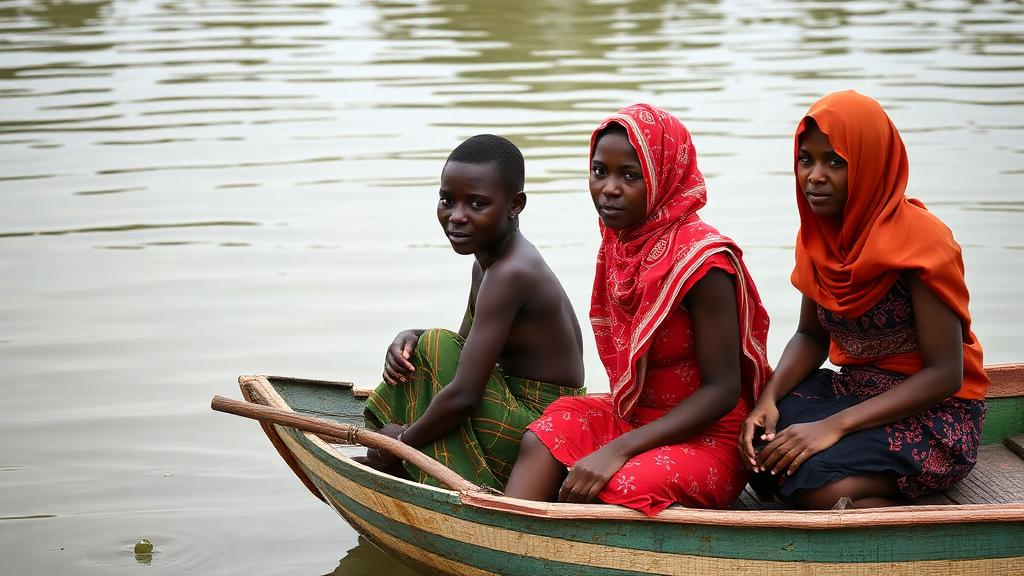
Adolescent girls and young women living in fishing communities along Lake Victoria in Uganda carry a striking burden of sexually transmitted infections, according to a cross-sectional study published in BMC Infectious Diseases. Among 400 participants aged 15 to 24 years, 294 — or 73.5 percent — had at least one laboratory-confirmed STI. Despite this high prevalence, treatment-seeking was low: of 172 participants who reported STI-related symptoms, only 56, or 32.6 percent, had sought formal healthcare before enrolling in the study.
Viral infections dominated the picture. Herpes simplex virus-2 was the most prevalent infection, affecting 44.8 percent of participants (179 of 400), followed by human papillomavirus at 39.3 percent (157 of 400). Bacterial and protozoal infections were less common: chlamydia was detected in 16.0 percent (64 of 400), trichomoniasis in 9.5 percent (38 of 400), gonorrhea in 1.8 percent (7 of 399) and syphilis in 0.8 percent (3 of 365).
The mean age of participants was 19.5 years, with a standard deviation of 2.9. Because the study is cross-sectional, it captures a snapshot of infections and behaviors at a single point in enrollment rather than tracking how infections develop over time, and the associations reported below identify correlations, not proven causes.
In multivariable logistic regression, three factors were independently associated with having at least one STI. Being aged 18 to 24 years roughly doubled the odds compared with younger participants (adjusted odds ratio 1.78, 95 percent confidence interval 1.11 to 2.86). Reporting transactional sex was also associated with higher odds (aOR 1.89, 95 percent CI 1.18 to 3.03), as was being a parent (aOR 2.00, 95 percent CI 1.24 to 3.22).
Among the symptomatic participants, the analysis also identified factors linked to whether young women had sought formal healthcare. Those with secondary education or higher had 2.48 times the odds of having sought care (95 percent CI 1.21 to 5.09).
The public health significance of these findings extends beyond the infections themselves. As the authors note in their background, STIs increase biological susceptibility to HIV, and adolescent girls and young women in sub-Saharan Africa bear a disproportionate STI burden.
The low treatment uptake figure is particularly consequential.
The authors conclude that integrated, youth-friendly STI screening, treatment and prevention strategies — including HPV vaccination — should be embedded within HIV programs in these high-risk settings. Such integration, they argue, could reduce both STI and HIV transmission and improve sexual and reproductive health outcomes for adolescent girls and young women in fishing communities.
As with any cross-sectional study of a single cohort, the results describe one population at one time and cannot establish causal direction between the measured factors and infection status. Nevertheless, the combination of a 73.5 percent infection prevalence and one-in-three treatment-seeking among symptomatic women provides a quantified baseline for services aiming to close the gap between infection and care in one of Uganda’s most underserved settings.
Subject of Research: Sexually transmitted infection prevalence and treatment-seeking among adolescent girls and young women in Ugandan fishing communities
Article Title: High burden of sexually transmitted infections and low treatment uptake among adolescent girls and young women in Ugandan fishing communities: a cross-sectional study
Article References: Musema, K., Lubega, C., Biribawa, V. M., Nakalyango, E., Kiiza, D., Basalirwa, G., Namuniina, A., Ssemunywa, H., Zalwango, K., Namara, I., Nanyonjo, G., Wambuzi, M., Nanvubya, A., Mpendo, J., Ssemaganda, A., Price, M. A., Okech, B., McKinnon, L. R., Kuteesa, M., & Ssetaala, A. (2026). High burden of sexually transmitted infections and low treatment uptake among adolescent girls and young women in Ugandan fishing communities: a cross-sectional study. BMC Infectious Diseases. https://doi.org/10.1186/s12879-026-14639-y
Image Credits: AI Generated
DOI: 10.1186/s12879-026-14639-y
Keywords: sexually transmitted infections, Uganda, fishing communities, adolescent girls and young women, HSV-2, human papillomavirus, chlamydia, healthcare-seeking behavior, HIV prevention, cross-sectional study, Lake Victoria, sexual and reproductive health
News Source: Ophelia Keating. (October 29, 2026). Three in four young women in Ugandan fishing communities carry an STI, yet few seek care. Scienmag.