Canada and Russia have the most to lose or gain, say researchers
Credit: UBC Okanagan
According to a group of international researchers, the potential for large countries to contribute to environmental protection is being overlooked.
The researchers, spanning 13 universities and three countries, were led by UBC Okanagan’s Adam T. Ford and Liber Ero Postdoctoral Fellow Laura Coristine. They recently examined the leverage an individual country has when it comes to protecting ecosystem values. And they say it isn’t–nor should it be–a level playing field.
“Loss of habitat is currently the single biggest threat to biodiversity and is being driven by an ever-expanding human footprint,” says Ford. “Intact lands with low industrial footprint, is critical to maintaining the world’s biodiversity.”
Ford, a Canada Research Chair in Wildlife Restoration Ecology, says the researchers calculated the land mass of the world’s countries and then compared this to the availability of ecosystem values. The eight largest countries–Russia, Canada, America, China, Brazil, Australia, India and Argentina–account for 50 percent of the Earth’s land area. However, those same countries represent barely three percent of the world’s nations.
“Larger countries accumulate greater amounts of ecosystem values,” says Ford, and so, the power to make decisions that affect the world’s remaining ecosystem values is concentrated in the hands of only a few nations.
For this latest research, the team evaluated six globally significant ecosystem values for all of the world’s countries: intact lands, freshwater availability, productive marine environments, breeding habitat for migratory wildlife, soil carbon storage and the potential for range shift in the face of climate change. By closely examining these specific values, Coristine says the team revealed several overlooked opportunities for high-impact contributions to global conservation.
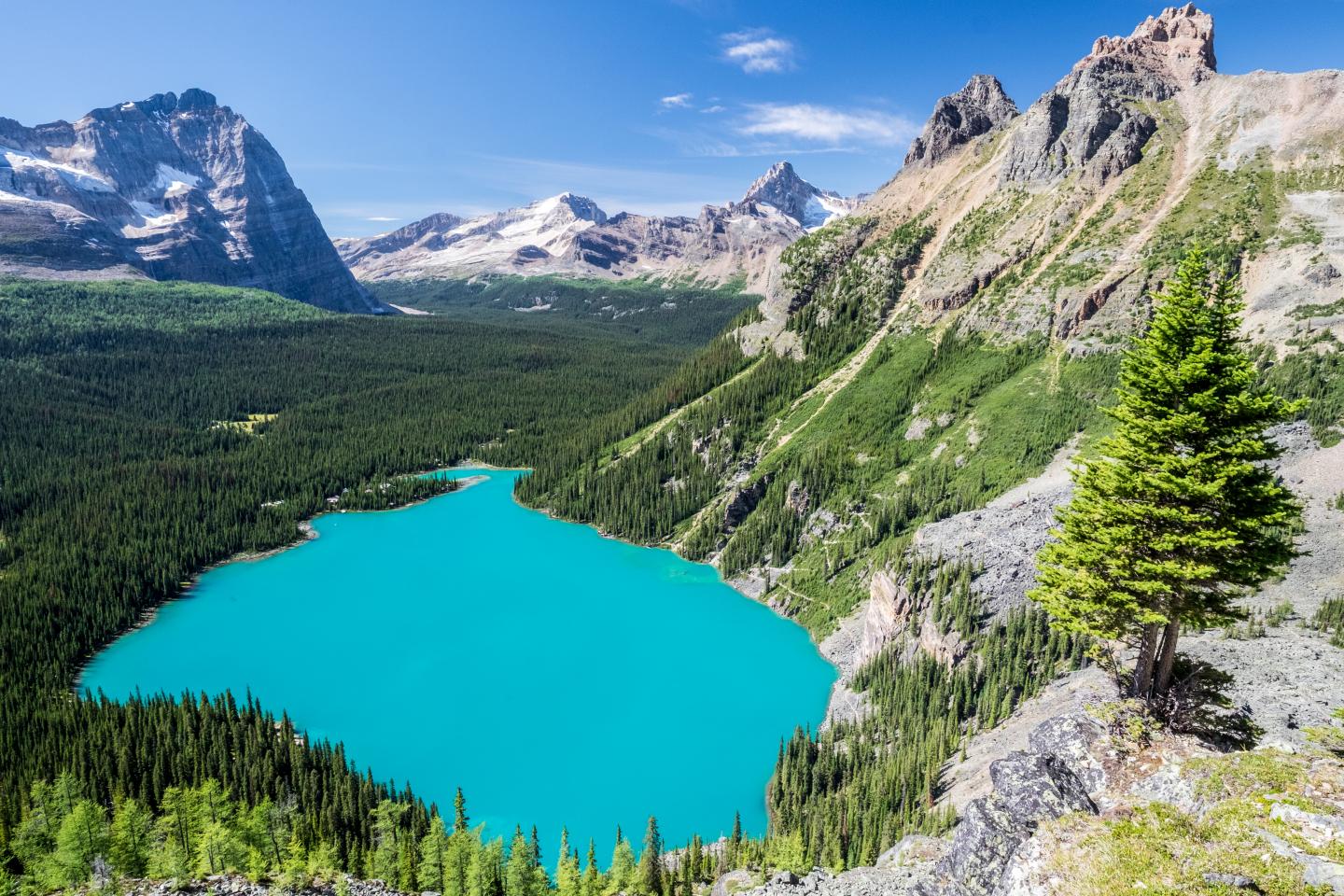
For example, when it comes to freshwater availability, Coristine explains that more than 75 per cent of the world’s total water supply (surface and glacier stored) is found in only three countries–China, Canada and Russia. How these countries manage and protect these water supplies matters to the world as a whole.
“For nations with a large volume of both surface and glacier-stored water, water policies and management of the ‘tap’ will have consequences not only for the global persistence of a wide variety of ecosystems,” she says, “but also for global water security.”
The same argument can be used when it comes to the continental shelves. Generally, the management of continental shelves belongs to the adjacent nation. That country’s domestic policies can have a tremendous impact on the sustainability of marine resources, with trickle-down effects to nations with much smaller contributions to the continental shelf area.
The countries that are the largest contributors to the global supply of continental shelf area are Russia, Canada, the USA and Australia. Russia and Canada top the list when it comes to intact wilderness and half of the world’s least impacted lands occur in those two countries.
Given the biogeography and variation in the area of the world’s nations, the domestic policies of a few nations, including Canada and Russia, can disproportionately influence the global supply of ecosystem values. At the same time, the national policies of these nations can have environmental repercussions for the rest of the world.
“Conservation superpowers–like Canada and Russia–have much greater leverage than we would predict based on their land mass,” says Coristine. “They have tremendous potential to impact global conservation outcomes through accumulation of ecosystem values and through policies that support conservation.”
Their research was published recently in Conservation Biology.
###
Media Contact
Nathan Skolski
[email protected]
250-807-9926
Original Source
https:/
Related Journal Article
http://dx.