• HOME
  • NEWS
  • EXPLORE
    • CAREER
      • Companies
      • Jobs
    • EVENTS
    • iGEM
      • News
      • Team
    • PHOTOS
    • VIDEO
    • WIKI
  • BLOG
  • COMMUNITY
    • FACEBOOK
    • INSTAGRAM
    • TWITTER
Monday, August 10, 2026
BIOENGINEER.ORG
No Result
View All Result
  • Login
  • HOME
  • NEWS
  • EXPLORE
    • CAREER
      • Companies
      • Jobs
        • Lecturer
        • PhD Studentship
        • Postdoc
        • Research Assistant
    • EVENTS
    • iGEM
      • News
      • Team
    • PHOTOS
    • VIDEO
    • WIKI
  • BLOG
  • COMMUNITY
    • FACEBOOK
    • INSTAGRAM
    • TWITTER
  • HOME
  • NEWS
  • EXPLORE
    • CAREER
      • Companies
      • Jobs
        • Lecturer
        • PhD Studentship
        • Postdoc
        • Research Assistant
    • EVENTS
    • iGEM
      • News
      • Team
    • PHOTOS
    • VIDEO
    • WIKI
  • BLOG
  • COMMUNITY
    • FACEBOOK
    • INSTAGRAM
    • TWITTER
No Result
View All Result
Bioengineer.org
No Result
View All Result
Home NEWS Science News Chemistry

There’s a twist in the story of volcanism & mass extinctions, say CCNY researchers

Bioengineer by Bioengineer
February 10, 2020
in Chemistry
Reading Time: 2 mins read
0
IMAGE
Share on FacebookShare on TwitterShare on LinkedinShare on RedditShare on Telegram

IMAGE

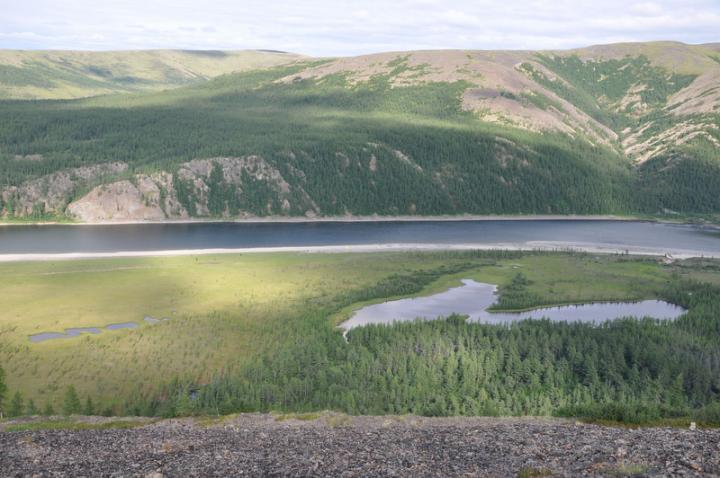
Credit: Photo credit: B. Black and L.T. Elkins-Tanton


An emerging scientific consensus is that gases–in particular carbon gases–released by volcanic eruptions millions of years ago contributed to some of Earth’s greatest mass extinctions. But new research at The City College of New York suggests that that’s not the entire story.

“The key finding of our research is that carbon from massive, ancient volcanic eruptions does not line up well with the geochemical clues that tell us about how some of Earth’s most profound mass extinctions occurred,” said Benjamin Black, assistant professor in CCNY’s Division of Science, whose expertise includes effects of volcanism on climate and mass extinctions.

The study by Black with his M.S. in geology student Ellen Gales, the lead author, is entitled “Carbonatites as a record of the carbon isotope composition of large igneous province outgassing.” It appears in the current issue of the journal “Earth and Planetary Science Letters,” and is a product of Gales’ thesis work.

The new data does not rule out volcanism as the culprit in driving past mass extinctions, the article points out. But it does conclude that there must have been something extra at work.

“Ellen’s work is new in that scientists have previously guessed what the geochemical fingerprint of CO2 from these giant eruptions might be, but our findings are some of the first direct measurements of this fingerprint,” said Black.

“Our finding challenges the idea that carbon from this kind of eruption might be special, and therefore capable of easily matching changes in the carbon cycle during mass extinctions. It also helps us understand how volcanic eruptions move carbon–a key ingredient for life and climate–around inside the Earth and between the solid Earth and the atmosphere,” said Gales.

In addition, the CCNY research also offers insights into Earth’s current climate. “Right now, people are releasing large quantities of CO2 into the atmosphere. In a way, we are heading into almost uncharted territory,” noted Black. “This scale of CO2 release has only happened a few times in Earth’s history, for example during rare, enormous volcanic eruptions like the ones we studied.”

Consequently, Black pointed out, even though volcanic eruptions on the scale of these enormous volcanic provinces are not expected any time soon, understanding the environmental changes triggered by prodigious volcanic CO2 release in the deep past is important for understanding how Earth’s climate could change in the coming centuries.

The researchers used samples collected from ancient volcanic eruptions including the 252-million-year-old Siberian Traps. They included data collected at Columbia University’s Lamont-Doherty Earth Observatory. Lindy Elkins-Tanton at Arizona State University also contributed to the work, which received support from the National Science Foundation.

###

Media Contact
Jay Mwamba
[email protected]
212-650-7580

Original Source

https://www.ccny.cuny.edu/news/theres-twist-story-volcanism-mass-extinctions-say-ccny-researchers

Related Journal Article

http://dx.doi.org/10.1016/j.epsl.2020.116076

Tags: Atmospheric ChemistryChemistry/Physics/Materials SciencesClimate ChangeClimate ScienceEcology/EnvironmentEvolutionNew WorldOld WorldPaleontology
Share13Tweet8Share2ShareShareShare2

Related Posts

Tuning Chiral Asymmetry Opens New Dimension for Lithium–Sulfur Battery Catalysts

Tuning Chiral Asymmetry Opens New Dimension for Lithium–Sulfur Battery Catalysts

August 10, 2026
Far-apart time crystals synchronize their oscillations

Far-apart time crystals synchronize their oscillations

August 10, 2026

Scientists observe antiferromagnetic skyrmions interacting in real time

August 10, 2026

Returning straw helps paddy soils retain more carbon

August 10, 2026
Please login to join discussion

POPULAR NEWS

  • Researchers uncover new insights into immune cell activity in sarcoidosis

    29 shares
    Share 12 Tweet 7
  • Alternative splicing could reveal proteins’ hidden functions

    29 shares
    Share 12 Tweet 7
  • Reference Percentiles for Crying, Regurgitation, Stool Consistency, and CoMiSSTM in Healthy Infants

    29 shares
    Share 12 Tweet 7
  • Impact-Resistant Autonomous Robots Inspired by Tensegrity Architecture

    29 shares
    Share 12 Tweet 7

About

We bring you the latest biotechnology news from best research centers and universities around the world. Check our website.

Follow us

Recent News

Researchers uncover new insights into immune cell activity in sarcoidosis

Alternative splicing could reveal proteins’ hidden functions

Reference Percentiles for Crying, Regurgitation, Stool Consistency, and CoMiSSTM in Healthy Infants

Subscribe to Blog via Email

Enter your email address to subscribe to this blog and receive notifications of new posts by email.

Join 86 other subscribers
  • Contact Us

Bioengineer.org © Copyright 2023 All Rights Reserved.

Welcome Back!

Login to your account below

Forgotten Password?

Retrieve your password

Please enter your username or email address to reset your password.

Log In
No Result
View All Result
  • Homepages
    • Home Page 1
    • Home Page 2
  • News
  • National
  • Business
  • Health
  • Lifestyle
  • Science

Bioengineer.org © Copyright 2023 All Rights Reserved.