Children’s Hospital Los Angeles study published in Journal of Pediatrics uses advanced imaging techniques to optimize a leading-edge therapy for babies with oxygen deprivation
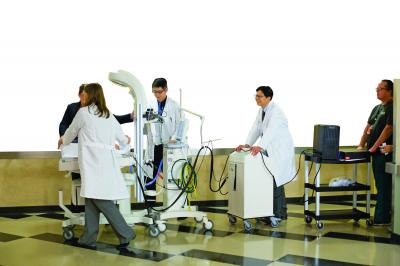
Credit: Children’s Hospital Los Angeles
LOS ANGELES (Feb. 20, 2020) — When a newborn suffers lack of oxygen before or during birth, doctors have very little time to save precious brain tissue. The only proven effective way to treat babies with hypoxic brain injuries is by reducing body temperature through controlled cooling. In a new study, Children’s Hospital Los Angeles neonatologist Tai-Wei Wu, MD, uses leading-edge imaging to measure temperature deep in the brains of these patients. The results demonstrate effective cooling in the deep areas of the brain, which are most often damaged by lack of oxygen.
The study, published in The Journal of Pediatrics this week, provides the foundation clinicians need to personalize this therapy in the future. In order to optimize this neuroprotective technique, the investigators need to understand precisely how therapeutic hypothermia affects a baby’s brain temperature.
“First and foremost, we want to make sure we are effectively cooling the center of the brain,” says Dr. Wu. “It’s usually the core that is hit the hardest by injuries arising from lack of oxygen. These injuries can result in lifelong neurological deficits like cerebral palsy” The results showed that the core of the brain was effectively cooled. Unexpectedly, it was the coldest part of the brain.
“We thought that the core of the brain would be warmer than the outer portions,” he says. “This is usually how body temperature works.” Dr. Wu explains that the observed effect could be due to cooled blood. The center of the brain receives the cooled blood first, before reaching peripheral parts of the brain, and may get colder for this reason. “Almost every patient showed this pattern,” he says, “so the effect is real.”
The study represents a critical proof of concept showing that the therapy is reaching the site most likely to be injured.
“Cooling babies after hypoxic injury gives brain cells their best chance at survival,” says Dr. Wu. Research found that the brain is in a state of energy failure after hypoxic injury. Multiple clinical trials showed that lowering body temperature several degrees for 72 hours improved neurological outcome. “The cooling of the brain decreased energy demand and prevented energy failure,” he says. Therapeutic hypothermia has been standard of care at Children’s Hospital Los Angeles for the past 10 years.
Dr. Wu is no stranger to pushing the edge of technology to save babies. Dr. Wu is the Director of the hospital’s therapeutic hypothermia program, and also developed the transport protocol that allows doctors to safely conduct imaging studies without interrupting the cooling therapy.
This study marks an important achievement in the field of therapeutic cooling. Measuring temperature in an inaccessible location like the brain is already no easy task. Taking this a step further, Dr. Wu wanted to make temperature measurements for multiple, different brain areas during the cooling therapy.
Fortunately, the radiology department at CHLA has Stefan Bluml, PhD, a magnetic resonance imaging and spectroscopy expert who specializes in adapting these techniques for out-of-the-box experimental questions.
“We were really excited to find out that we could measure temperature in different areas of the brain with great accuracy,” says Dr. Wu. The team detected changes as small as 0.2 degrees Celsius between brain regions – all non-invasively and without disrupting treatment.
The findings also show that temperatures were not the same everywhere in the brain. “The fact brain isn’t homogenously cooled is important information to have,” says Dr. Wu. Knowing how the treatment affects different brain regions could allow investigators to tailor treatments to individual babies and their unique patterns of damage. “The outer portion of the brain is hit harder in about 20% of hypoxic patients,” he says. “So, this study shows us how we could better serve individual babies. And better outcomes really are our goal.”
###
The study was funded by Judy and Ben Reiling, Carolee Reiling, Mike Reiling and the Reiling Family Foundation. The work was also supported by the Rudi Schulte Research Institute. First author, Dr. Wu, is an Assistant Professor of Clinical Pediatrics at the Keck School of Medicine at USC. Additional authors on the paper are: Jessica Wisnowski, PhD, Robert F. Geisler, RN, MSN, Aaron Reitman, DO, Eugenia Ho, MD, Benita Tamrazi, MD, Rachel Chapman, MD, and senior author Stefan Bluml, PhD.
About Children’s Hospital Los Angeles
Founded in 1901, Children’s Hospital Los Angeles is ranked the top children’s hospital in California and fifth in the nation for clinical excellence with its selection to the prestigious U.S. News & World Report Honor Roll of children’s hospitals. Clinical care is led by physicians who are faculty members of the Keck School of Medicine of USC through an affiliation dating from 1932. The hospital also leads the largest pediatric residency training program at a freestanding children’s hospital of its kind in the western United States. The Saban Research Institute of Children’s Hospital Los Angeles encompasses basic, translational and clinical research conducted at CHLA. To learn more, follow us on Facebook, Instagram, LinkedIn and Twitter, and visit our blog for families (CHLA.org/blog) and our research blog (chla.org/blog/research).
Media Contact
Melinda Smith
[email protected]
323-361-7236
Related Journal Article
http://dx.