Credit: Mogens Trolle
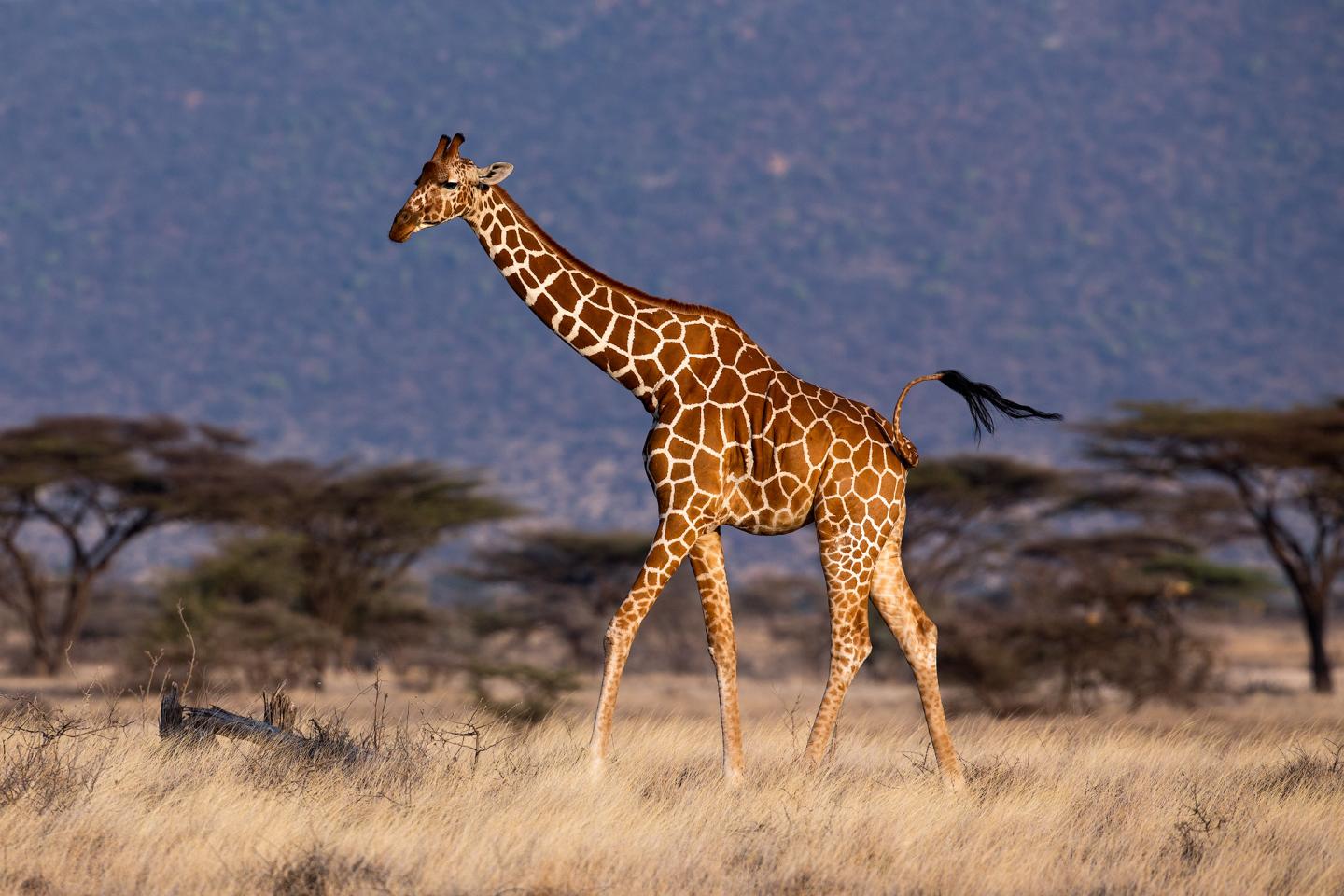
The giraffe is a truly puzzling animal. With its exceptional anatomy and suite of evolutionary adaptations, the giraffe is an outstanding case of animal evolution and physiology. Now, an international team of researchers from the University of Copenhagen and Northwestern Polytechnical University in China have produced a high-quality genome from the giraffe and investigated which genes are likely to be responsible for its unique biological features.
The extraordinary stature of the giraffe has led to a long list of physiological co-adaptations. The blood pressure of the giraffe, for instance, is twice as high as in humans and most other mammals to allow a steady blood supply to the lofty head. How does the giraffe avoid the usual side effects of high blood pressure, such as severe damage to the cardiovascular system or strokes?
The team discovered a particular gene – known as FGFRL1 – that has undergone many changes in the giraffe compared to all other animals. Using sophisticated gene editing techniques they introduced giraffe-specific FGFRL1 mutations into lab mice. Interestingly, the giraffe-type mice differed from normal mice in two important aspects: they suffered less cardiovascular and organ damage when treated with a blood pressure increasing drug, and they grew more compact and denser bones.
– “Both of these changes are directly related to the unique physiological features of the giraffe – coping with high blood pressure and maintaining compact and strong bones, despite growing them faster than any other mammal, to form the elongated neck and legs.”, says Rasmus Heller from the Department of Biology, University of Copenhagen, one of the lead authors on the study.
Giraffe’s can’t get no sleep
While jumping out of bed for (some) humans might be an effortless and elegant affair, this is definitely not the case for the giraffe. Merely standing up is an a lengthy and awkward procedure, let alone getting up and running away from a ferocious predator. Therefore, giraffes have evolved into spending much less time sleeping than most other mammals.
– Rasmus Heller elaborates: “We found that key genes regulating the circadian rhythm and sleep were under strong selection in giraffes, possibly allowing the giraffe a more interrupted sleep-wake cycle than other mammals”.
In line with research in other animals an evolutionary trade-off also seem to be determining their sensory perception, Rasmus continues:
– “Giraffes are in general very alert and exploit their height advantage to scan the horizon using their excellent eyesight. Conversely, they have lost many genes related to olfaction, which is probably related to a radically diluted presence of scents at 5m compared to ground level”.
A model of evolutionary mechanisms–and perhaps even human medicine?
These findings provide insights into basic modes of evolution. The dual effects of the strongly selected FGFRL1 gene are compatible with the phenomenon that one gene can affect several different aspects of the phenotype, so called evolutionary pleiotropy. Pleiotropy is particularly relevant for explaining unusually large phenotypic changes, because such changes often require that a suite of traits are changed within a short evolutionary time. Therefore, pleiotropy could provide one solution to the riddle of how evolution could achieve the many co-dependent changes needed to form an animal as extreme as a giraffe. Furthermore, the findings even identifies FGFRL1 as a possible target of research in human cardiovascular disease.
– “These results showcase that animals are interesting models, not only to understand the basic principles of evolution, but also to help us understand which genes influence some of the phenotypes we are really interested in – such as those related to disease. However, it’s worth pointing out that genetic variants do not necessarily have the same phenotypic effect in different species, and that phenotypes are affected by many other things than variation in coding regions.”, says Qiang Qiu from Northwestern Polytechnical University, another lead author on the study.
The results have just been published in the prestigious scientific journal, Science Advances.
###
Media Contact
Rasmus Heller
[email protected]
Original Source
https:/
Related Journal Article
http://dx.