The microbial mix inside some lemurs’ guts is dictated by what species they are and where they live
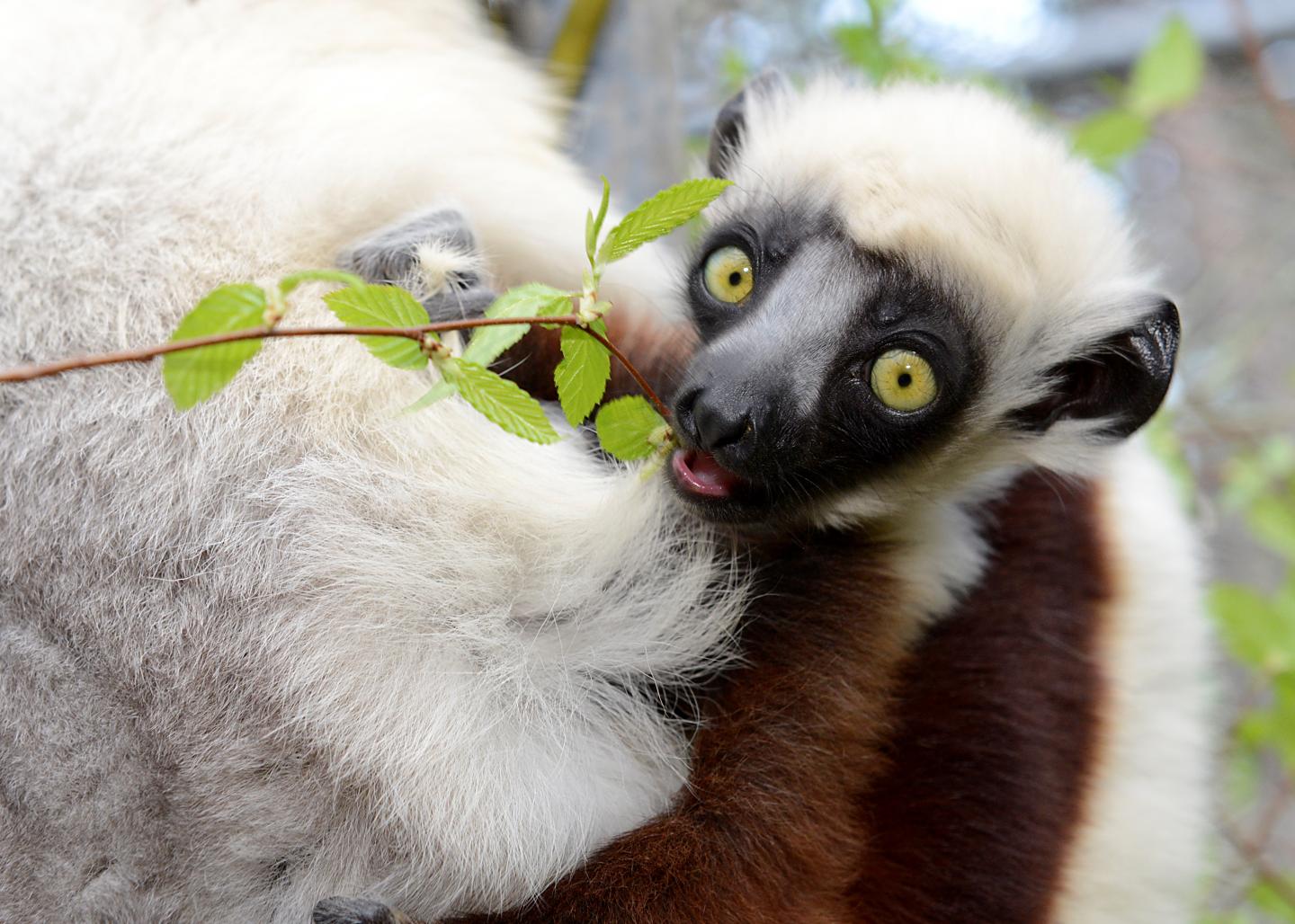
Credit: David Haring, Duke Lemur Center
DURHAM, N.C. — Duke University scientists have given us another way to tell which endangered lemur species are most at risk from deforestation — based on the trillions of bacteria that inhabit their guts.
In a new study, researchers compared the gut microbes of 12 lemur species across the island of Madagascar, where thousands of acres of forest are cleared each year to make way for crops and pastures.
The team found that some lemurs harbor microbes that are more specialized than others for the forests where they live, to help lemurs digest their leafy diets.
One thing that could make it more difficult for such lemurs to adapt to fragmented forests or new locales in the wake of habitat change, the findings suggest, may be their ability to digest the specific mix of plants that grow there.
The study was published June 12 in the journal Biology Letters.
Researchers are trying to tease apart the influence of various factors that shape the balance of microbes in the gut, in part because of studies showing that an animal’s gut microbiome affects its health.
“Gut microbes perform crucial functions,” said first author Lydia Greene, who conducted the research as part of her Ph.D. dissertation at Duke.
Led by Greene and professor of evolutionary anthropology Christine Drea, the study compared the gut microbiomes of 12 species representing two branches of the lemur family tree, brown lemurs and sifaka lemurs.
Both groups of lemurs eat plant-based diets culled from hundreds of species of trees. But while brown lemurs eat mostly fruit, sifakas are known for the ability to eat leaves full of fiber and tannins. Sifakas’ intestines are teeming with mostly friendly bacteria that help them break down the tough leaves they eat, turning plant fiber into nutrients the lemurs use to stay healthy.
Using feces collected by a network of lemur-tracking colleagues working at seven sites across Madagascar, the team sequenced the DNA of gut bacteria from 128 lemurs to figure out which microbes were present.
The stool samples revealed striking differences. The fruit-eating brown lemurs harbored similar collections of gut microbes regardless of where they lived on the island. But the microbial makeup inside the guts of the leaf-eating sifakas varied from place to place, and in ways that couldn’t be attributed to genetic relatedness between lemur species. Instead, what mattered most was where they lived: Microbes that were common in lemurs living in dry forest were rare or absent in rainforest dwellers, and vice versa.
The patterns they found may also explain “why so many brown lemurs have adapted to captivity, but only one species of sifaka” has been successfully reared in zoos and sanctuaries, Greene said.
“They have specialized diets and are completely reliant on having the right microbes” to extract nutrients and energy from the food they eat, Greene said.
“If you look at any one of these fruit-eating species and take away its forest, theoretically it could move next door,” Drea said. “The leaf specialists may not be able to.”
###
This research was funded by the Margot Marsh Biodiversity Foundation and Duke University.
CITATION: “Local Habitat, Not Phylogenetic Relatedness, Predicts Gut Microbiota Better Within Folivorous Than Frugivorous Lemur Lineages,” Lydia K. Greene, Jonathan B. Clayton, Ryan S. Rothman, Brandon P. Semel, Meredith A. Semel, Thomas R. Gillespie, Patricia C. Wright and Christine M. Drea. Biology Letters, June 12, 2019. https:/
Media Contact
Robin Ann Smith
[email protected]
Related Journal Article
http://dx.