New research, published in SCI’s Journal of the Science of Food and Agriculture illuminates the untapped potential of the shrub sea buckthorn as a rich source of natural antioxidants in North America.
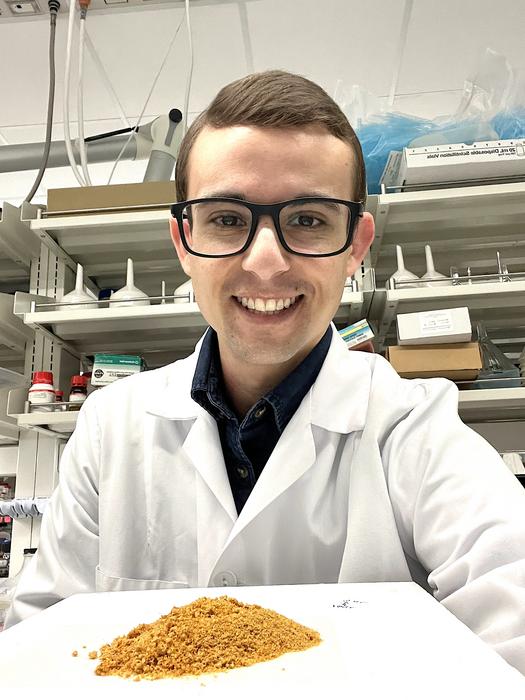
Credit: Renan Danielski, Memorial University of Newfoundland
New research, published in SCI’s Journal of the Science of Food and Agriculture illuminates the untapped potential of the shrub sea buckthorn as a rich source of natural antioxidants in North America.
The study, which was carried out by researchers at the Memorial University of Newfoundland in Canada and led by Professor Fereidoon Shahidi, outlines the unique nutritional profile of sea buckthorn berries grown in Canada and highlights their commercial potential as a bioactive-loaded superfood.
Sea buckthorn is a deciduous, thorny plant found along the coasts of northwestern Europe as well as temperate regions of central Asia. Its berries and leaves are widely used for their nutritional, pharmaceutical and functional properties – sea buckthorn oil is rich in omega-3 and omega-6 fatty acids, vitamins E, B, and A and polyphenols.
In Canada, the plant was introduced in the early 2000s following research by governmental agencies on the crop’s commercial potential. As Renan Danielski, a PhD student at the University of Newfoundland and author on the study explains, ‘Sea buckthorn is a unique crop with vast potential for utilisation. Popular in Asia and North-Western Europe, there is an opportunity to replicate this success in North America by leveraging the unique qualities of locally grown varieties.’
Motivated by the experimental status and limited commercialisation of sea buckthorn in North America to date, the researchers set out to characterise the unique composition of polyphenols, a class of compounds with antioxidative properties, in Canadian cultivars.
‘Understanding how our cultivar compares globally can help communicate the benefits to consumers and establish a market presence,’ notes Fereidoon Shahidi, Professor of Biochemistry at Memorial University of Newfoundland and corresponding author of the study.
The study’s findings highlight the presence of key polyphenolic compounds in sea buckthorn pomace and seeds, each boasting potential health benefits ranging from cardiovascular protection to anti-inflammatory properties. Importantly, geographical factors influence the polyphenolic profile of sea buckthorn berries, with the researchers identifying several distinct compounds with enhanced bioactivity which are only contained in the sea buckthorn cultivar grown in Newfoundland.
Moreover, the sea buckthorn extracts demonstrated promising in vitro antidiabetic and anti-obesity potential, paving the way for further investigation into their mechanisms and potential therapeutic applications.
‘This is a first step in understanding how sea buckthorn polyphenols can modulate our physiology in a beneficial manner. Future research needs to focus on understanding the mechanisms behind those effects and further experimentation using animal models and humans. If these effects are confirmed in vivo, we can envision the use of sea buckthorn polyphenols for therapeutic and pharmacological purposes, aiding in the prevention and treatment of diabetes, obesity, and many other conditions,’ remarked Danielski.
The findings of this study pave the way for harnessing sea buckthorn berries as a valuable source of natural antioxidants in North America. As consumer interest in functional foods and “nutraceuticals” continues to grow, sea buckthorn presents itself as a sustainable and health-enhancing option.
Journal
Journal of the Science of Food and Agriculture
DOI
10.1002/jsfa.13386
Subject of Research
Not applicable
Article Title
Phenolic composition and bioactivities of sea buckthorn (Hippophae rhamnoides L.) fruit and seeds: an unconventional source of natural antioxidants in North America
COI Statement
The authors declare no conflict of interest.