Quantum simulators have long promised to reveal how complex quantum matter behaves—systems so difficult to calculate that even the most powerful conventional computers can quickly become overwhelmed. Yet as these machines grow larger and more capable, a fundamental problem is becoming harder to ignore: how can researchers know whether a quantum simulator’s answer is accurate?
A team led by researchers at the Technical University of Munich, the University of Innsbruck and the Institute for Quantum Optics and Quantum Information of the Austrian Academy of Sciences has developed a method designed to answer that question. The approach does more than reconstruct the behavior of a quantum system from experimental measurements. It also estimates how uncertainty in the simulator’s physical parameters, environmental noise and measurement process affects the final result, producing quantitative error bounds rather than a single unqualified prediction.
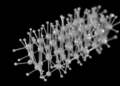
The method, called bounded-error quantum simulation via Hamiltonian and Lindbladian learning, was demonstrated on an ion-trap quantum simulator containing as many as 51 trapped ions. The experiment was carried out by a team led by Manoj Joshi and Christian Roos in Innsbruck, Austria. By learning the system’s underlying dynamics directly from data, the researchers were able to characterize how the simulator actually operated instead of relying entirely on an idealized model prepared in advance.
Quantum simulators are built to imitate the behavior of one quantum system using another controllable quantum platform. In an ion-trap device, individual ions are confined by electromagnetic fields and manipulated with lasers. Their internal electronic states act as quantum bits, while carefully engineered interactions allow researchers to reproduce the behavior of many-body systems. Such platforms can be used to investigate magnetism, phase transitions, particle transport and other phenomena that become extraordinarily expensive to model as the number of particles increases.
The challenge is that real quantum devices never behave exactly like their theoretical descriptions. The strength of an interaction may drift, laser fields can fluctuate, and unwanted coupling to the environment can cause decoherence, gradually erasing quantum information. Even the process of measuring the ions introduces uncertainty. A simulation based on slightly incorrect assumptions can therefore produce a result that looks precise while quietly carrying a substantial error.
The new framework addresses this problem by treating the simulator itself as an object to be learned experimentally. The researchers use observed time-dependent data to infer the parameters governing the system’s evolution. In the language of quantum mechanics, these parameters can define a Hamiltonian, which describes the coherent interactions driving the system, and a Lindbladian, which captures open-system effects such as dissipation and noise. Rather than assuming that either description is perfectly known, the method estimates them from repeated measurements and tracks the uncertainty associated with those estimates.
Once a model has been learned, the researchers propagate its uncertainties forward in time to determine how much confidence can be placed in a predicted observable. This may include the probability of finding ions in particular quantum states, the development of correlations between distant particles or the evolution of magnetization across the system. The result is not simply a calculated value, but a value accompanied by a mathematically bounded range. In principle, this allows scientists to distinguish between a prediction that is genuinely reliable and one whose apparent precision is misleading.
The researchers first tested the approach on a chain of ten ions, a system small enough to be simulated independently on a conventional computer. This comparison provided a crucial benchmark: the learned model and its error limits could be checked against direct calculations and additional experimental measurements. The team then applied the same strategy to a 51-ion chain, demonstrating that the method could be extended to a system large enough to strain classical computational resources while still yielding experimentally grounded uncertainty estimates.
This capability could become increasingly important as quantum simulation moves beyond one-dimensional chains and into two-dimensional geometries. Two-dimensional quantum systems are often more difficult to analyze because their connectivity and many-body correlations create a much larger space of possible behaviors. Classical calculations can become impractical as the number of particles grows, removing the simplest route for verifying a quantum device. In that regime, experimentally determined error bounds may offer an alternative way to assess whether the simulator’s conclusions are trustworthy.
The researchers are now working to adapt the method to newer generations of two-dimensional quantum simulators, which can provide greater precision and accommodate larger particle numbers. The work could also influence how quantum advantage is defined. Speed alone may not be enough to establish that a quantum machine has outperformed a classical computer. A more meaningful comparison could ask whether the quantum system solves a problem faster while also delivering a result with a smaller, independently verifiable margin of error. If successful, this approach would make accuracy a measurable part of quantum advantage, helping transform quantum simulation from a powerful but difficult-to-check technology into a scientific instrument whose conclusions come with explicit limits of confidence.
Subject of Research: Experimental verification and uncertainty quantification in quantum simulation
Article Title: Bounded-Error Quantum Simulation via Hamiltonian and Lindbladian Learning
News Publication Date: 13-Aug-2026
Web References: https://doi.org/10.1103/s96t-n8tx
References: Tristan Kraft, Manoj K. Joshi, William Lam, Tobias Olsacher, Florian Kranzl, Johannes Franke, Lata Kh Joshi, Rainer Blatt, Augusto Smerzi, Daniel Stilck França, Benoît Vermersch, Barbara Kraus, Christian F. Roos and Peter Zoller, “Bounded-Error Quantum Simulation via Hamiltonian and Lindbladian Learning,” Physical Review X 16, 031037. DOI: 10.1103/s96t-n8tx
Image Credits: Markus R. Knabl/IQOQI Innsbruck
Keywords
quantum simulation, quantum computing, quantum error bounds, ion-trap quantum computer, Hamiltonian learning, Lindbladian learning, quantum verification, trapped ions, quantum noise, quantum advantage
Tags: complex quantum system behavior analysiserror bounds in quantum simulationexperimental quantum system characterizationHamiltonian and Lindbladian learning in quantum systemsimproving reliability of quantum computational resultsion-trap quantum simulatorsmeasurement and environmental noise in quantum computingquantum simulation with trapped ionsQuantum simulator accuracy assessmentreliable error estimation for quantum matter modelsscalable quantum simulation validation methodsuncertainty quantification in quantum experiments