• HOME
  • NEWS
  • EXPLORE
    • CAREER
      • Companies
      • Jobs
    • EVENTS
    • iGEM
      • News
      • Team
    • PHOTOS
    • VIDEO
    • WIKI
  • BLOG
  • COMMUNITY
    • FACEBOOK
    • INSTAGRAM
    • TWITTER
Friday, June 26, 2026
BIOENGINEER.ORG
No Result
View All Result
  • Login
  • HOME
  • NEWS
  • EXPLORE
    • CAREER
      • Companies
      • Jobs
        • Lecturer
        • PhD Studentship
        • Postdoc
        • Research Assistant
    • EVENTS
    • iGEM
      • News
      • Team
    • PHOTOS
    • VIDEO
    • WIKI
  • BLOG
  • COMMUNITY
    • FACEBOOK
    • INSTAGRAM
    • TWITTER
  • HOME
  • NEWS
  • EXPLORE
    • CAREER
      • Companies
      • Jobs
        • Lecturer
        • PhD Studentship
        • Postdoc
        • Research Assistant
    • EVENTS
    • iGEM
      • News
      • Team
    • PHOTOS
    • VIDEO
    • WIKI
  • BLOG
  • COMMUNITY
    • FACEBOOK
    • INSTAGRAM
    • TWITTER
No Result
View All Result
Bioengineer.org
No Result
View All Result
Home NEWS Science News Biology

The ins and outs of sex change in medaka fish

Bioengineer by Bioengineer
May 21, 2020
in Biology
Reading Time: 2 mins read
0
IMAGE
Share on FacebookShare on TwitterShare on LinkedinShare on RedditShare on Telegram

IMAGE

Credit: TANAKA.

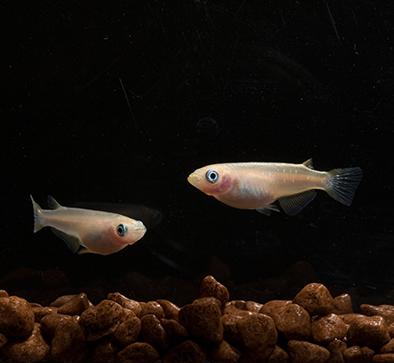
Larval nutrition plays a role in determining the sexual characteristics of Japanese rice fish, also called medaka (Oryzias latipes), report a team of researchers led by Nagoya University. The findings, published in the journal Biology Open, could further understanding of a rare condition in humans and other vertebrates, where they genetically belong to one sex but also have characteristics of the other.

Decades ago, scientists found that medaka fish often undergo sex reversal in the wild. This involves genetically female larvae (meaning they have two X chromosomes) going on to develop male characteristics, or vice versa. This has made medaka fish a model organism for studying environmental sex development and other biological processes they have in common with vertebrates.

Now, Nagoya University reproductive biologist Minoru Tanaka and colleagues in Japan have gained further insight into the factors that affect medaka sex reversal, potentially providing direction for future research into similar conditions in other species.

Scientists had already discovered that environmental factors, such as temperature changes in the brackish and fresh waters where medaka fish live, are likely involved in their sex reversal. Tanaka and his team wanted to know if nutrition also played a role.

They starved medaka larvae for five days. This was enough time to affect their metabolism without killing them. Three to four months later, the team examined the fish and found that 20% of the genetically female medaka had developed testes and characteristically male fins. The same did not occur in larvae that were not starved.

Further tests showed that sex reversal in the fish was associated with reduced fatty acid synthesis and lipid levels. Specifically, starvation suppressed a metabolic pathway that synthesizes an enzyme called CoA, and disrupted a gene called fasn. These disruptions led to reductions in fatty acid synthesis. The scientists also found that a male gene, called dmrt1, was involved in the female-to-male reversal.

“Overall, our findings showed that the sex of medaka fish is affected by both the external environment and internal metabolism,” Tanaka says. “We believe lipids may represent a novel sex regulation system that responds to nutritional conditions.”

The team next plans on identifying other internal factors involved in medaka sex reversal. Future research should try to find the tissues or organs that sense changes in the internal environment and then produce key metabolites to regulate sex differentiation.

###

This study, “Starvation causes female-to-male sex reversal through lipid
metabolism in the teleost fish, medaka (Olyzias latipes),” was published in the journal Biology Open on April 7, 2020 at DOI: 10.1242/bio.050054.

Media Contact
Minoru Tanaka
[email protected]

Original Source

http://en.nagoya-u.ac.jp/research/activities/news/2020/05/the-ins-and-outs-of-sex-change-in-medaka-fish.html

Related Journal Article

http://dx.doi.org/10.1242/bio.050054

Tags: BiochemistryBiologyBiomedical/Environmental/Chemical EngineeringDevelopmental/Reproductive BiologyEcology/EnvironmentFisheries/AquacultureMarine/Freshwater BiologyNutrition/NutrientsPhysiology
Share12Tweet8Share2ShareShareShare2

Related Posts

Natural Hallucinogens: Evolution’s Ecological Tools, Not Mere Chemical Byproducts

June 25, 2026

This Famous Butterfly Revealed: Three Distinct Species Hidden in One

June 25, 2026

Scientists Attack Soybean Cyst Nematode by Starving Its Food Source

June 25, 2026

Decoding the Secret Code of a Crucial Immune Sensor

June 24, 2026
Please login to join discussion

POPULAR NEWS

  • Saying Goodbye to PGY-6: Pediatric Fellowship Realities

    103 shares
    Share 41 Tweet 26
  • Multi-Hospital Study Reveals Long Covid Burden Is Twice as High as Current Estimates

    92 shares
    Share 36 Tweet 23
  • Detection of EDCs in Breast Milk and Infant Urine Up to Six Months Highlights Early Exposure Risks

    77 shares
    Share 31 Tweet 19
  • New Drug Candidate Developed at McMaster Shows Potential for Treating Brain Cancer

    58 shares
    Share 23 Tweet 15

About

We bring you the latest biotechnology news from best research centers and universities around the world. Check our website.

Follow us

Recent News

Tracking Lanthanide-Labeled Microplastics in Plants

POSTECH Researchers Slash Cost of Reconstituted Cell-Free Systems by 95%

AI and Physics Collaborate to Design Advanced Hydrogen Storage Materials

Subscribe to Blog via Email

Success! An email was just sent to confirm your subscription. Please find the email now and click 'Confirm' to start subscribing.

Join 82 other subscribers
  • Contact Us

Bioengineer.org © Copyright 2023 All Rights Reserved.

Welcome Back!

Login to your account below

Forgotten Password?

Retrieve your password

Please enter your username or email address to reset your password.

Log In
No Result
View All Result
  • Homepages
    • Home Page 1
    • Home Page 2
  • News
  • National
  • Business
  • Health
  • Lifestyle
  • Science

Bioengineer.org © Copyright 2023 All Rights Reserved.