


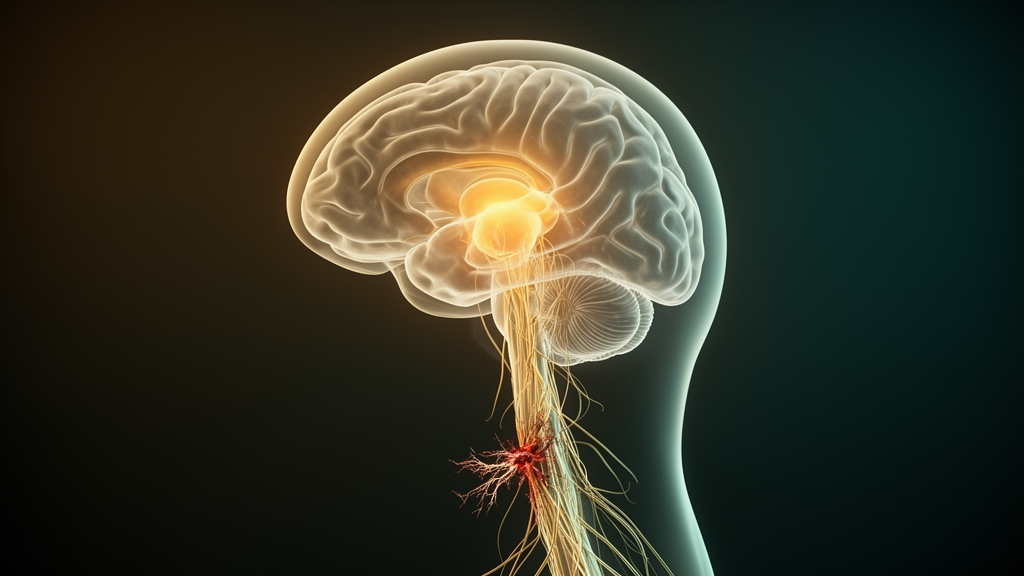
Below-level neuropathic pain, one of the most common and stubborn complications of spinal cord injury, may not originate solely in the damaged spinal cord. A new review published in Frontiers in Cellular Neuroscience argues that sustained remodeling of the thalamus, the brain’s major relay station for sensory signals, could be a critical mechanism by which abnormal activity from the injured spinal cord drives central pain processing. The authors, a team from Jiangxi University of Traditional Chinese Medicine and East China University of Technology, synthesize existing evidence on neuroimmune, neurochemical, and circuit-level changes that may underlie this refractory pain condition.
The central puzzle the review addresses is clinical heterogeneity: below-level neuropathic pain persists in many patients and varies widely between individuals, features that are difficult to explain through mechanisms confined to the injured cord. Because the thalamus receives ascending sensory input from the spinal cord and maintains extensive connections with the somatosensory cortex, insula, and cingulate cortex, the authors propose it as a plausible hub where abnormal spinal signals are transformed into chronic central pain.
A key starting point is altered afferent input. Existing evidence indicates that partial sensory deafferentation, the loss of normal sensory input after injury, and abnormal neural activity transmitted through spared pathways can change the signals arriving at the thalamus. This reshaping of thalamic input may set the stage for longer-lasting changes in how thalamic neurons respond and fire.
The review also highlights a neuroimmune dimension. Signaling involving C-C motif chemokine ligand 21, or CCL21, may influence the local neuroimmune environment of the thalamus. Alongside this, microglial responses, the altered regulation of excitatory and inhibitory synaptic balance, changes in ion-channel expression, and structural modifications at synapses are all associated with hyperexcitability and aberrant firing patterns in thalamic neurons, according to the evidence the authors consolidate.
These local thalamic changes, the authors suggest, may not remain isolated. They may be accompanied by reorganization of corticothalamic feedback, the top-down signals the cortex sends back to the thalamus, and by alterations in thalamocortical functional connectivity, linking cellular and molecular changes to network-level reorganization across pain-processing circuits.
Human imaging studies provide converging support at the systems level. Pain phenotypes in patients have been associated with thalamic metabolism, with the microstructure of related white-matter tracts, and with patterns of functional connectivity involving the thalamus. The review treats these imaging findings as associations with pain phenotypes rather than as proof of causation, but they align with the proposed framework in which thalamic remodeling tracks clinical pain presentations.
Importantly, this is a review article, not a new experimental study: it systematically consolidates prior evidence rather than reporting new clinical trials or animal experiments. The authors state that their aim is to enhance understanding of supraspinal mechanisms, organize existing findings, and provide a basis for investigating thalamus-related candidate clinical measures and mechanism-based interventions. No specific treatment recommendations follow directly from the review, and the mechanisms described remain candidates to be tested rather than established therapeutic targets.
The value of the framework lies in its integration. By connecting thalamic afferent status, neuroimmune signaling, neurochemical and electrophysiological changes, and the reorganization of related circuits into a single account, the review offers a testable model for why below-level neuropathic pain persists after spinal cord injury and why it differs so much between patients. Future work measuring thalamic changes in parallel with pain outcomes could clarify which elements of this remodeling are causal drivers of chronic pain and which are downstream consequences, a distinction that will matter for any effort to translate these mechanisms into clinical measures.
Subject of Research: Thalamic mechanisms of below-level neuropathic pain following spinal cord injury
Article Title: Thalamic remodeling underlying below-level neuropathic pain following spinal cord injury: neuroimmune, neurochemical, and circuit-level mechanisms
Article References: Chen, W., Ai, Y., Yi, B., Yu, C., & Hong, E. (2026). Thalamic remodeling underlying below-level neuropathic pain following spinal cord injury: neuroimmune, neurochemical, and circuit-level mechanisms. Frontiers in Cellular Neuroscience, 20, Article 1969437. https://doi.org/10.3389/fncel.2026.1969437
Image Credits: AI Generated
DOI: 10.3389/fncel.2026.1969437
Keywords: spinal cord injury, neuropathic pain, thalamus, neuroimmune signaling, CCL21, microglia, thalamocortical circuits, neuroimaging, synaptic plasticity, review, Thalamic, remodeling
News Source: Cassandra Pierce. (October 29, 2026). Thalamus Remodeling May Drive Neuropathic Pain After Spinal Cord Injury. Scienmag.



