• HOME
  • NEWS
  • EXPLORE
    • CAREER
      • Companies
      • Jobs
    • EVENTS
    • iGEM
      • News
      • Team
    • PHOTOS
    • VIDEO
    • WIKI
  • BLOG
  • COMMUNITY
    • FACEBOOK
    • INSTAGRAM
    • TWITTER
Thursday, May 21, 2026
BIOENGINEER.ORG
No Result
View All Result
  • Login
  • HOME
  • NEWS
  • EXPLORE
    • CAREER
      • Companies
      • Jobs
        • Lecturer
        • PhD Studentship
        • Postdoc
        • Research Assistant
    • EVENTS
    • iGEM
      • News
      • Team
    • PHOTOS
    • VIDEO
    • WIKI
  • BLOG
  • COMMUNITY
    • FACEBOOK
    • INSTAGRAM
    • TWITTER
  • HOME
  • NEWS
  • EXPLORE
    • CAREER
      • Companies
      • Jobs
        • Lecturer
        • PhD Studentship
        • Postdoc
        • Research Assistant
    • EVENTS
    • iGEM
      • News
      • Team
    • PHOTOS
    • VIDEO
    • WIKI
  • BLOG
  • COMMUNITY
    • FACEBOOK
    • INSTAGRAM
    • TWITTER
No Result
View All Result
Bioengineer.org
No Result
View All Result
Home NEWS Science News Chemistry

Texas A&M researchers light cells using nanosheets for cancer treatment

Bioengineer by Bioengineer
June 10, 2020
in Chemistry
Reading Time: 3 mins read
0
IMAGE
Share on FacebookShare on TwitterShare on LinkedinShare on RedditShare on Telegram

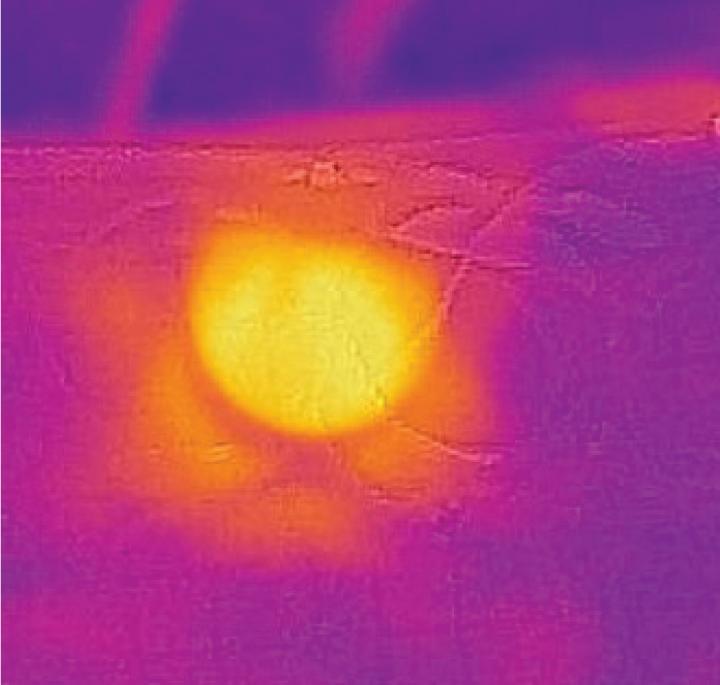
A 2D nanosheet developed by scientists in the Department of Biomedical Engineering could be used to control cell response via light
IMAGE

Credit: Texas A&M University

Scientists in the Department of Biomedical Engineering at Texas A&M University are developing new ways to advance the field of regenerative medicine and cancer treatment. They are developing a 2D nanosheet that is 1,000 times smaller than a strand of hair.

Dr. Akhilesh Gaharwar, associate professor, has developed a new class of 2D nanosheets called molybdenum disulfide that can adsorb near infrared (NIR) light and modify cell behavior. These nanosheets are an emerging class of materials that have shown distinct physical and chemical properties due to their unique shape and size. Recently, some nanosheets have been explored for biomedical applications due to their light-responsive ability. Despite strong potential, Gaharwar’s research is entering new territory, as few studies have investigated their cellular compatibility and none have explored their ability to modulate cellular functions using light.

To explore the possibility of controlling the cell response via light, Gaharwar’s research group has synthesized an atomically thin nanosheet that can adsorb NIR light and convert it into heat. NIR light can penetrate deep inside the tissue compared to other types of light, including ultraviolet and visible light, and can be used to stimulate natural biological repair mechanisms in deep tissue.

Due to the high-surface area of nanosheets, they can stick to the outer membrane of cells and transmit a cellular signal to the nucleus, thereby controlling their behavior. Some of the nanosheets are also eaten by the cells and can influence cellular functions from inside.

“Light-responsive biomaterials have a strong potential for developing the next generation of noninvasive, precise and controllable medical devices for a range of biomedical applications, including drug delivery, cancer therapy, regenerative medicine and 3D printing,” Gaharwar said.

His research was recently featured in the journal Proceedings of the National Academy of Sciences.

In collaboration with Dr. Irtisha Singh, assistant professor in the Department of Molecular and Cellular Medicine of the Texas A&M Health Science Center, Gaharwar’s team used a next-generation sequencing technique to decipher the effect of light and/or nanosheets on the gene regulation of cells. Picture a cell as a blank canvas, and gene regulation as the paint that turns the canvas into something unique or interesting. For stem cells, that would mean determining what kind of cell they will be, such as muscle, bone, etc. Slight agitations in gene expression, either from light or these nanosheets, can significantly affect the functions of these cells such as movement, reproduction and expression.

Global gene expression profiles of cells reveal that light stimulation of the nanosheet can have a significant influence on cellular migration and wound healing. They demonstrated that cancer cells treated with a nanosheet and light are not able to move freely, which is good news. This is important as cancer spreads in the body by moving from one tissue to another. The combination of the nanosheet and light may provide new approaches to control and regulate cellular migration and functions.

The team found that the nanosheets bind to a cell surface receptor known as an integrin, a simple protein with a sugar attached. These integrin proteins are important in normal cell functioning by providing information to cells about its surroundings. If these proteins are covered by nanosheets, they cannot tell the cells to move around, effectively stopping the cells for an indefinite time.

###

Media Contact
Amy Halbert
[email protected]

Original Source

https://today.tamu.edu/2020/06/01/texas-am-researchers-light-cells-using-nanosheets-for-cancer-treatment/

Related Journal Article

http://dx.doi.org/10.1073/pnas.1914345117

Tags: Biomedical/Environmental/Chemical EngineeringBiotechnologycancerMedicine/HealthNanotechnology/Micromachines
Share12Tweet8Share2ShareShareShare2

Related Posts

Advancing In Vivo and In Situ Monitoring: Science Bulletin Highlights Host-Based Antifouling Gold Nanotube Sensor for Selective Detection of Mechanically Sensitive Serotonin Release in Intestinal Mucosa — Chemistry

Advancing In Vivo and In Situ Monitoring: Science Bulletin Highlights Host-Based Antifouling Gold Nanotube Sensor for Selective Detection of Mechanically Sensitive Serotonin Release in Intestinal Mucosa

May 20, 2026
How Magnetic Orientation Could Influence the Building Blocks of Life — Chemistry

How Magnetic Orientation Could Influence the Building Blocks of Life

May 20, 2026

Breaking a 200-Year-Old Belief: Novel Surface Design Achieves Two Distinct Wetting States on One Substrate

May 20, 2026

Unveiling Sound Waves: Scientists Discover Hidden Behaviors in Acoustic Phenomena

May 20, 2026
Please login to join discussion

POPULAR NEWS

  • blank

    New Study Reveals Plants Can Detect the Sound of Rain

    733 shares
    Share 292 Tweet 183
  • ESMO 2025: mRNA COVID Vaccines Enhance Efficacy of Cancer Immunotherapy

    301 shares
    Share 120 Tweet 75
  • Research Indicates Potential Connection Between Prenatal Medication Exposure and Elevated Autism Risk

    846 shares
    Share 338 Tweet 212
  • Breastmilk Balances E. coli and Beneficial Bacteria in Infant Gut Microbiomes

    58 shares
    Share 23 Tweet 15

About

We bring you the latest biotechnology news from best research centers and universities around the world. Check our website.

Follow us

Recent News

Experts Warn of a Moral Crisis in Healthcare

Common Food Preservatives Associated with Elevated Blood Pressure and Increased Heart Disease Risk

Study Finds Reusable Catheters a Safe Option That Could Save the NHS Millions

Subscribe to Blog via Email

Enter your email address to subscribe to this blog and receive notifications of new posts by email.

Join 82 other subscribers
  • Contact Us

Bioengineer.org © Copyright 2023 All Rights Reserved.

Welcome Back!

Login to your account below

Forgotten Password?

Retrieve your password

Please enter your username or email address to reset your password.

Log In
No Result
View All Result
  • Homepages
    • Home Page 1
    • Home Page 2
  • News
  • National
  • Business
  • Health
  • Lifestyle
  • Science

Bioengineer.org © Copyright 2023 All Rights Reserved.