• HOME
  • NEWS
  • EXPLORE
    • CAREER
      • Companies
      • Jobs
    • EVENTS
    • iGEM
      • News
      • Team
    • PHOTOS
    • VIDEO
    • WIKI
  • BLOG
  • COMMUNITY
    • FACEBOOK
    • INSTAGRAM
    • TWITTER
Tuesday, May 12, 2026
BIOENGINEER.ORG
No Result
View All Result
  • Login
  • HOME
  • NEWS
  • EXPLORE
    • CAREER
      • Companies
      • Jobs
        • Lecturer
        • PhD Studentship
        • Postdoc
        • Research Assistant
    • EVENTS
    • iGEM
      • News
      • Team
    • PHOTOS
    • VIDEO
    • WIKI
  • BLOG
  • COMMUNITY
    • FACEBOOK
    • INSTAGRAM
    • TWITTER
  • HOME
  • NEWS
  • EXPLORE
    • CAREER
      • Companies
      • Jobs
        • Lecturer
        • PhD Studentship
        • Postdoc
        • Research Assistant
    • EVENTS
    • iGEM
      • News
      • Team
    • PHOTOS
    • VIDEO
    • WIKI
  • BLOG
  • COMMUNITY
    • FACEBOOK
    • INSTAGRAM
    • TWITTER
No Result
View All Result
Bioengineer.org
No Result
View All Result
Home NEWS Science News Biology

Testing barley’s salt tolerance is a numbers game

Bioengineer by Bioengineer
December 2, 2019
in Biology
Reading Time: 2 mins read
0
IMAGE
Share on FacebookShare on TwitterShare on LinkedinShare on RedditShare on Telegram

IMAGE

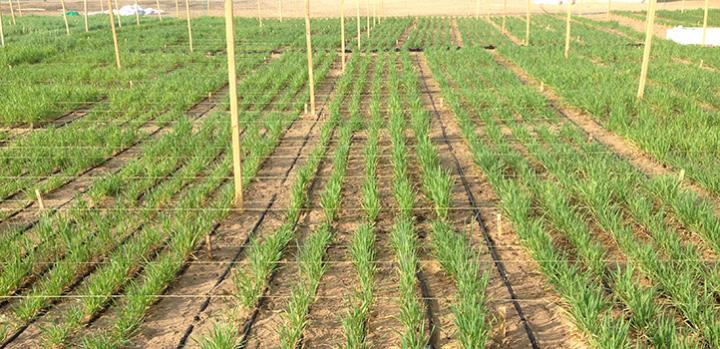
Credit: © 2019 KAUST

Plant scientists are striving to cultivate crops that can cope with saline soils in the hope that this may help feed the world’s growing population, particularly in the face of climate change. Now, KAUST researchers have applied a newly developed robust statistical technique to examine how different barley plant traits affect yields grown in saline and nonsaline conditions.

“The problem with traditional regression analyses is that they focus on finding the average, or mean, of a given distribution,” says Gaurav Agarwal, who worked on the project under the guidance of his supervisor Ying Sun and in collaboration with plant scientists Stephanie Saade and Mark Tester.

“In plant science, this incomplete picture can be frustrating because we’re often more interested in details at the extreme ends of the distribution and what these data can tell us about optimizing crops,” says Agarwal.

The two research groups turned to new advanced quantile regression techniques to analyze the traits that influence salt tolerance and yield in barley plants. The team modeled the saline and nonsaline conditions jointly, dividing up the data into different “quantiles” to build up a more detailed picture of the entire distribution. In this way, they could focus their analyses on those plant groups that displayed higher yields and greater tolerance and then examine the main influencing factors.

The team’s results provide interesting insights into barley’s responses and could inform future crop decisions, particularly in arid parts of the world.

Two key traits help gain high yield under saline conditions. Firstly, the plants’ flowering time should not occur too late in the growing season. Late flowering may mean that the plant is affected by increased heat as the season progresses, reducing its ability to produce seeds.

“A more surprising result was that the salinity tolerance of plants increased linearly as the ear number per plant increased,” says Agarwal. “However, tolerance then faltered when a plant grew more than three ears. A possible explanation is that the plant can cope with salt stress while producing seeds, but only up to a point, after which generating seeds comes at the expense of salinity tolerance.”

“We are keen to expand on these initial results,” adds Sun. “Our insights may also help further understanding of mechanisms of salt tolerance in barley and other crops.”

###

Media Contact
Carolyn Unck
[email protected]

Original Source

https://discovery.kaust.edu.sa/en/article/896/testing-barley’s-salt-tolerance-is-a-numbers-game

Related Journal Article

http://dx.doi.org/10.1186/s12870-019-2039-9

Tags: BioinformaticsBiologyGeneticsMathematics/StatisticsNumber Literacy/General Statistics
Share12Tweet8Share2ShareShareShare2

Related Posts

From Complexity to Clarity: Unraveling the “Topological Laws” Governing Cell Death — Biology

From Complexity to Clarity: Unraveling the “Topological Laws” Governing Cell Death

May 11, 2026
New Classification Framework Identifies Tumor-Associated Bacterial Effectors as Crucial Drivers of Tumor Biology and Immune Response — Biology

New Classification Framework Identifies Tumor-Associated Bacterial Effectors as Crucial Drivers of Tumor Biology and Immune Response

May 11, 2026

HIV-1 Strains Reveal Varied Paths to Antibody Escape

May 11, 2026

CRISPRi Screening Identifies Fungal-Specific Drug Targets

May 11, 2026
Please login to join discussion

POPULAR NEWS

  • Research Indicates Potential Connection Between Prenatal Medication Exposure and Elevated Autism Risk

    841 shares
    Share 336 Tweet 210
  • New Study Reveals Plants Can Detect the Sound of Rain

    728 shares
    Share 290 Tweet 182
  • Salmonella Haem Blocks Macrophages, Boosts Infection

    62 shares
    Share 25 Tweet 16
  • Breastmilk Balances E. coli and Beneficial Bacteria in Infant Gut Microbiomes

    57 shares
    Share 23 Tweet 14

About

We bring you the latest biotechnology news from best research centers and universities around the world. Check our website.

Follow us

Recent News

Humans and Zebra Finches Share Similar Speech Learning Techniques #ASA190

New Study Uncovers How Fungal Parasites Attack Strawberries and Raspberries

City of Hope Researchers to Present Groundbreaking Immunotherapy and Precision Medicine Advances Across Multiple Cancer Types at ASCO 2026

Subscribe to Blog via Email

Enter your email address to subscribe to this blog and receive notifications of new posts by email.

Join 82 other subscribers
  • Contact Us

Bioengineer.org © Copyright 2023 All Rights Reserved.

Welcome Back!

Login to your account below

Forgotten Password?

Retrieve your password

Please enter your username or email address to reset your password.

Log In
No Result
View All Result
  • Homepages
    • Home Page 1
    • Home Page 2
  • News
  • National
  • Business
  • Health
  • Lifestyle
  • Science

Bioengineer.org © Copyright 2023 All Rights Reserved.