• HOME
  • NEWS
  • EXPLORE
    • CAREER
      • Companies
      • Jobs
    • EVENTS
    • iGEM
      • News
      • Team
    • PHOTOS
    • VIDEO
    • WIKI
  • BLOG
  • COMMUNITY
    • FACEBOOK
    • INSTAGRAM
    • TWITTER
Saturday, June 27, 2026
BIOENGINEER.ORG
No Result
View All Result
  • Login
  • HOME
  • NEWS
  • EXPLORE
    • CAREER
      • Companies
      • Jobs
        • Lecturer
        • PhD Studentship
        • Postdoc
        • Research Assistant
    • EVENTS
    • iGEM
      • News
      • Team
    • PHOTOS
    • VIDEO
    • WIKI
  • BLOG
  • COMMUNITY
    • FACEBOOK
    • INSTAGRAM
    • TWITTER
  • HOME
  • NEWS
  • EXPLORE
    • CAREER
      • Companies
      • Jobs
        • Lecturer
        • PhD Studentship
        • Postdoc
        • Research Assistant
    • EVENTS
    • iGEM
      • News
      • Team
    • PHOTOS
    • VIDEO
    • WIKI
  • BLOG
  • COMMUNITY
    • FACEBOOK
    • INSTAGRAM
    • TWITTER
No Result
View All Result
Bioengineer.org
No Result
View All Result
Home NEWS Science News Chemistry

Templating S100A9 amyloids on Aβ fibrillar surfaces revealed

Bioengineer by Bioengineer
June 26, 2020
in Chemistry
Reading Time: 2 mins read
0
IMAGE
Share on FacebookShare on TwitterShare on LinkedinShare on RedditShare on Telegram

IMAGE

Credit: Jonathan Pansieri

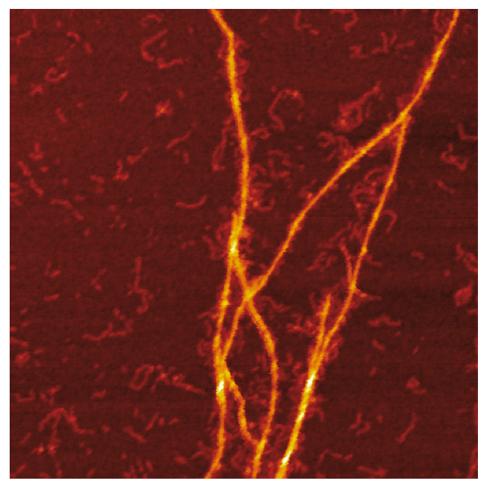
A research team lead by Ludmilla Morozova Roche at Umeå University, Sweden, has provided the mechanistic insight into protein co-aggregation in Alzheimer’s disease. The templating mechanism of S100A9 amyloids on Aβ fibrillar surfaces during co-aggregation process was revealed by synergy of biophysical methods including charge detection mass spectrometry, microscopy, kinetic and microfluidic analyses.

Amyloid formation is of the key clinical significance since this process is involved in numerous neurodegenerative diseases such as Alzheimer’s, Parkinson’s and others. These diseases affect millions of the aging population world-wide. Often it is difficult to draw the line between these diseases or they may occur simultaneously, which is known as disease comorbidity.

While the amyloid formation process was studied extensively, little is known about the specific mechanisms of co-aggregation of different amyloid species together, underlying the comorbidity of the diseases. In Alzheimer’s disease, the amyloid-neuroinflammatory cascade is manifested in co-aggregation of Aβ with proinflammatory S100A9 protein, which leads to intracellular and extracellular amyloid assembly, amyloid plaque depositions and cellular toxicity.

Deciphering the interactions between proinflammatory S100A9 protein and Aβ42 peptide in Alzheimer’s disease is fundamental since inflammation plays a central role in the disease onset. Here the researchers use innovative charge detection mass spectrometry (CDMS) together with biophysical techniques to provide mechanistic insight into the co-aggregation process and differentiate amyloid complexes at a single particle level.

Combination of mass and charge distributions of amyloids together with reconstruction of the differences between them and detailed microscopy reveals that co-aggregation involves templating of S100A9 fibrils on the surface of Aβ42 amyloids. Kinetic analysis further corroborates that the surfaces available for the Aβ42 secondary nucleation are diminished due to coating by S100A9 amyloids, while the binding of S100A9 to Aβ42 fibrils is validated by a microfuidic assay.

The researchers demonstrate that synergy between CDMS, microscopy, kinetic and microfuidic anayses opens new directions in interdisciplinary research.

###

The research was conducted in close international collaboration with the leading role of the research group of Ludmilla A. Morozova-Roche at the Umeå University and also involved the laboratories of Rodolphe Antoine in Institut Lumière Matière, Lyon, France, Thuomas Knowles, University of Cambridge, UK and Vytautas Smirnovas, Vilnius University, Lithuania.

Media Contact
Ola Nilsson
[email protected]

Related Journal Article

http://dx.doi.org/10.1039/C9SC05905A

Tags: AlzheimerMedicine/Health
Share13Tweet8Share2ShareShareShare2

Related Posts

AI and Physics Collaborate to Design Advanced Hydrogen Storage Materials

June 25, 2026

International Team Including Dresden Scientists Develops Novel Designer Proteins for Advanced Study of Living Tissue

June 25, 2026

New Study Uncovers Key Factors Driving Water Chemistry in Nanoscale Environments

June 25, 2026

Plasma Technology Extends Catalyst Lifespan in Hydrogen Production

June 24, 2026
Please login to join discussion

POPULAR NEWS

  • Saying Goodbye to PGY-6: Pediatric Fellowship Realities

    103 shares
    Share 41 Tweet 26
  • Multi-Hospital Study Reveals Long Covid Burden Is Twice as High as Current Estimates

    92 shares
    Share 36 Tweet 23
  • Detection of EDCs in Breast Milk and Infant Urine Up to Six Months Highlights Early Exposure Risks

    77 shares
    Share 31 Tweet 19
  • New Drug Candidate Developed at McMaster Shows Potential for Treating Brain Cancer

    58 shares
    Share 23 Tweet 15

About

We bring you the latest biotechnology news from best research centers and universities around the world. Check our website.

Follow us

Recent News

Tracking Lanthanide-Labeled Microplastics in Plants

POSTECH Researchers Slash Cost of Reconstituted Cell-Free Systems by 95%

AI and Physics Collaborate to Design Advanced Hydrogen Storage Materials

Subscribe to Blog via Email

Success! An email was just sent to confirm your subscription. Please find the email now and click 'Confirm' to start subscribing.

Join 82 other subscribers
  • Contact Us

Bioengineer.org © Copyright 2023 All Rights Reserved.

Welcome Back!

Login to your account below

Forgotten Password?

Retrieve your password

Please enter your username or email address to reset your password.

Log In
No Result
View All Result
  • Homepages
    • Home Page 1
    • Home Page 2
  • News
  • National
  • Business
  • Health
  • Lifestyle
  • Science

Bioengineer.org © Copyright 2023 All Rights Reserved.