A large-scale study of U.S. children and adolescents has found that participation in a team sport is associated with fewer mental health difficulties, but that kids who are exclusively involved in an individual sport—such as tennis or wrestling—may face greater mental health difficulties than kids who do no sports at all. Matt Hoffmann of California State University, U.S.A., and colleagues present these findings in the open-access journal PLOS ONE on June 1, 2022.
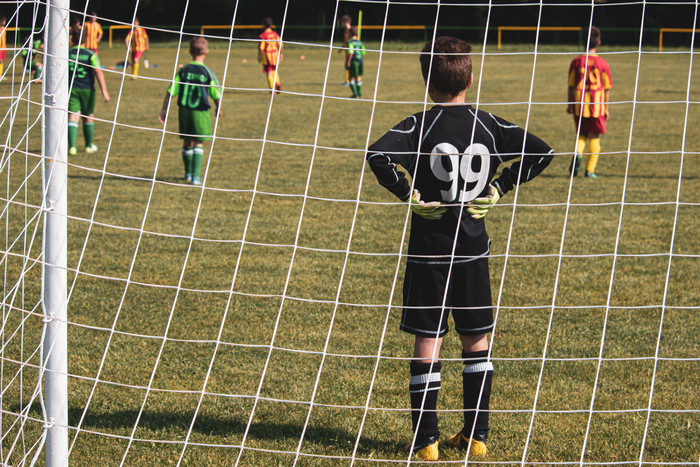
Credit: Robo Michalec, Pexels, CC0 (https://creativecommons.org/publicdomain/zero/1.0/)
A large-scale study of U.S. children and adolescents has found that participation in a team sport is associated with fewer mental health difficulties, but that kids who are exclusively involved in an individual sport—such as tennis or wrestling—may face greater mental health difficulties than kids who do no sports at all. Matt Hoffmann of California State University, U.S.A., and colleagues present these findings in the open-access journal PLOS ONE on June 1, 2022.
Previous research has consistently suggested that youth participation in organized sports might help protect against mental health difficulties. However, some studies have linked youth sports participation to worse mental health, so more detailed research is needed to determine which approaches to sports might be most beneficial.
To shed new light, Hoffmann and colleagues analyzed data on the sports habits and mental health of 11,235 kids aged 9 to 13. Parents and guardians reported on several aspects of the children’s mental health by filling out a form known as the Child Behavior Checklist. The researchers looked for any associations between the mental health data and the kids’ sports habits, while also accounting for other factors that might impact mental health, such as household income and overall physical activity.
In line with the researchers’ expectations, the analysis showed that kids involved in team sports were less likely to have signs of anxiety, depression, withdrawal, social problems, and attention problems.
The researchers also expected individual sports to be associated with fewer mental health difficulties, even if to a lesser extent than for team sports. However, they instead found that children who exclusively played individual sports tended to have greater mental health difficulties than those who did not play sports at all. Nonetheless, for female kids, participation in both team and individual sports was associated with a lower likelihood of rule-breaking behavior than non-sports participation.
Overall, these findings add to a growing body of evidence that playing team sports is positively associated with mental health for children and adolescents. The authors suggest that further research could help clarify the link they observed between individual sports and worse mental health difficulties, and longitudinal observations are needed to investigate any causal relationships between sport participation and mental health.
The authors add: “Children and adolescents who played exclusively team sports, like basketball or soccer, had fewer mental health difficulties than those who did not participate in any organized sports. However, to our surprise, youth who participated in only individual sports, such as gymnastics or tennis, had more mental health difficulties compared to those who did not participate in organized sports.”
#####
In your coverage please use this URL to provide access to the freely available article in PLOS ONE: https://journals.plos.org/plosone/article?id=10.1371/journal.pone.0268583
Citation: Hoffmann MD, Barnes JD, Tremblay MS, Guerrero MD (2022) Associations between organized sport participation and mental health difficulties: Data from over 11,000 US children and adolescents. PLoS ONE 17(6): e0268583. https://doi.org/10.1371/journal.pone.0268583
Author Countries: U.S.A., Canada
Funding: The authors received no specific funding for this work.
Journal
PLoS ONE
DOI
10.1371/journal.pone.0268583
Method of Research
Survey
Subject of Research
People
Article Title
Associations between organized sport participation and mental health difficulties: Data from over 11,000 US children and adolescents
Article Publication Date
1-Jun-2022
COI Statement
The authors have declared that no competing interests exist.